

Christian Adorna
Kirby Ang
Christen Leighe Chua
Kai Yam Shi

De La Salle University Manila

Adrian Mabalay


Keep this story going! Share below!
There is a version of "saving the environment" that most people have grown tired of — the one that feels expensive, distant, and reserved for those who can afford luxury eco-resorts. MAD Travel does not subscribe to that version. Founded in 2015, this Philippine social enterprise has built its business around a simpler sustainability premise: that sustainability is not an exclusive lifestyle but rather an inclusive, progressive action that can bind communities together. By transforming tourism into an educational platform, MAD Travel connects travelers directly with local communities to help restore the environment. Through a mix of immersive educational tours and a growing portfolio of green economy products, they prove that real social and environmental impact can be practical, accessible, and deeply human.
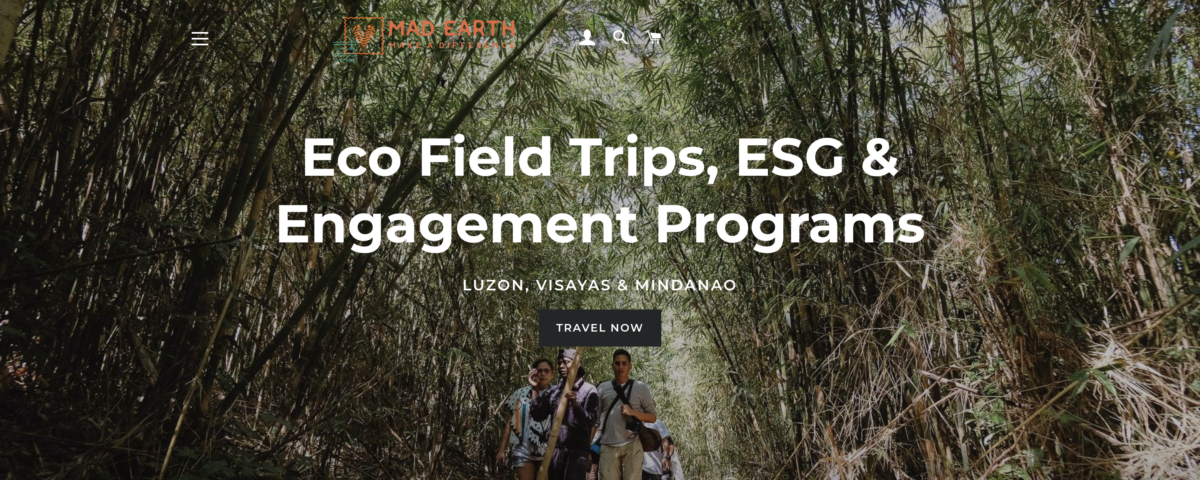
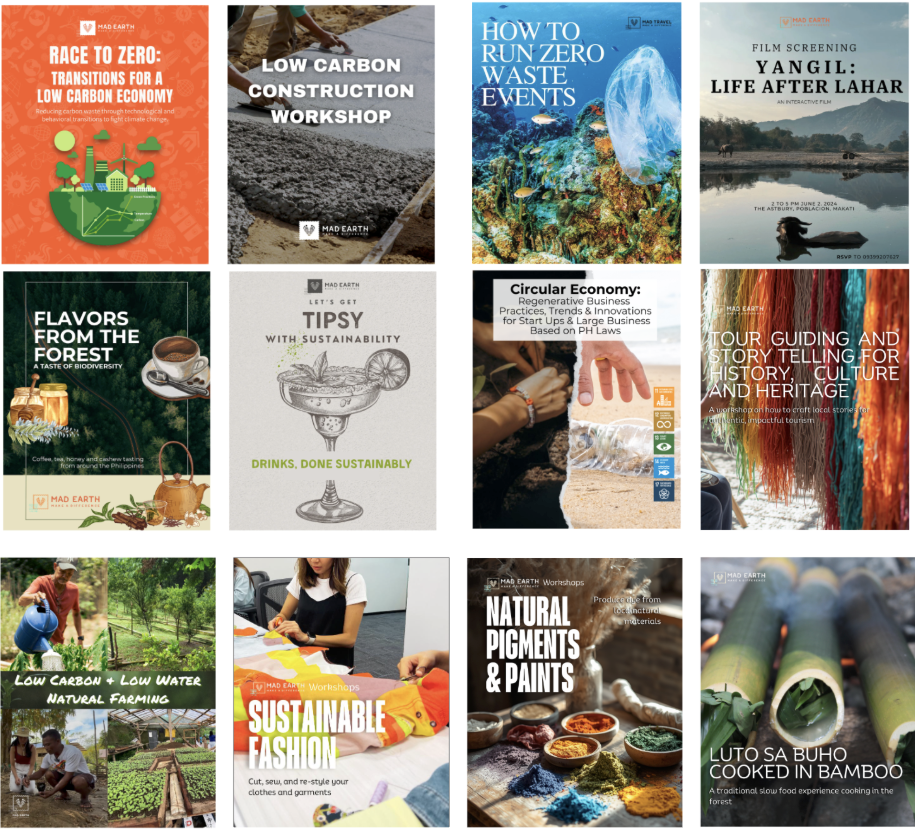
Most tour companies sell a destination. MAD Travel sells an understanding of it. That is the core of its business innovation — not a single product or gimmick, but a business model that fuses tourism, education, environmental restoration, and community development into one seamless experience. What began in 2015 as tours bringing guests to farming and urban-poor communities has since grown into a comprehensive sustainability education practice. Instead of treating climate action as a topic learned from a corporate slide deck, MAD Travel puts participants directly in front of the indigenous groups, farmers, scientists, and ecosystems living that reality every day. Immersive workshops, biodiversity tours, agroforestry initiatives, and corporate ESG learning programs teach in ways a traditional classroom often cannot.
What fundamentally sets MAD Travel apart from a typical tour operator is not the destinations themselves, but the strategic intent behind visiting them. While traditional tourism is built entirely around leisure, MAD Travel is built around learning and active ecosystem regeneration. Central to this approach is MAD Travel's proprietary Area Mastery Framework, founded on the principle that "the solutions are within the area." Rather than applying generic ecotourism models, the framework examines three interconnected dimensions of a locality: (1) the environment, including its plants, animals, land, and water bodies; (2) social behavior and culture; and (3) economic opportunities and challenges. By understanding these dimensions together, MAD Travel co-creates sustainability initiatives tailored to each community's unique context.
Because this framework treats environmental and social issues as an interconnected web, MAD Travel's commercial operations generate a ripple effect that directly drives progress across multiple UN Sustainable Development Goals. Their immersive workshops provide high-quality education and create long-term economic growth for partner communities, advancing SDG 4 (Quality Education) and SDG 8 (Decent Work and Economic Growth). On the environmental front, their active reforestation, marine rehabilitation, and maximization of local resources drive progress for SDG 13 (Climate Action) and SDG 15 (Life on Land). Ultimately, by acting as a collaborative bridge connecting corporations and grassroots communities, MAD Travel embodies SDG 17 (Partnerships for the Goals), proving that systemic impact can be practical, accessible, and deeply human. While the story primarily highlights ecosystem restoration and education, SDG 8 is the throughline that makes both possible — the fair-wage, livelihood-generating structure behind every tour and workshop is what turns environmental education and reforestation into a self-sustaining economic cycle rather than a one-time charitable effort.
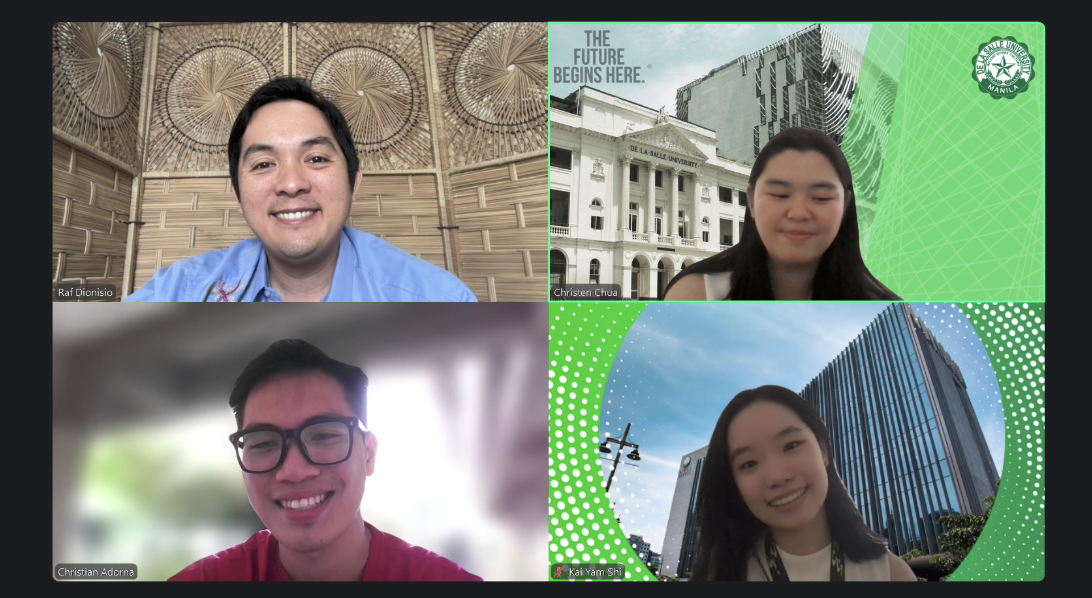
Almost every social enterprise founder has a version of the same fork in the road. For MAD Travel's Co-Founder and President, Rafael "Raf" Dionisio, it came from watching classmates walk away from corporate offers to chase something bigger. He explained: "I had some batchmates and some people in my school who were saying, 'I'm going to try to change the trajectory of poverty in the country.' It made me question why I should go into the multinational setting or corporate setting. At the same time, I really like business. So I thought maybe I could combine the two, helping in business."
Raf did not build MAD Travel alone. Together with co-founders Thomas Graham, Andrea Legaspi, and a growing network of collaborators, they helped shape the social enterprise by drawing lessons from existing tourism models while adapting them to the Philippine context. Before MAD Travel existed, they had already been studying tour operators. They were doing something similar to G-Adventures, even in early models from the Department of Tourism, and noticed a pattern: communities with a steady stream of visitors tended to do better, especially when their guides were treated well and paid fairly rather than being an afterthought. If it worked for them, they figured, it could work here. So in 2015, MAD Travel ran its first tour, built on a fairly simple premise: to take tourists into farming and urban-poor communities and let tourism become a livelihood.
For a while, that was the whole plan. Then came the meeting that changed the company's trajectory entirely: an introduction to the Aeta communities in Zambales, and with it, a foothold in reforestation and tribal tourism. It was not a shift that Raf and the MAD Travel team navigated alone. A mentor from Mindanao stepped in to help, teaching them how to work with forest ecosystems while building trust with the communities living alongside them. Together with the Aeta communities and other local partners, these relationships laid the foundation for MAD Travel's regenerative approach. By 2016, MAD Travel was not just running tours anymore — it was planting one of its first forests. As Raf stated: "One of our core values is to make sustainability simple because many times people think it's for the rich only, but it's not. You can do it in the community."
It is a value that eventually formed what MAD Travel now calls its Area Mastery Framework: the idea that most solutions to a community's problems are already sitting in front of it, once you know the environment, the culture, and the economic opportunities well enough to see them. Running underneath all of it is the story they keep coming back to: that most economies, historically, have been built on extracting from nature rather than restoring it. Mining, logging, and monoculture farming are inheritances that trace back generations. MAD Travel's founding motivation, at its core, was a bet that tourism could be the vehicle for something different: teaching people how to build an economy that regenerates instead of depletes.
In most sustainability stories, impact is a promise made on faith. You plant something, and you hope. MAD Travel is one of the rare cases where that hope has had years to prove itself. The clearest evidence sits in the ground, quite literally. After partnering with the Aeta communities in Yangil, Zambales, MAD Travel launched a long-term restoration initiative with the goal of restoring 4,000 hectares of rainforest, establishing 100 hectares of food forest, and creating sustainable livelihoods through ecotourism and agroforestry. In 2017 alone, the organization planted more than 20,000 pioneer tree species, while subsequent partnerships have contributed toward a broader target of 88,000 trees, with 30,000 trees planted by 2022. Rather than ending with tree-planting events, community members continue maintaining newly planted trees during their early years, reinforcing the organization's long-term regenerative approach. As Raf shared: "The stuff we planted in 2016 started to grow. And so when people saw, 'Oh, it's really working,' they started sending more money."
The business impact became evident even before the pandemic. MAD Travel observed that its educational tours consistently outperformed traditional leisure tourism, prompting the organization to reposition itself as a sustainability enterprise that uses tourism as one of its primary delivery platforms. When COVID-19 disrupted travel, the organization responded by launching MAD Market, allowing partner communities to continue selling products such as coffee, honey, cacao, and other agroforestry goods despite travel restrictions.
Environmental outcomes have likewise become increasingly measurable. Beyond reforestation, MAD Travel reports recycling 10 tonnes of plastic across its projects, including 1.5 tonnes of plastic recovered from ocean environments, demonstrating how its educational programs translate into tangible environmental action rather than awareness alone.
Socially, the organization's impact has extended beyond environmental restoration. Its immersive educational programs equip students, employees, and corporate leaders with practical knowledge of climate change, biodiversity, and circular economy practices while generating sustained livelihood opportunities for partner communities through ecotourism, agroforestry products, and long-term partnerships. Rather than relying on one-time community assistance, MAD Travel integrates education, ecosystem restoration, and enterprise development into a regenerative cycle where each activity reinforces the others.
None of these impacts exists in isolation. Educational tourism generates resources for ecosystem restoration, restored landscapes strengthen community-based enterprises, and those enterprises in turn enrich the educational experiences offered to future participants. Nearly a decade after its founding, MAD Travel has demonstrated that tourism can move beyond extracting value from destinations to regenerating ecosystems, creating livelihoods, and fostering long-term partnerships among communities, businesses, and environmental advocates.
For MAD Travel, sustainability innovation is not just an additional feature bolted onto the business — it is the business. As the organization grew, it discovered that educational tourism and sustainability-focused programs generated greater demand and long-term viability than traditional tourism offerings.
Much of the organization's business today comes from corporate clients seeking sustainability education and ESG-related learning programs. Organizations increasingly recognize the need to educate employees on environmental issues, creating a growing market for MAD Travel's services. As Raf explains: "Companies need to educate their employees on sustainability since sustainability was not in the curriculum 10, 15, or 20 years ago."
Crucially, the income from those workshops does not just sit on a balance sheet — it funds programs like reforestation, community partnerships, and product development that make the education worth teaching in the first place.
The social and environmental impact of MAD Travel lies in the entanglement of economic development and environmental restoration. The organization treats these as two interdependent instruments that serve their intended beneficiaries — local communities, indigenous groups, educators, corporate employees, and future generations who will inherit whatever remains of the environment. MAD wishes for a future with healthier ecosystems for all these stakeholders.
MAD continues to innovate and translate that aspiration into tangible initiatives. One notable nature-based solution introduced is the use of biodegradable name tags made from naturally adhesive leaves. As Raf shared: "Our solution was we found a leaf that actually sticks to your clothes because it's got a velcro-like characteristic. You can write on it, and it'll crumple after a day. So biodegradable name tags."
This initiative contributed to reducing plastic waste while also opening an additional source of income for local communities where the leaves are sourced. It also sparked conversation among stakeholders about how advancing sustainability can be achieved through simple decisions, such as substituting typical plastic name tags with this eco-friendly alternative. This reflects MAD Travel's core principle: that sustainability can manifest in simple solutions, and that by keeping it simple, it becomes more accessible and relatable to communities — turning the journey toward sustainability into something regenerative rather than daunting.
Get stories of positive business innovations from around the world delivered right to your inbox.
Raf Dionisio, Co-Founder, President

MAD Travel (Make A Difference) is a travel education platform, ecosystem builder, and marketplace helping build the green economy for a transition to low-carbon lifestyles. MAD is on a mission to teach sustainability and make it simple through experiential learning. To achieve this, the enterprise operates under three main pillars: (1) Education with Impact, (2) Ecosystem Restoration, and (3) Green Economy. Through Education with Impact, MAD runs experiential travel programs and food-based learning that engage communities in hands-on environmental action. Under Ecosystem Restoration, MAD applies science, technology, and strategy to restore and regenerate ecosystems. Through the Green Economy, MAD incubates agroforestry farmers and local producers, guiding them on production and connecting them to markets, which collectively cultivate their entrepreneurial mindset and help them sustain their businesses.