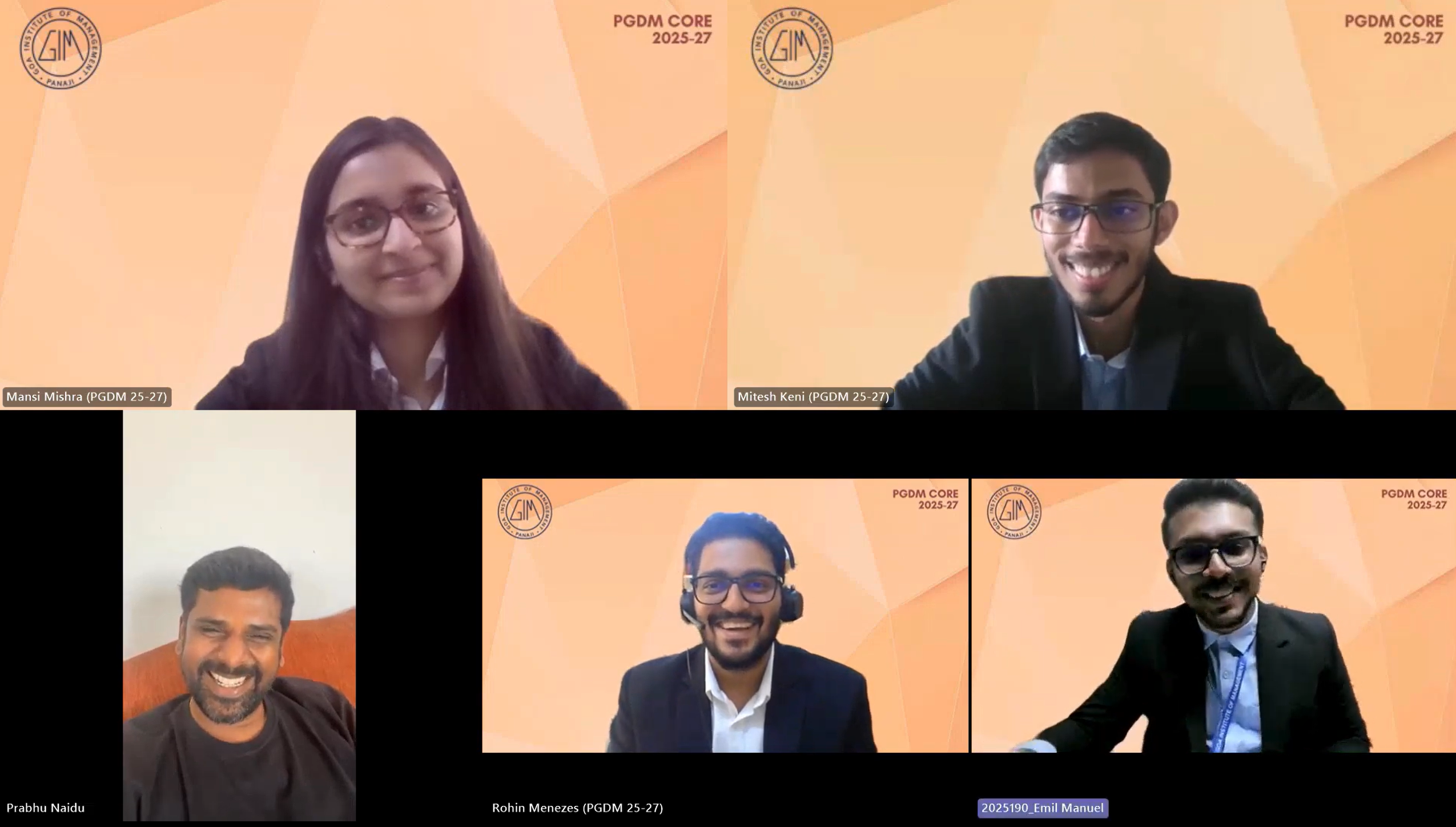

Rohin Menezes

Mansi Mishra

Mitesh Keni
Emil Manuel

Goa Institute of Management

Divya Singhal


Keep this story going! Share below!
The business that we interviewed, Prabhu Naidu Limited, is a sustainable textile enterprise that manufactures eco-friendly cotton and recycled bags as an alternative to plastic while creating large scale livelihood opportunities for rural women. By training and equipping over 8,000 women to stitch the bags from home, Prabhu Naidu Limited combines environmental responsibility with economic empowerment. The company's model directly advances SDG 5 (Gender Equality), SDG 8 (Decent Work and Economic Growth), and SDG 12 (Responsible Consumption and Production) by replacing the plastic waste with sustainable products and creating inclusive income opportunities in rural India.
Prabhu Naidu Limited was founded by entrepreneur Mr. Prabhu Naidu after two life-changing experiences that he experienced in Mumbai which he shared with us. The first was his experience where he witnessed plastic waste blocking water passages leading to flooding and second was seeing truckloads of disposable plastic bags in the local markets. What began in 2010 as an attempt to replace plastic with non-woven bags, he soon transformed it into a deeper sustainability mission when he was shocked to realize that non-woven fabric was also actually plastic based. This turning point led him to pivot toward 100% cotton, compostable canvas bags that genuinely reduce environmental harm. Based in Ichalkaranji, Maharashtra, the company operates as a B2B manufacturer supplying sustainable bags across India and even to international markets.
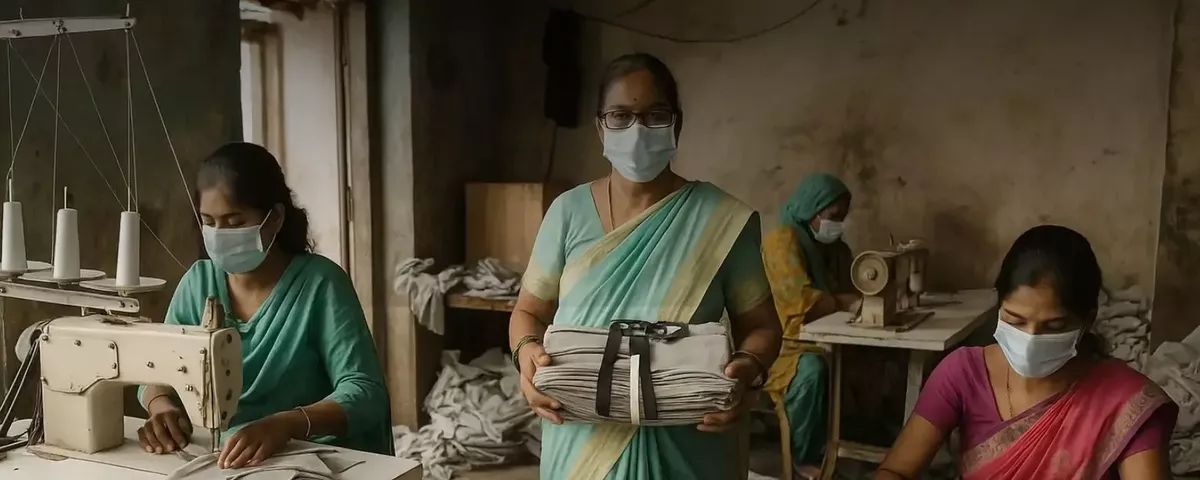
This innovation lies not just in the product, but in the model as well. Instead of relying solely on centralized factory production, the company trains and equips rural women with sewing machines, enabling them to stitch the bags from their own homes. Today, thousands of women across villages in Maharashtra earn supplementary income while also managing their households. By pre-cutting fabric, organizing village leaders, and ensuring steady orders, the company has built a decentralized production ecosystem that combines environmental sustainability with social empowerment.
This solution advances SDG 5 (Gender Equality) by empowering rural women economically, SDG 8 (Decent Work and Economic Growth) by creating inclusive livelihood opportunities, and SDG 12 (Responsible Consumption and Production) by replacing plastic with biodegradable alternatives. By aligning profit with purpose, Prabhu Naidu Limited demonstrates how sustainability can be scalable, ethical, and commercially viable, also contributing to a cleaner environment and a just society.
Mr. Prabhu Naidu’s innovation began with a powerful experience during the Mumbai floods of 2005–06. After completing his office shift, Mr. Naidu was forced to walk home because the public transportation facilities had halted in Mumbai due to all the waterlogging. The streets were flooded, and people were stranded. On the way, he saw an elderly woman and a small child stuck on one side of the road, unable to cross. He noticed that the road was completely submerged in water and began searching for the cause. About 50 meters ahead, he found a pothole where the water should have drained out from. When he pushed his leg inside, he felt something soft and unusual. He then put his hand in and discovered that plastic bags had completely blocked the drainage system. With no tools and driven solely by the intention to help, he bent down into the dirty floodwater and used both hands to pull out a massive bundle of plastic, lifting it to his chest. He carried it nearly 60 to 70 meters to a nearby bridge so the water could finally flow freely. He described that moment as “the first trigger I had in my life.” Months later, when he saw a truck full of plastic bags at a market, the memory returned in full force. He made a firm decision “If I want to do a business, that will be something that will be a replacement for plastic bags.” That emotional experience shaped his purpose and ultimately led to his sustainable innovation.
The overall impact of Prabhu Naidu’s innovation has been environmental, economic, and deeply social. In the short term, we observed that Mr. Naidu’s innovation directly addressed the plastic pollution by replacing plastic carry bags with 100 per cent cotton, compostable tote bags among other sustainable products. In the early years, he helped replace nearly 480 tons of plastic by producing alternative bags. As the business grew, production scaled significantly. During the COVID-19 period, the company manufactured close to 90,000 to 1,00,000 bags per month to support essential supply kits in Kerala. This demonstrated not only operational capacity but also social responsiveness during a crisis. The most meaningful impact, however, has been on rural women. Starting with just four to five women, the enterprise expanded to create employment for more than 8,000 women across nearly 300 villages, particularly in the Kolhapur district. Sewing machines were provided by the company, training was conducted, and women were enabled to work from their own homes. Mr. Naidu shared with us that, in villages, where even ₹3000 per month makes a significant difference, this income created financial independence and stability. Women who were earlier dependent on irregular agricultural work could now earn consistently while managing household responsibilities. In the long term, the impact goes beyond income generation. The initiative promotes financial awareness, dignity of work, and confidence among rural women. The company also scaled financially, crossing ₹106 crores in turnover, proving that sustainability and profitability can coexist. Overall, the innovation has built a model that combines environmental responsibility with women's empowerment and rural development.
The sustainability driven innovation of producing 100% cotton, compostable bags while empowering rural women has significantly strengthened Prabhu Naidu Limited’s business growth, market position, and their operational scalability. As the business shifted from plastic based alternatives to genuinely sustainable cotton products around 2016–2017, it was able to align itself with the rapidly growing global demand for eco-friendly packaging. This shift enabled the company to expand its customer base across India and to international markets as well, including supplying fabrics to global markets such as China and fulfilling large-volume institutional and government-linked orders, such as supplying bags for essential distribution programs in Kerala during the COVID-19 pandemic.
This innovation has also contributed directly to strong financial growth. The company grew from revenues of approximately ₹10 lakh in its early stages to over ₹106 crore in annual revenue by 2023. The decentralized production model, where over 8,000 rural women work from home using distributed sewing machines, has allowed the company to scale production rapidly without heavy investment in centralized infrastructure. This asset-light, community-based model reduced operational costs, increased production flexibility, and improved supply reliability, enabling the company to fulfil large orders quickly and efficiently.
Additionally, the innovation has strengthened employee loyalty, supplier relationships, and brand reputation. Women working with the company experience improved financial independence and wellbeing, resulting in high retention and a stable workforce. The company’s strong sustainability positioning has enhanced trust among customers, distributors, and partners, opening doors to new product lines such as sustainable packaging, eco-friendly consumer products, and international expansion opportunities. This demonstrates that sustainability has not only created social and environmental impact but has also driven significant and sustainable business growth for Prabhu Naidu Limited.
Prabhu Naidu Limited’s innovation model benefits both society and the environment by addressing plastic pollution while creating dignified livelihood opportunities for rural women. After realizing that non-woven bags were also in fact plastic-based, the company shifted to manufacturing 100% cotton, compostable bags. These biodegradable alternatives naturally decompose over time, unlike plastic which persists for decades and clogs drainage systems, landfills, and water bodies. Earlier in its journey, the founder reported replacing approximately 480 tons of plastic through alternative bag distribution. Today, the company continues to scale sustainable packaging solutions across India and international markets, reducing dependence on single-use plastic.
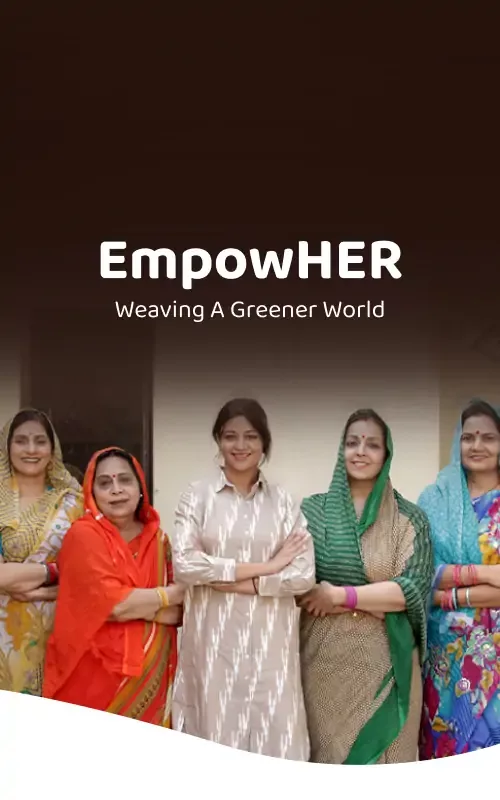
The social impact is also very deeply transformative. Prabhu Naidu Limited has enabled employment for over 8,000 rural women across nearly 300 villages, particularly in Maharashtra. Women are trained, provided sewing machines, and empowered to work from home, allowing them to earn steady income while managing household responsibilities. Even earnings of around ₹3,000 per month significantly strengthen rural household financial security, promote savings habits, and enhance women’s decision-making power within families.
During the COVID-19 pandemic, the company received a bulk order linked to Kerala’s public distribution system. This ensured uninterrupted income for thousands of women during a time when many industries had shut down, while simultaneously supporting essential supply distribution using sustainable packaging.
By integrating environmental responsibility with decentralized women-led employment, Prabhu Naidu Limited demonstrates how business innovation can create measurable ecological benefits and inclusive economic development at scale, aligning strongly with SDGs 5, 8 and 12.
Get stories of positive business innovations from around the world delivered right to your inbox.

Prabhu Naidu Limited is a sustainability-focused manufacturing company that produces eco-friendly cotton and recycled bags. Founded in 2010, the company works to create sustainable livelihoods by upskilling rural women and enabling them to participate in the production process. Through its initiatives, the business integrates environmental responsibility with social impact, supplying high-quality sustainable products to domestic and global markets. The organization aims to empower women, promote sustainable materials, and contribute to community development.