

Mahak Agarwal
Ansh Gupta
Yash Saket
Aman Sharma
Harsh Shankhwalkar
Goa Institute of Management

Divya Singhal


Keep this story going! Share below!
ReCharkha is a Pune-based circular economy enterprise that transforms waste plastic into handcrafted lifestyle products through a low-carbon, artisan-led production process . By upcycling plastic into yarn using traditional charkhas and employing rural women artisans, the business simultaneously reduces landfill waste and generates sustainable livelihoods. This integrated model directly advances SDG 12: Responsible Consumption and Production, SDG 5: Gender Equality, and SDG 8: Decent Work and Economic Growth.
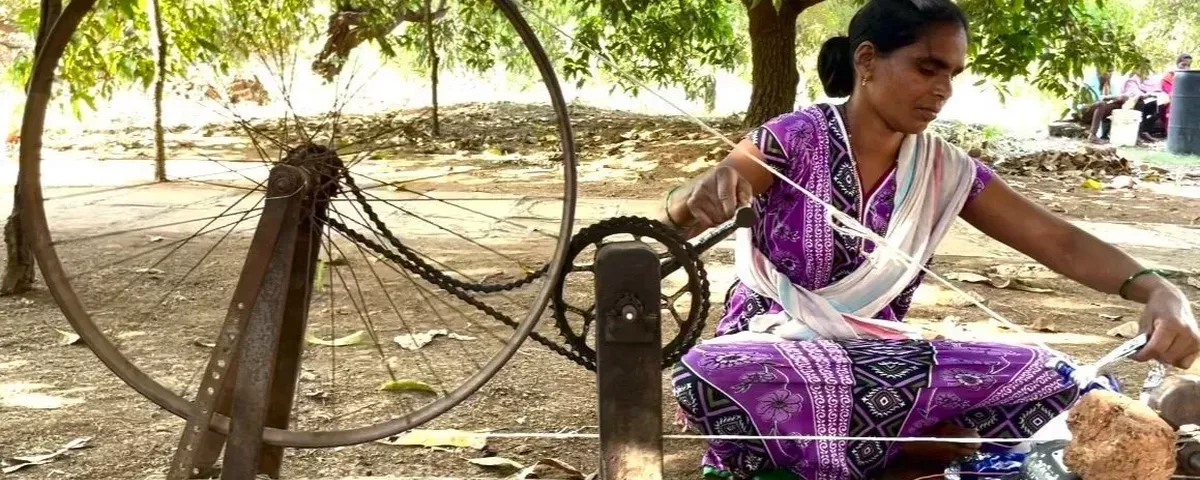
ReCharkha is a Pune-based circular economy enterprise, conceptualized nearly a decade ago (earlier known as Arohana), that addresses the dual challenges of plastic waste and rural unemployment . Operating between Pune and its weaving unit in Bhor, Maharashtra, the organization transforms discarded plastic into handcrafted lifestyle products. At the heart of this model are rural women artisans who lead the weaving and yarn-making processes, making them central, not peripheral to the innovation.
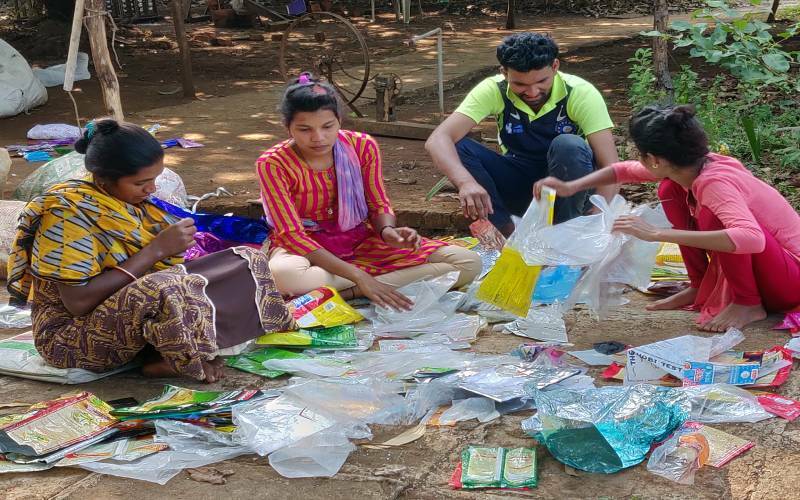
The enterprise’s core innovation is a closed-loop, low-carbon production system. Waste plastic is collected through individuals, corporates, and courier channels, cleaned and segregated, then manually cut and spun into yarn using a traditional charkha. This yarn is woven on handlooms in Bhor and stitched into products in Pune . Customers are encouraged to return products at the end of their lifecycle, reinforcing circularity. By eliminating virgin plastic use and relying on handcrafted production, ReCharkha minimizes environmental impact while preserving traditional skills.
For women artisans, this model provides more than employment, it ensures stable, non-seasonal income in regions where farm labor is uncertain and irregular . Many of these women are single or lack strong financial support systems, and their earnings contribute directly to household stability, children’s education, and long-term economic security. By integrating women into a value-added, sustainability-driven supply chain, ReCharkha advances SDG 12 (Responsible Consumption and Production), SDG 5 (Gender Equality), and SDG 8 (Decent Work and Economic Growth), demonstrating how environmental innovation can simultaneously drive social empowerment.
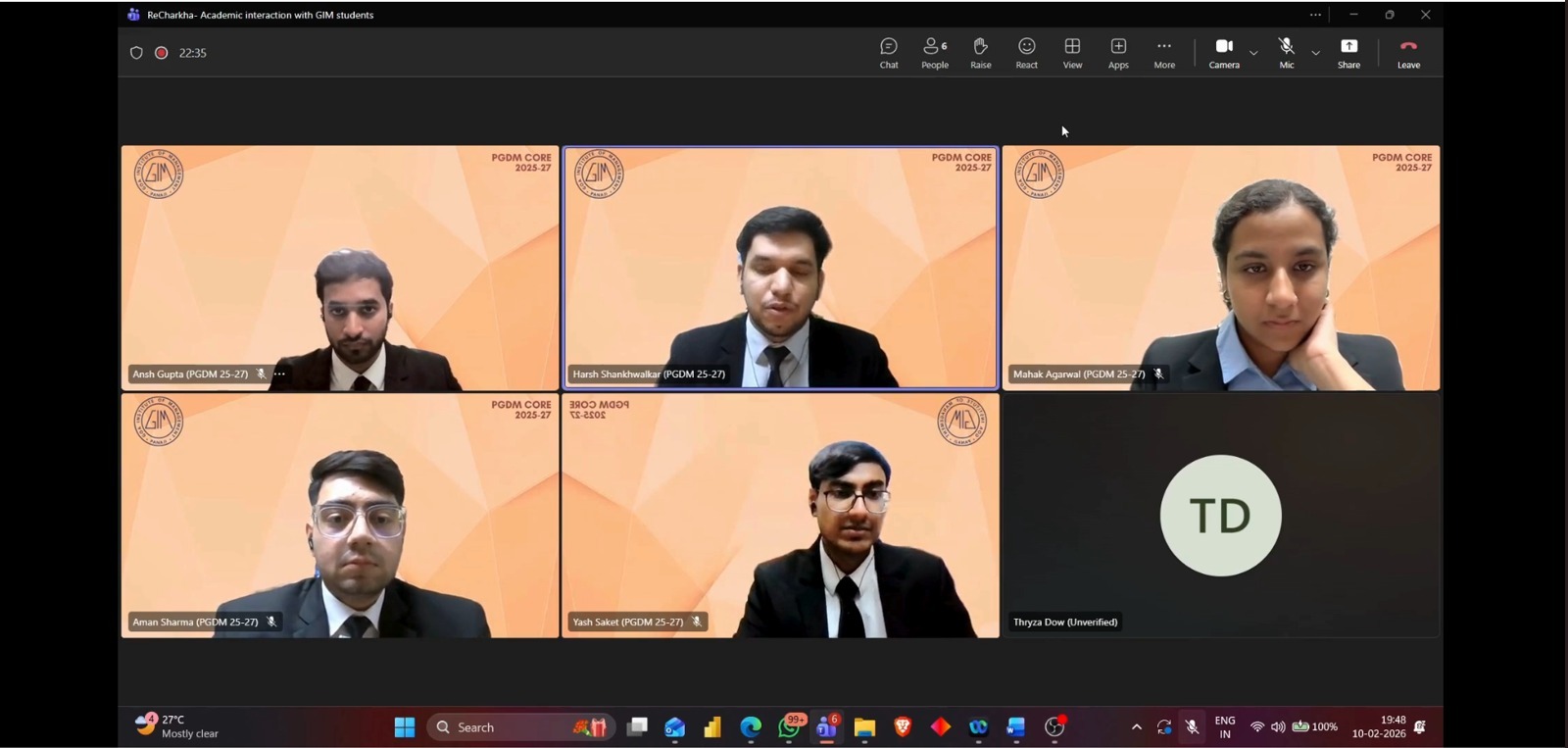
Ms. Thryza Dow’s journey into sustainability was shaped more by professional evolution than by a singular inspirational moment. Reflecting on her transition, she shared candidly, “I wouldn’t say that there is like an inspiring story or epiphany over here. I stumbled upon it. It was a happenstance that I started working with people from the sustainability domain.” Her early consulting role with nonprofit organizations exposed her to impact measurement and capacity-building, and she explained that once she entered the space, she continued “designing programs for organizations… improving the capacities of nonprofits and later startups working in the sustainability domain."
Over time, what kept her in the sector was alignment with purpose-driven enterprises. Speaking about organizational culture at ReCharkha, she emphasized, “Everybody’s passionate about sustainability, and they want to work in an organization that is focusing on sustainability.” This shared commitment reinforces her belief that sustainability must be embedded in systems, not treated as an add-on.
When discussing the impact on women artisans, her reflections revealed what gives meaning to the work. She highlighted that many women rely on ReCharkha for steady income, noting, “There is no guarantee that there would be income coming in every month” in rural farm labor contexts . Although operational demands often take precedence, she acknowledged that the organization is “making a small dent in a very large problem”, a realistic yet hopeful perspective that continues to drive her leadership in scaling impact responsibly.
In the short term, ReCharkha’s innovation delivers measurable environmental and livelihood outcomes. The enterprise has upcycled over 4 million plastic bags and wrappers, generated more than 70,000 livelihood days for rural women artisans, and contributed to saving approximately 218 metric tonnes of CO₂ emissions. These figures provide concrete evidence that the model is not symbolic sustainability but operational impact at scale. Each product sold translates into quantifiable plastic diverted from landfills and documented income generated for artisans, reinforcing accountability through transparent metrics.
For the women artisans, the short-term effect is steady and predictable income in regions where employment is typically seasonal and uncertain. This financial stability supports household expenses, children’s education, and reduced economic vulnerability. In the long term, this consistency builds economic resilience within rural communities, shifting women from irregular farm labor to skilled, value-added production roles within a structured supply chain.
Environmentally, the long-term impact extends beyond waste diversion. By institutionalizing a closed-loop system, where customers are encouraged to return products at end-of-life, the enterprise influences consumption behavior and normalizes circular production. Over nearly a decade of sustained operations, increasing cumulative impact numbers and expanding distribution channels suggest that this innovation has moved beyond experimentation into durable, replicable practice. The evidence lies not only in the metrics but in the continuity and growth of both environmental and social outcomes year after year.
Since the business embedded circularity and women-led production at the core of its model, it has been able to differentiate itself in a highly competitive lifestyle and accessories market. By upcycling plastic into handcrafted products rather than using virgin materials, ReCharkha has created a strong sustainability-driven value proposition that appeals to eco-conscious consumers and corporate partners. This has enabled the business to develop multiple revenue streams, including direct online sales, offline retail, reseller networks across Indian cities, exhibitions, and corporate upcycling partnerships where companies provide plastic waste and purchase finished products in return .
The enterprise transparently tracks and communicates impact metrics such as plastic upcycled and livelihood days generated, and thus has built strong customer trust and repeat patronage. Loyal customers not only repurchase but also contribute plastic and provide product feedback, improving functionality and retention. This alignment between brand values and customer values strengthens long-term relationships and reduces dependence on high marketing budgets, which is especially valuable for a small but growing sustainability enterprise.
Internally, the innovation has created stable employment for rural women artisans and attracted team members who are intrinsically motivated by sustainability. Many employees and interns have transitioned from volunteering roles, indicating strong mission alignment and organizational commitment . As the company scales, it is investing in operational restructuring, system improvements, and team expansion to support growth . Thus, because ReCharkha embedded impact into its business model rather than treating it as a side initiative, it has strengthened revenue channels, customer loyalty, workforce stability, and long-term scalability.
ReCharkha’s innovation benefits both society and the environment by addressing two interconnected challenges: plastic waste accumulation and rural livelihood insecurity. By upcycling post-consumer plastic into durable lifestyle products, the enterprise diverts large volumes of waste from landfills and reduces dependence on virgin plastic production. The reported impact, over 4 million plastic bags and wrappers upcycled and significant CO₂ emissions saved, demonstrates measurable environmental restoration rather than symbolic sustainability. Operating between Pune and its rural weaving unit in Bhor, the organization embeds low-carbon, handcrafted production methods that minimize additional resource extraction while closing the loop through product return initiatives.
Socially, the innovation directly benefits rural women artisans who form the backbone of the production process. In regions where agricultural labor is seasonal and uncertain, ReCharkha provides stable, skill-based employment within a structured supply chain. This steady income supports household expenses, food security, and children’s education, creating economic resilience at the family level. Over tens of thousands of livelihood days generated, the impact extends beyond temporary employment to sustained economic participation.
Beyond individual benefits, the model influences broader consumption behavior. By transparently communicating environmental and livelihood metrics with each product, the enterprise educates customers about responsible consumption and circular production. This not only reduces waste but shifts mindsets toward accountability in purchasing decisions. Over nearly a decade of operations, the cumulative environmental data and continued livelihood generation indicate that the innovation creates durable, systemic impact, restoring ecosystems while strengthening rural communities.
Get stories of positive business innovations from around the world delivered right to your inbox.
Thryza Dow, Head of Business Operations

ReCharkha is a circular economy enterprise that upcycles waste plastic into handcrafted lifestyle and travel products such as tote bags, purses, and home décor items . The collected plastic is cleaned, cut, and spun into yarn using a traditional charkha, woven into fabric on handlooms by rural women artisans near Pune, and then tailored into finished products. Through this model, ReCharkha reduces plastic waste going to landfills while generating sustainable livelihoods for rural women. The organization integrates environmental impact with social empowerment at every stage of its value chain.