


Rhomina Silva

Universidad Anáhuac Puebla
Joel Rico


Keep this story going! Share below!
The X-Chair is a Mexican high-tech company that has developed the world’s first functional wheelchair controlled entirely by a Brain-Computer Interface (BCI), allowing users with motor disabilities to move simply by thinking. As the team states: "It is not just a chair; it is a brain-computer interface that provides independence to those who need it most." This innovation directly addresses SDG 3 and SDG 10 by restoring autonomy and providing an affordable, locally manufactured alternative to expensive foreign medical technology.
Developed in Puebla, Mexico, The X-Chair is a sophisticated interface that decodes neurological signals and translates them into physical movement without the need for manual controls. The system allows the user to navigate their environment using only their cognitive intent. As the team explains: "With your own ability to think, you can direct it forward, to the left, or to the right, and we already have this as a functional prototype."
What makes this solution unique for a better world is its focus on accessibility and scalability. The company is currently developing the X-Module, a universal adapter designed to "democratize independence" by allowing any conventional wheelchair to be converted into a mind-controlled device. By manufacturing in Puebla, the team has optimized the hardware to be 20% more affordable than international competitors, ensuring that cutting-edge innovation isn't a luxury, but a reachable standard for the many, aligning with SDG 9.
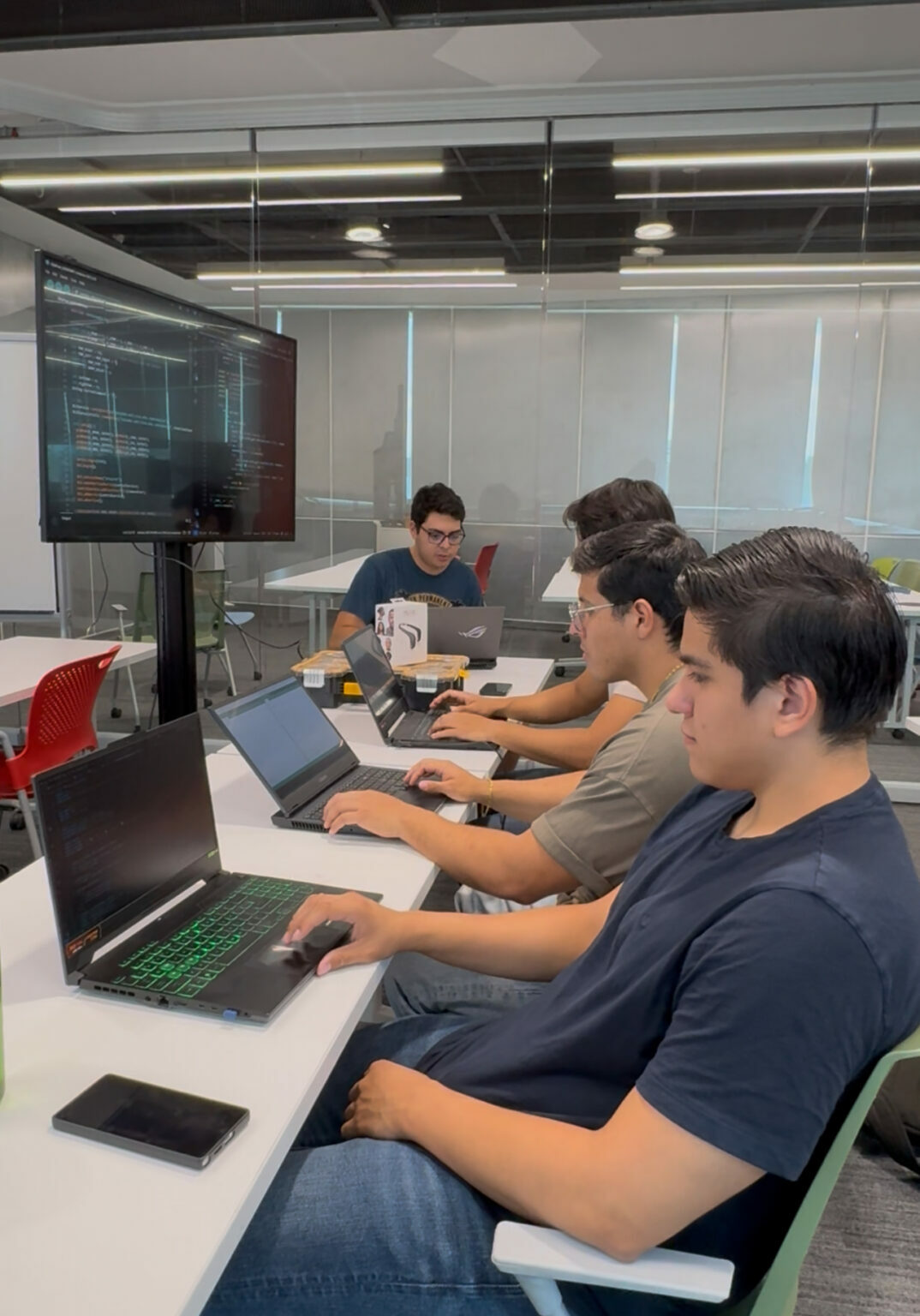
The inspiration for The X-Chair was born from a mix of academic defiance and deep human empathy. Founders Daniel Munguía and Eduardo Zárate, both mechatronics engineers, reached a turning point during their graduation project. They decided to take a leap of faith: "Why not risk it and create our own project? Why not make a wheelchair like the one in X-Men?" This bold question shifted their focus from a simple academic requirement to a mission of global significance.
The true heart of the project came from observing their professor, Dr. Jones, whose wife, Edith, had to push his wheelchair every day so he could teach his classes. This daily reality of total dependency combined with Eduardo’s personal experience with disability in his close circle transformed the technology into a moral imperative. They realized that while joysticks existed, they weren't enough for those with severe motor limitations.
CFO Joserhamón Silva joined the team moved by the raw emotion of users at institutions like Cáritas, where he saw firsthand the need for a real change. As Joserhamón shared: “We aren't just building a wheelchair; we are in love with the challenge of restoring people’s independence.” This philosophy of being "in love with the problem, not just the solution" ensures that every technical breakthrough is rooted in the human need for dignity and freedom.
The immediate impact of The X-Chair is the restoration of human dignity through autonomous movement. In the short term, field tests conducted with organizations like Cáritas in Puebla have provided qualitative evidence of this transformation. Users who previously relied entirely on others to navigate their surroundings experienced a profound psychological shift upon using the mind-controlled interface. As CFO Joserhamón Silva recalls: “I remember very well Toñita, Pedro, and José Pablo... they were thrilled to test something never seen before: a wheelchair that moves with the mind.” This emotional breakthrough serves as primary evidence that the technology successfully bridges the gap between physical limitation and personal agency.
In the long term, the innovation generates a "ripple effect" that benefits the user’s entire support network. By fostering self-sufficiency, The X-Chair significantly reduces the logistical and emotional burden on caregivers and families. As the team emphasizes: “We don't just focus on the affected person, but also on their entire environment.” This long-term autonomy allows both the user and their family members to reintegrate into social and economic activities, contributing to a more inclusive community. The evidence of this impact lies in the successful transition of the prototype into a functional platform capable of serving diverse age groups, from young students to the elderly.
Furthermore, the strategic development of the X-Module as a universal adapter ensures that this impact is scalable and sustainable. By allowing any conventional wheelchair to be upgraded, the company is effectively "democratizing independence" on a global scale. This shift moves away from the idea of disability as a state of total dependency and towards a future of self-managed mobility. Ultimately, the innovation fulfills its promise as a “comprehensive platform that provides independence and freedom,” proving that when technology is human-centric, it can fundamentally alter the social landscape for people with motor disabilities.
By developing a functional, mind-controlled prototype that is 20% more cost-effective than foreign alternatives, the business has opened significant investment and market opportunities in Mexico's medical technology sector. By manufacturing locally in Puebla, the company has avoided costly import tariffs and international shipping costs, creating a sustainable revenue model that balances social impact with financial health. The creation of the X-Module as a universal adapter has further expanded its market reach, allowing them to offer a "conversion service" rather than just a high-cost hardware product, which lowers the barrier to entry for new customers.
Furthermore, the innovation has fostered a high-performance culture and increased employee well-being. For leaders like Joserhamón Silva, the business provides a platform for continuous growth: "My philosophy is to never lose, because what I invest is compound interest in knowledge for my next step." This purpose-driven model has improved team retention and attracted top engineering talent who are motivated by the company’s ethical mission. By staying "in love with the problem," the team has cultivated a unique brand identity that resonates with partners and investors alike.
Ultimately, being a pioneer in Brain-Computer Interface (BCI) technology has positioned the company as a "point of the spear" in Latin American robotics. This reputation has opened doors to strategic alliances with health institutions and NGOs, proving that a social enterprise can be both a competitive market player and a beacon of innovation. The business benefits not just from the sale of a product, but from the creation of a comprehensive platform that is scalable, adaptable, and deeply rooted in a philosophy of ethical participation and global expansion.
The X-Chair benefits society by directly tackling the systemic marginalization of people with severe motor disabilities. By providing an affordable and locally-maintained solution, it ensures that families in emerging economies do not have to choose between financial stability and their loved one's mobility. This promotes social inclusion and allows individuals to participate more actively in their communities, schools, and workplaces. As the team states: “Everything starts with one person, a group, a community... so why not be pioneers in this social aid?” This pioneer spirit fosters a more equitable landscape where physical limitations no longer dictate a person’s potential for contribution.
From an environmental and logistical perspective, the focus on local manufacturing in Puebla significantly reduces the carbon footprint associated with shipping heavy medical equipment and specialized parts from overseas. By establishing a local supply chain, the company minimizes the environmental cost of long-distance logistics. Furthermore, the development of the X-Module promotes a circular economy approach to assistive technology. Instead of discarding a perfectly functional manual wheelchair to purchase a new electric one, users can simply upgrade their existing equipment. This "upgrade-not-replace" philosophy reduces industrial waste and maximizes the lifecycle of existing medical devices.
Ultimately, the innovation serves as a “comprehensive platform that provides independence and freedom to a person and their family.” It transforms the domestic environment, allowing caregivers—who are often women or elderly relatives—to reclaim their own time and autonomy. By aligning cutting-edge Brain-Computer Interface (BCI) technology with the Sustainable Development Goals, the company proves that a business can be a powerful engine for both social justice and environmental responsibility, ensuring that the future of mobility is inclusive, sustainable, and human-centric.
Get stories of positive business innovations from around the world delivered right to your inbox.

The X-Chair is a high-tech medical and assistive technology company based in Puebla, Mexico, dedicated to restoring autonomy to individuals with motor disabilities. The firm specializes in developing Brain-Computer Interface (BCI) solutions that transform neurological signals into physical movement, eliminating the need for manual or traditional controls.