

Ryan Calvache
Kaleb Conger
Saahil Thoppay
Arnav Reddy
Kanishk Neerumalla

Case Western Reserve University - Weatherhead School of Management

Megan Buchter


Keep this story going! Share below!
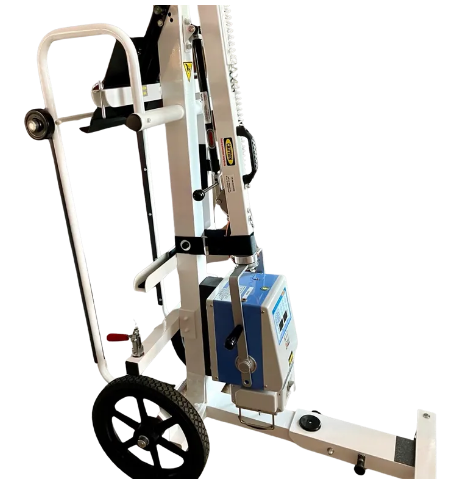
Quantum Leap Imaging strives to make X-ray screenings more accessible for patients by designing and manufacturing portable X-ray devices that can be used in various settings besides hospitals. The company designs portable X-ray machines that are lightweight, easy to carry, and simple to set up. This helps address UN SDG 3: Good Health and Well-being by improving access to diagnostic care. These X-ray machines can be used in home settings or in places like nursing homes, where elderly residents can receive frequent screenings.
Quantum Leap Imaging provides portable X-ray machines that are lighter than industry standards and battery-powered. The battery-powered design prevents staff from having to search for a compatible electrical outlet in the patient’s home. This is especially helpful, as patients may have difficulty moving furniture to access outlets, and some homes may not even have outlets that support the machine. Chris also told us that due to the X-ray’s high power draw, operators would frequently have to reset circuit breakers in the patient’s home and even assist in restarting the device after power surges. This wasted a significant amount of time and money for healthcare providers trying to serve as many patients as possible.
The lightweight design allows a much broader range of staff to operate the machine. With shifting demographics in healthcare, having equipment that can be operated by more people is incredibly important. By ensuring the machine remains lightweight, Quantum Leap Imaging makes it easier to use. One specific example the founder, Chris, shared was the rise in women X-ray operators. In previous years, men more often operated at-home X-ray machines, but with shifting demographics, a need arose for lighter equipment. This directly contributes to UN SDG 3: Good Health and Well-being, as it improves the at-home healthcare experience for both patients and staff.
Chris Anderson founded this business with his wife, Megan Anderson, after working in the industry for over 20 years. Chris previously worked at a similar company that manufactured and sold portable healthcare products and found that their products and practices were quite antiquated. With the overall rise in the healthcare industry due to the large size of the baby boomer generation, and following a falling out with his partner at the previous company, Chris decided to start his own business, Quantum Leap Imaging, which would combine modern technology to advance the healthcare industry. Chris wanted to solve all the pain points he observed customers facing in his previous position: “It really came down to the mentality and the thought process of there’s a better way to deliver solutions to these providers.”
Most of Quantum Leap Imaging’s competitors still retain their legacy methods, as they can use their large client base and manufacturing pool to outprice any smaller innovative company. While this led to customer complaints, many buyers could do nothing, as they had no alternative. Chris also mentioned that many customers may not actually know what could be improved in the portable equipment process, so he spends a lot of time identifying these pain points, all the way from the equipment to the software.
Chris launched the company and was able to easily find customers due to his close relationships within the industry and strong word of mouth. He also regularly stays in contact with his customers to ensure that any feedback they may have is incorporated into the design and iteration process.
Innovations developed by Quantum Leap Imaging (QLI) have produced meaningful impacts for healthcare, entrepreneurial, and social environments, particularly for healthcare providers, patients, and technicians who rely on portable imaging services, especially those struggling to access traditional imaging. QLI introduced lightweight, battery-powered portable X-ray machines, designed for easy transport, compact carrying, and independent operation in healthcare settings—far superior to conventional systems. QLI X-ray and imaging models weigh significantly less than traditional equipment due to their state-of-the-art LG flat panel detectors, allowing technicians to perform imaging in diverse settings such as nursing homes, prisons, and private residences, where bedbound, senior, or immobile patients may reside. QLI innovates by simplifying existing interfaces, reducing setup times required to perform imaging, and assisting healthcare providers in delivering faster, more efficient diagnostics.
In the short term, QLI’s innovations transformed workflows for portable imaging providers. Technicians experienced far less physical strain due to the machines’ lightweight body (~44.5 pounds compared to industry standards) and required fewer steps to operate. QLI also implemented faster setup times and simpler interfaces, enabling a diverse workforce to operate the machines more efficiently, improving quality of care, speed of service delivery, and overall efficacy. Chris Anderson notes that these “operational improvements are quite important as the US has been facing rapidly aging populations increasingly relying on home-based health alternatives.”
The long-term impact of QLI’s innovations is evident in industry adoption and growing demand. Evidence of this impact includes repeat customers, referrals from existing client bases, and measurable increases in product satisfaction and performance. By reducing barriers to access and improving operational efficiency, QLI’s portable X-ray machines contribute to enhanced healthcare delivery, particularly for patients who previously had limited access to imaging services.
By actively engaging with its clients, QLI was able to identify unmet needs in the high-quality portable X-ray market. This approach not only helped the company retain customers but also generated strong word-of-mouth, positioning QLI as a company committed to quality and client satisfaction.
QLI has also grown by adapting its business strategy beyond just portable X-rays. Their first customer initially sought a completely different product, and QLI was able to make a slight course correction to meet that need. This flexibility enabled them to secure large early customers, providing funding and momentum for further product development.
Since its founding, QLI has focused on steady, sustainable growth rather than chasing rapid funding rounds typical of Silicon Valley startups. The company emphasizes meeting customer needs and staying attuned to market trends to guide expansion. Currently, QLI introduces new products primarily in response to customer requests, ensuring there is existing demand before investing in research and development. Most of these products are significant improvements on existing technology, allowing QLI to deliver solutions faster than larger competitors that may need to develop products from scratch.
Quantum Leap Imaging’s societal benefits stem from making diagnostic care more accessible to individuals who cannot easily reach hospitals or imaging centers. QLI’s primary innovation—the lightweight, battery-powered portable imaging technologies—is widely used by mobile imaging providers serving nursing homes, prisons, and homebound patients. This is particularly important given the US’s rapidly aging population and growing home-based care needs. By bringing vital diagnostic resources directly to these populations, QLI enables faster diagnoses and treatments in the very places where individuals already receive care.
Additionally, QLI’s innovations benefit healthcare workers and service providers by reducing the weight and bulk of traditional portable X-ray machines. QLI’s machines, weighing approximately 44.5 pounds, reportedly reduce physical strain for technicians, making imaging processes easier for health providers. This improvement enhances workflow, lowers workplace stress, and increases provider efficiency. Over time, it can support employee retention and contribute to higher-quality care, thanks to equipment designed around the daily needs of healthcare professionals.
QLI also addresses environmental considerations. Because the equipment is smaller and more compact, providers can transport it in more efficient vehicles, better aligning with EPA regulations. Chris Anderson also notes that the reduced size supports the use of electric vehicles for bulk-order transport, further demonstrating the innovation’s environmental impact. Ultimately, QLI’s solutions create meaningful positive effects on both society and the environment through improved healthcare accessibility, provider wellbeing, and sustainable practices.
Get stories of positive business innovations from around the world delivered right to your inbox.

Quantum Leap Imaging strives to make X-ray screenings more accessible for patients by designing and manufacturing portable X-ray devices that can be used in various settings besides hospitals. The main problem with regular X-ray machines is that they are too bulky and require a lot of power to operate. Quantum Leap Imaging solves this issue by creating portable X-ray machines that are easy to carry and easy to set up, making them a viable option for screening in settings like nursing homes.