

Juan Manuel San Martin
Gonzalo Rios Noriega

Janelis Davila
Marianna Sanchez
Vallentah Nyangasi
Wamuyu Abigael Nyambura

Universidad de Navarra

Dominican University

Kenyatta University

Isabel Rodriguez Tejedo

Anjali Chaudhry
Mary Ragui


Keep this story going! Share below!
Litec contributes actively to several United Nations Sustainable Development Goals (SDGs). The company constantly introduces innovative technologies for the sustainable development of the industry, meeting Goal 9 (Industry, Innovation, and Infrastructure). Additionally, these products that they provide and the company's sustainable practices align with Goals 12 (Responsible Consumption and Production) and 13 (Climate Action), as they aim to reduce waste and minimize the use of natural resources, ultimately helping the environment.
Litec is deeply concerned about the environmental impacts that are happening globally; that is why the company is utilizing and offering innovative technologies from around the world designed to reduce waste and minimize natural resources to protect the environment. Litec is instrumental in the introduction of precision agriculture machines, such as professional self-feeding pruning shredders designed to enhance pruning efficiency or specialized tractors and harvest platforms for narrow spaces and uneven land. These mechanical solutions improve harvesting, accuracy, and safety and are suited especially for Peru’s challenging terrain. Showing how innovation can increase efficiency and sustainable development in an industry meeting Goal 9.
Litec offers a wide range of solutions that reduce waste and effectively use resources like water, land, and nutrients to meet Goal 12. For instance, pushing the use of coconut fiber instead of peat, as coconut fiber is a renewable by-product from agriculture that is repurposed to enhance crop yield. Coconut fiber has a lower environmental impact and has better resistance to decomposition than peat, reducing agricultural waste. Not only do they offer solutions to their clients, but they also have company campaigns to reduce paper use and replace it with a digital ecosystem. As well as reducing employee travel through digital media, they are actively working on reducing their operational footprint.
Through all the initiatives the company is making, they are helping the environment and trying to reduce climate change, appealing to Goal 13. Litec has another sustainable campaign to cut its energy consumption across its offices. An initiative that aims to lower greenhouse emissions.
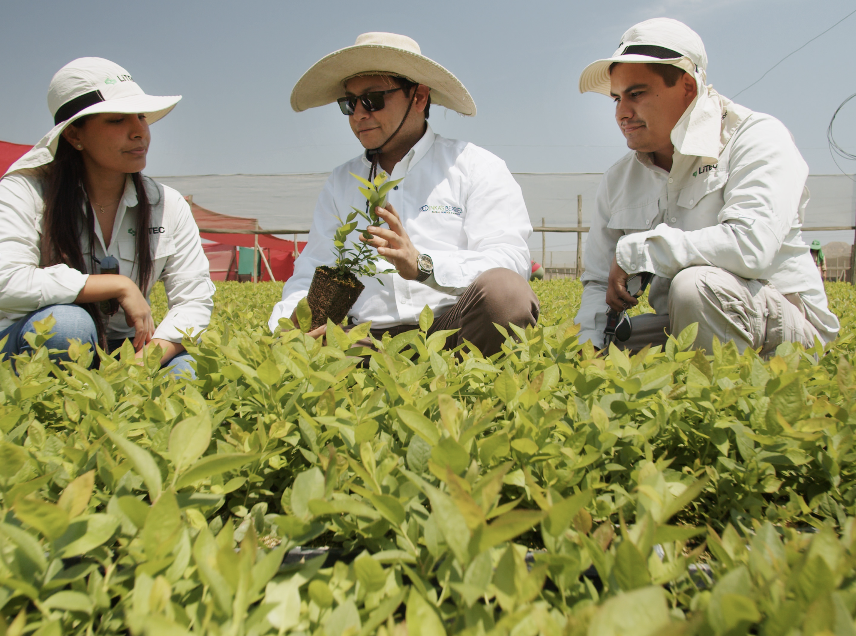
Juan Carlos Li started as a visionary entrepreneur in the growing industry of agriculture in Peru; he saw potential in an industry that would grow twentyfold in the next 20 years. He had a vision to help and ensure that farmers and businesses could compete globally. These industries faced significant problems because of the unique challenges the Peruvian landscape presents for agriculture and recurring issues of water scarcity. These opportunities, enhanced by his desire to support the backbone of the Peruvian economy, were the reasons that drove Juan Carlos to create an international network, allowing Peruvian agriculture access to world-class machinery with the latest innovations.
“Droppers are one of the biggest innovations to maximize water use.” Juan Carlos is especially keen on the idea that innovation doesn't always mean the latest technology or machinery—a simple idea, such as droppers, can have a huge impact on increasing efficiency. This irrigation system delivers the nutrients plants need—water and chemicals —in the form of drops, drastically reducing water consumption. Droppers are the perfect example of how innovation drives positive change and problem-solving.
Juan Carlos built Litec not only as a business but also as a constant partner of the agricultural companies that trust him. That is why Litec opened its after-sales services, offering everything from maintenance to specialized spare parts to prolong the product's lifetime. This integral approach to business not only builds a web of loyalty with its customers but also helps to reduce unnecessary waste.
Litec's innovation in the industry has changed the Peruvian agricultural system's efficiency and overall productivity hand in hand with sustainable practices. Through the introduction of energy-efficient machinery, eco-friendly substrates, and optimized packaging, the company has positioned itself as a key player in the sustainable agriculture machinery market. For instance, Litec's new form of packaging, which reduces plastic usage, has enabled producers to store larger quantities of agricultural goods with fewer packaging materials, successfully reducing plastic in the industry while maintaining product quality for optimal export.
Moreover, the induction of coconut fiber substrate by Litec as a substitute for its environmentally harmful cousin, peat, has initiated an eco-friendly trend in the usage of substrates to improve soil quality, thus reducing the environmental footprint that agricultural companies used to leave behind.
Internally, Litec has implemented many sustainable measures in day-to-day operations and in customer relations. The company has been transitioning into a fully digitalized system, effectively reducing paper consumption throughout the office. Furthermore, new routes have been introduced to the delivery team to reduce distance in efforts to lower fuel consumption and effectively reduce the environmental footprint it might leave behind.
Everything started with Juan Carlos Li, founder and CEO of Litec. After completing a specialization in Almería, Spain—a city full of innovation and technology, with the highest density of greenhouses per square meter in the world—he noticed that the Peruvian agricultural industry had significant growth potential through innovative technology. Given the challenging terrain, he realized that for the sector to flourish worldwide, it needed modernization and technological innovation to overcome harsh landscapes. Drawing on his experiences abroad, he decided to import anti-aphid mesh from Israel when Peru was just beginning the cultivation of paprika.
These initial successes led him to expand his portfolio to include other tools and materials necessary for the sector’s growth. In this way, Litec rode and led the wave of Peru’s agricultural evolution. Innovation has always been a key factor in Litec’s success, as the company is constantly striving to bring the latest products and technologies to the market, building a strong network of international relationships. Revolutionizing the traditional market where agriculture only used peat, Litec introduced coconut fiber imported from Brazil, which offers many more benefits compared to peat.
In 2009, Juan Carlos had the vision to add machinery to his portfolio, representing a Spanish atomizer brand. This move created significant opportunities for additional commercial activities such as technical services and machinery maintenance. After 20 years in the market, Juan Carlos recognizes that challenges are always evolving, such as new exporting regulations and the associated costs for his clients. Nevertheless, he assures that as a company with innovation in its DNA, Litec views these challenges as opportunities for growth and for producing the highest quality products.
The positive environmental impacts Litec makes align with larger sustainability benefits. The industry's commitment to implement alternative sustainable methods, such as precision dropping irrigation systems or eco-friendly substrates such as coconut fiber instead of the traditional peat, boosts efficiency, reduces resources needed, and preserves biodiversity. As well as the initiative for after-sales services, it enhances and prolongs products' lifetime, reducing overall waste and the need for constant manufacturing. These efforts, together with the help of farmers and agricultural companies, promote a sustainability culture in this industry, like reducing emissions and promoting water efficiency. Hence, supporting climate resilience and aligning with the Sustainable Development Goals.
Moreover, Litec’s role in the industry has made a massive impact on the exponential international growth. Creating thousands of jobs and making agriculture, which has changed lives. Nowadays, the agricultural industry in the country is one of the biggest, and Litec was part of that evolution that made Peru known worldwide. Peru is now the largest exporter of blueberries in the world, exporting its products to North America, Europe, and even Asia. To become what it is, it had to face several challenges through innovative technology and products, and Litec was a key player in providing that service.
This reflects that sustainable practices and innovation are able to drive economic growth in the whole country while still preserving the environment and promoting social well-being.
Get stories of positive business innovations from around the world delivered right to your inbox.
Juan Carlos Li, CEO

An industry worth 12 billion USD (2024), with a wide reach from North America to Asia, that puts food on millions of tables. Peru’s agriculture industry is not only one of the largest exporters in the world but also one of the toughest environments to work in. Ranging from dry deserts to high mountains, innovation has been key to placing Peru at the top of the industry. A company that has made this possible is Litec. With over 20 years in the business, Litec has provided a broad portfolio of the most innovative technologies of the moment; for example, anti-aphid nets, specialized trays, coconut fibers, and mechanized machines to improve efficiency, reduce waste, and support the harvest of specialized crops. Through these key pillars, the company has positioned itself at the top for agro-solutions in the country and has formed strong international and local alliances to revolutionize agriculture in Peru.