

Arzoo Sattar

Loyola Marymount University
Jeff Thies


Keep this story going! Share below!
Help Us Green is a social enterprise that transforms discarded temple flowers into eco-friendly products such as incense sticks through a circular economy model. The innovation addresses both environmental pollution from floral waste and social inequality by creating dignified employment for women from underserved communities. The model directly supports UN Sustainable Development Goals including Responsible Consumption and Production and Decent Work and Economic Growth.
Help Us Green was founded in 2015 by Karan Rastogi to address the growing environmental issue of floral waste generated in Indian temples. In many religious spaces, flowers offered during worship are discarded into rivers or landfills, contributing to pollution and environmental degradation. After witnessing this contradiction firsthand, Rastogi began questioning how something considered sacred could end up harming the environment. As he put it, “A place of worship has to be clean.”
Rather than attempting to change deeply rooted religious practices, the company built a solution around them. “We did not want to change how people offer flowers. We wanted to build a system around what already exists,” he explained. Help Us Green collects discarded flowers from temples, weddings, and residential communities, then cleans, dries, and processes them into charcoal-free incense and other biodegradable products.
What makes this model innovative is its dual-impact design. Environmentally, it diverts large volumes of waste from rivers and landfills through a circular production system. At the same time, it creates structured employment for women from underserved communities who are involved in sorting, processing, and manufacturing. Rastogi emphasized that sustainability must work across all dimensions, noting that it needs to “sustain the business, sustain livelihoods, and sustain the planet.” By embedding livelihood generation directly into the production process, the innovation operates as both a waste management solution and a platform for social empowerment.
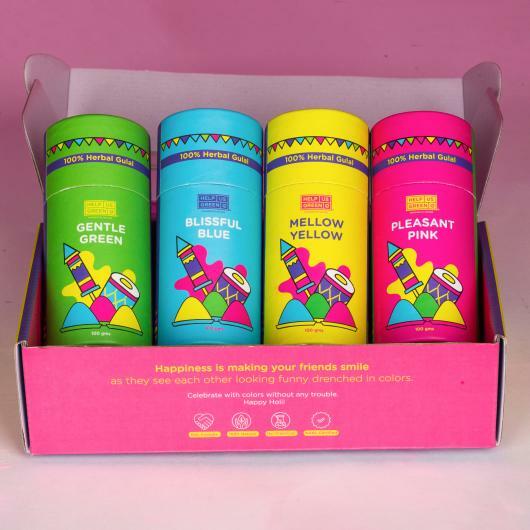
The idea for Help Us Green emerged from Karan Rastogi’s personal experience visiting a temple in Kanpur. During these visits, he noticed large amounts of floral waste being discarded in ways that contradicted the purpose of a place meant for peace and cleanliness.
He recalled, “When I went to the temple, I saw that the floral waste was dumped in a corner, unattended… cows were eating flowers along with plastic.” This moment highlighted the environmental consequences of an everyday religious practice and became the starting point for questioning how the system could be improved. He further reflected on this contradiction, stating, “A place of worship has to be clean.”
The idea was further shaped during his master’s studies at Warwick Business School, where he was exposed to sustainability practices adopted by global corporations. He recognized that while large companies were beginning to integrate sustainability into their operations, similar approaches were not widely implemented in India at the time.
Early experimentation included composting, but this proved to be economically unviable at scale. As Rastogi noted, “We realized very quickly that if the model is not financially sustainable, it cannot survive in the long run.” This led to the development of incense-based products, which aligned more closely with everyday consumer use and created a viable revenue stream. The inspiration for the business was therefore shaped not only by observation, but by continuous testing of what could work both environmentally and economically.
The impact of Help Us Green extends across environmental, social, and generational levels, with each dimension reinforcing the other.
Environmentally, the company reduces the volume of floral waste that would otherwise be dumped into rivers or left in open landfills. By redirecting this waste into production, the model contributes to cleaner ecosystems and promotes more responsible consumption practices. This shift transforms what was previously an environmental burden into a usable resource within a circular system.This includes the consistent diversion of large volumes of temple waste on a daily basis, reducing pressure on local waste systems and waterways.
Socially, the innovation creates stable employment opportunities for women from underserved communities. These roles provide income, safer working conditions, and a sense of dignity. As Rastogi noted, “If you give them a clean place of work and meet all the basic requirements, they are ready to put 120 percent rather than 100 percent.” This reflects how improved working environments directly influence both productivity and well-being.
The impact becomes even more significant at the generational level. “The children are learning from their mothers,” Rastogi explained, describing how consistent income and exposure to structured work are shaping future aspirations. Over time, this has translated into increased access to education and new career pathways for employees’ children, including entry into highly competitive institutions. While the short-term outcomes include income generation and improved quality of life, the long-term effects are visible in shifting family dynamics, financial independence, and expanded opportunities for the next generation.
The innovation has also created strong advantages for the business by enabling differentiation, market expansion, and long-term positioning.
By transforming waste into eco-friendly products, Help Us Green has built a unique value proposition within the incense and wellness market. While domestic markets in India remain price-sensitive, the company has strategically expanded into international markets where sustainability carries greater perceived value. As Rastogi explained, “The people abroad, like the US, UK, and Europe, place a lot more value on this.”
This shift has directly increased the perceived value of the product, allowing the company to command higher price points and improve margins compared to the domestic market. In these markets, consumers are more willing to pay premium prices for products that align with ethical sourcing and environmental responsibility, creating stronger margins and brand equity.
In addition, the company has diversified its growth strategy through B2B partnerships, including private labeling for international brands. This enables scale without relying entirely on direct-to-consumer awareness in every market. At the same time, maintaining a measured approach to external funding has allowed the company to retain control over its mission and long-term direction. As a result, the innovation supports both financial sustainability and the preservation of core values.
The broader significance of this innovation lies in how it redefines waste as a resource within cultural systems that traditionally did not account for environmental consequences. By introducing a structured collection and processing model, Help Us Green creates a replicable framework for managing religious and community-based waste at scale.
Environmentally, this shifts disposal practices away from unmanaged dumping toward circular reuse, reducing pollution at the source rather than treating it afterward. The model also encourages cleaner production by replacing synthetic incense alternatives with biodegradable inputs.
Socially, the innovation contributes to longer-term structural change by integrating women into formalized work systems. Beyond income, this exposure builds skills, financial awareness, and confidence that extend beyond the workplace. As participation becomes normalized, it gradually reshapes perceptions of women’s roles within households and communities.
By operating at the intersection of culture, environment, and employment, the innovation demonstrates how sustainable solutions can be embedded into existing social behaviors rather than imposed externally.
Get stories of positive business innovations from around the world delivered right to your inbox.
Karan Rastogi, Founder
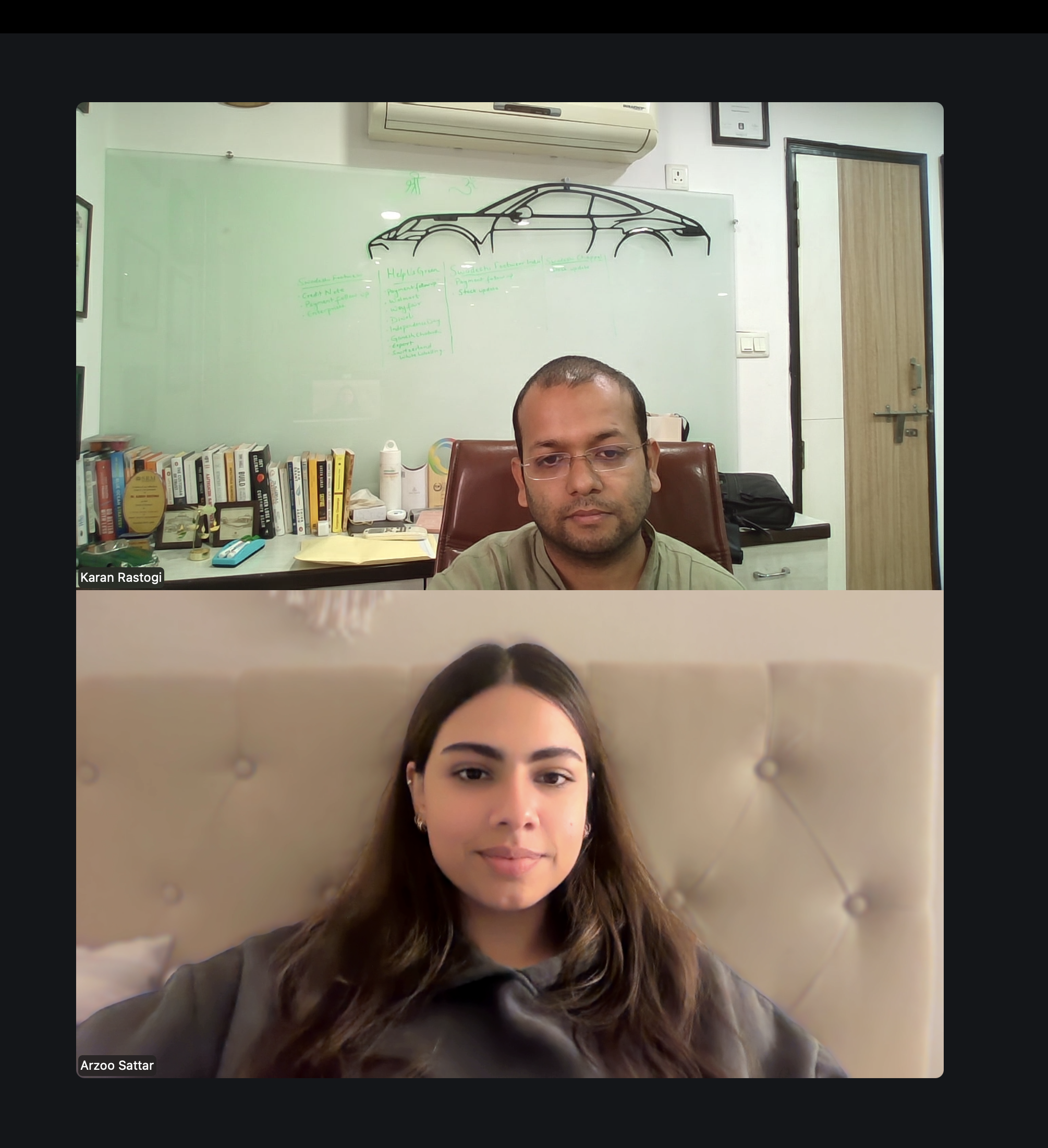
Help Us Green is a social enterprise based in India that transforms floral waste from temples into sustainable products such as incense sticks and organic materials. The company operates on a circular economy model that prevents religious floral waste from polluting rivers and landfills. Alongside its environmental mission, it creates employment opportunities for women from underserved communities, combining sustainability with social impact.