

Dominic Valenzuela
Sam Szczepanski
darleny gomez
Luke Ayaz

Fairleigh Dickinson University (FDU)

Aixa Ritz


Keep this story going! Share below!
Swintec Corporation produces durable electronic and transparent typewriters that provide secure, reliable writing tools for environments where computers are not permitted, such as correctional facilities. Their products enable individuals to complete educational work, legal documents, and personal communication, helping expand access to learning and self-advocacy. By offering long-lasting, repairable machines that reduce the need for frequent electronic replacement, the company also supports SDG 4: Quality Education, SDG 10: Reduced Inequalities, and SDG 12: Responsible Consumption and Production.
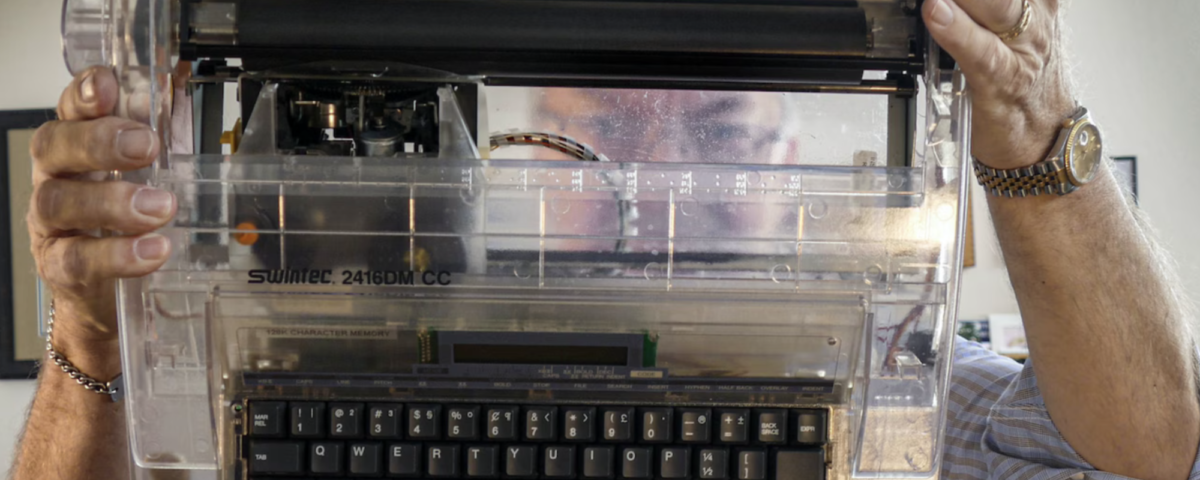
Swintec Corporation has developed and produced a specialized line of transparent electronic typewriters designed primarily for use in secure environments such as correctional facilities. These machines were created in response to strict security requirements in prisons, where computers and standard electronics are often prohibited due to concerns about storage, internet access, and contraband concealment. By engineering a clear, tamper-resistant casing and maintaining a simple, durable design, Swintec created a solution that allows institutions to safely provide writing technology without compromising security. This innovation emerged as demand grew from correctional systems across the United States for tools that could support education and communication programs while still meeting safety regulations.
The innovation works by balancing access and restriction: incarcerated individuals are given the ability to type assignments, letters, and legal documents, while institutions retain full visibility and control over the device. These typewriters are widely distributed throughout correctional facilities in the U.S. and have become a standard tool in many prison education and rehabilitation programs. This makes Swintec’s solution both practical and scalable, as it fits within existing security infrastructure without requiring expensive technological upgrades.
This innovation directly supports SDG 4: Quality Education, by enabling continued learning and skill development, and SDG 10: Reduced Inequalities, by providing access to communication tools for a population with limited technological access. It also contributes to SDG 12: Responsible Consumption and Production through the production of long-lasting, repairable machines that reduce electronic waste and promote more sustainable use of technology.
The president of Swintec, Dominic Vespia, was inspired by the challenge of keeping a traditional technology relevant in a modern world dominated by computers. Noelle stated that "He has often emphasized the importance of persistence and serving unique markets that are often overlooked by larger companies." She explained, “What inspired him most was not following trends, but finding value in tools that still serve a real purpose.” This mindset helped guide Swintec’s focus on producing durable typewriters and specialized equipment for institutions like schools and correctional facilities.
Vespia has also been motivated by the idea of access and fairness. It was noted by Noelle, “Even as technology advanced, he saw a need for secure, simple machines that everyone could use equally.” This belief helped shape Swintec’s role in providing typewriters for environments where computers are restricted, ensuring communication and learning can still take place.
Another key inspiration for his leadership is longevity and reliability. Noelle stated, “He wanted to build products that last, not ones that are replaced every year.” This philosophy connects directly to Swintec’s commitment to durability and sustainability.
Overall, his leadership reflects a focus on purpose driven manufacturing, ensuring that even older technologies continue to provide meaningful value in specific industries.
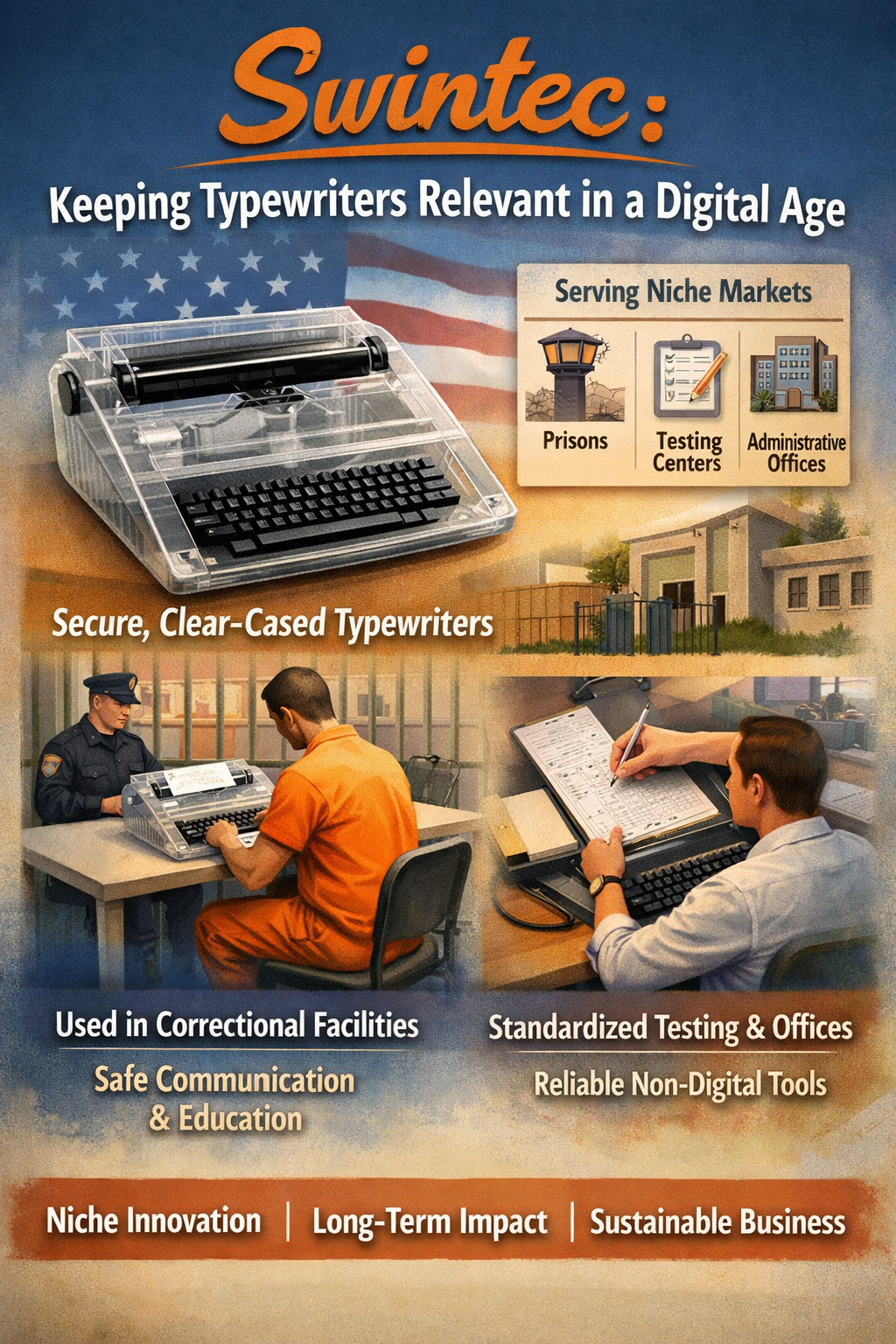
The innovation of Swintec had a significant overall impact by maintaining the use of specialized typewriter technology in environments where digital devices are restricted. Operating in the United States under Dominic Vespia, Swintec focused on producing durable, secure typewriters used in schools, standardized testing centers, and especially correctional facilities. In particular, Swintec developed security focused typewriters for prisons, often designed with clear or tamper resistant casings that allowed correctional officers to visually inspect the machines while still enabling inmates to write safely and communicate.
In the short term, this innovation ensured that institutions transitioning away from traditional typewriters still had access to reliable writing tools. Evidence of this impact can be seen in the continued use of Swintec typewriters in correctional facilities, where computers are prohibited, as well as in standardized testing environments that require non digital tools to prevent cheating. This helped maintain communication, education, and administrative functions without disruption in secure settings.
In the long term, Swintec’s innovation demonstrated that older technologies can remain valuable when adapted for specialized needs. While the overall typewriter market declined due to computers, Swintec’s niche focus allowed it to survive with a very small workforce and continue serving institutional clients. This shows that even outdated technologies can have lasting relevance when designed for safety, security, and specific user needs.
The innovation of Swintec benefits the business by allowing it to survive and remain relevant in a market where most typewriter manufacturers have disappeared. By focusing on durable, secure, and specialized typewriters used in environments such as correctional facilities, standardized testing centers, and certain administrative offices, Swintec created a niche demand that continues to generate steady revenue. Instead of competing with modern computer companies, Swintec positioned itself as a provider of essential tools for institutions that require non digital writing systems.
Because of this innovation, the company is able to maintain a consistent, long term customer base. Even with a very small workforce of approximately four employees at its main office, Swintec can continue operating efficiently because its products are simple, reliable, and require minimal large scale production infrastructure. This lean structure reduces operational costs, which benefits the business by allowing it to remain profitable even with lower sales volume compared to larger tech companies.
In addition, Swintec’s focus on niche markets helps protect it from competition. Few companies still manufacture secure, mechanical typewriters designed for restricted environments, which gives Swintec a unique position in the industry. This has helped the business maintain long term contracts with institutions that depend on its products.
Overall, the innovation benefits Swintec by ensuring business continuity, reducing competition, lowering operating costs, and creating stable niche revenue streams. Rather than relying on mass production or fast changing technology markets, Swintec succeeds by serving a specific, ongoing need that larger companies no longer prioritize.
The innovation of Swintec benefits society by providing secure and reliable writing tools in environments where digital access is limited or restricted. Operating primarily in the United States, Swintec produces specialized typewriters used in schools, testing centers, and correctional facilities. The “how” involves building simple, tamper resistant machines that do not require internet access or advanced technology. In correctional facilities, these secure typewriters allow individuals to communicate, complete educational programs, and engage in legal writing in a structured and monitored way.
This innovation improves access and fairness in both education and institutional systems. For example, in prisons, Swintec typewriters provide a controlled way for inmates to write letters, complete coursework, and maintain communication with the outside world. Evidence of this impact can be seen in their continued use in correctional institutions where computers are restricted but written communication is still necessary.
Swintec’s innovation supports social stability and reduced inequality by ensuring that even individuals in restricted environments have access to basic communication and learning tools. This aligns with goals like SDG 4 (Quality Education) and SDG 10 (Reduced Inequalities). Environmentally, the durability of these mechanical devices reduces electronic waste compared to frequently replaced digital equipment. By extending product lifespan and minimizing reliance on complex electronics, Swintec contributes to more sustainable consumption patterns while continuing to meet specialized societal needs.
Get stories of positive business innovations from around the world delivered right to your inbox.
Noelle Asteri Aversano, Sales/General Manager

Swintec Corporation is a privately held office equipment manufacturer headquartered in Moonachie, New Jersey. The company designs and distributes electronic typewriters, calculators, and related accessories for customers across the United States and internationally. Swintec is especially known for producing clear case typewriters used in secure environments such as correctional facilities, where computers are often restricted. Through its specialized products, the company provides reliable writing tools that support communication and productivity in a variety of professional and institutional settings.