

Berend Kramer
Suus Weetink

Avans University of Applied Sciences
Asja van Hooijdonk


Keep this story going! Share below!
This essay was written by group 4 with Semmy Mullenberg, Suus Weetink and Berend Kramer
PlaSTiEK closes local material loops by transforming discarded plastics into durable outdoor furniture, all within the Breda region. Their innovation lies in making circular production local, visible, and transparent—turning waste into a valuable resource. This approach directly supports SDG 11 (Sustainable Cities and Communities), SDG 12 (Responsible Consumption and Production), and SDG 13 (Climate Action).
PlaSTiEK Breda was founded in 2021 with a mission to turn local plastic waste into valuable, long-lasting products. The initiative started when a group of local entrepreneurs asked themselves a simple question: “Why should plastic waste leave our region when it can be reused right here?” From that idea, a circular production process was created in which every step, collecting, sorting, shredding, pressing, designing, and delivering, takes place within the Breda area.
The innovation lies in keeping the entire recycling loop local. Instead of exporting plastic waste to large external facilities, PlaSTiEK transforms discarded materials such as old garden chairs into durable outdoor furniture for parks, playgrounds, and schools. This local approach reduces CO₂ emissions from transport, creates jobs within the community, and raises awareness about responsible consumption. The products are made from 100% recycled plastic and are designed to last up to 25 years. After that period, they can be recycled again, ensuring that the material never loses its value.
Beyond production, PlaSTiEK adds an educational layer to its innovation. Citizens can see the transformation process themselves, sometimes even recognizing their own waste being turned into something new. This visible and transparent approach changes people’s perception of waste, making sustainability more relatable and accessible. By doing so, PlaSTiEK contributes directly to several UN Sustainable Development Goals: SDG 11 (Sustainable Cities and Communities), SDG 12 (Responsible Consumption and Production), and SDG 13 (Climate Action).
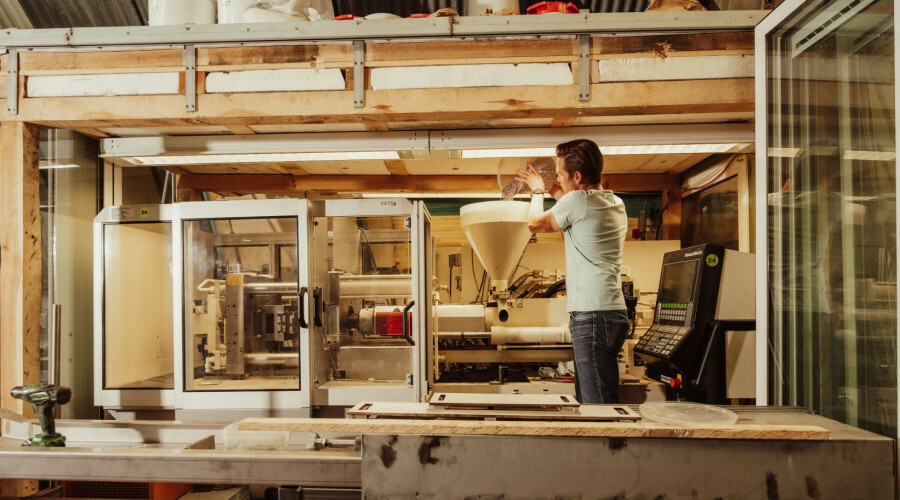
The inspiration behind PlaSTiEK Breda came from a simple yet powerful realization: plastic waste still has value. Founder Jilles Verspoor noticed that many discarded plastic products, such as garden chairs, were still strong and reusable, yet were often sent to the incinerator. “We started asking ourselves,” he explained, ‘Why do we treat waste as worthless when it’s actually still a material?’ This question became the starting point for creating a local and visible circular process.
Verspoor and his team wanted to make circularity something people could understand and experience directly. “We didn’t want sustainability to be just a word on paper,” he said. “We wanted people to actually see their own waste being transformed into something new.” This hands-on and transparent approach inspired the creation of PlaSTiEK’s local recycling workshop, where citizens can literally watch the transformation from waste to product.
The project also grew from a desire to reconnect people with their environment. Verspoor explained, “If people can see that their old chair becomes a new bench for their park, they start thinking differently about what waste really is.” By combining environmental responsibility with community engagement, PlaSTiEK proves that sustainability can be personal, local, and inspiring. This mindset continues to drive their work today, motivating others to rethink waste and recognize the potential of circular innovation.
Since 2021, PlaSTiEK Breda has demonstrated that circular innovation can deliver real environmental, social, and economic value. In the short term, their initiative has significantly reduced plastic waste in the Breda region by collecting and transforming local discarded plastics into durable outdoor furniture. Each product replaces the need for new raw materials and helps reduce CO₂ emissions from both waste transportation and production. This immediate environmental gain is supported by growing partnerships with municipalities and organizations that choose PlaSTiEK’s products for their sustainability and transparency.
In the long term, the impact goes beyond recycling—it’s cultural. PlaSTiEK has changed how citizens view plastic waste by making the recycling process visible and tangible. Community members can witness their own discarded items being turned into something useful again, leading to greater environmental awareness and behavioral change. Their collaboration with schools and community groups ensures that young people also learn about circular design in practice, not just theory.
Evidence of their impact can be seen across Breda: parks, playgrounds, and schools now feature furniture made entirely from locally recycled plastic. These installations serve as physical proof of circular economy principles in action. Through this approach, PlaSTiEK not only contributes to SDG 11 (Sustainable Cities and Communities) and SDG 12 (Responsible Consumption and Production) but also builds a stronger sense of community ownership and pride. Their innovation shows that sustainability works best when it’s local, visible, and shared by everyone.
Because PlaSTiEK Breda developed a fully local circular production model, the business has experienced steady growth and increasing recognition since its founding in 2021. By producing locally recycled furniture, PlaSTiEK has attracted a loyal customer base that includes municipalities, schools, and sustainability-driven organizations. These partnerships have not only created consistent revenue but also opened opportunities for long-term contracts, ensuring financial stability.
The innovation has also strengthened PlaSTiEK’s market position. In a time when sustainability is becoming a key purchasing factor, their transparent and traceable production process gives them a clear competitive advantage. Because all production takes place locally, the company can quickly respond to client needs and customize products for different public spaces. This flexibility, combined with the unique story behind each product, has increased customer trust and brand visibility—helping PlaSTiEK expand its reach within and beyond the Breda region.
Internally, the circular business model has also benefited employee engagement and well-being. Working for a company that visibly contributes to a cleaner environment gives employees a strong sense of purpose and pride. The small, skilled team enjoys a collaborative environment where innovation and creativity are encouraged. As a result, PlaSTiEK not only generates sustainable revenue but also builds a motivated, mission-driven workforce. This combination of social and economic success demonstrates how sustainability can be both profitable and personally meaningful.
PlaSTiEK Breda’s innovation directly benefits both society and the environment by transforming waste into local value. By collecting and reusing hard plastics that would otherwise be burned or sent to landfill, the company reduces CO₂ emissions, conserves resources, and keeps valuable materials in circulation. Each product made from recycled plastic replaces the need for new raw materials and demonstrates how waste can be turned into a long-lasting asset.
Socially, PlaSTiEK brings people closer to the concept of circularity. Through collaborations with schools, municipalities, and community organizations, residents of Breda can see exactly how their waste becomes something new. This transparency helps citizens better understand sustainability and builds pride in local recycling efforts. As founder Jilles Verspoor explained, “When people see their own old chair turned into a new bench, they realize that sustainability is not abstract—it’s something you can touch.”
The company’s impact extends beyond environmental awareness. By producing everything locally, PlaSTiEK strengthens community ties and supports local employment. Their work also inspires other regions and businesses to consider how circular production can function on a smaller, more personal scale. In the long run, PlaSTiEK’s model helps create cleaner cities, more conscious citizens, and a stronger sense of shared responsibility for the planet—proving that sustainable innovation can truly start close to home.
Get stories of positive business innovations from around the world delivered right to your inbox.

PlaSTiEK Breda is a local circular design workshop that transforms discarded hard plastics into durable outdoor furniture. All steps of their process, from collecting and sorting to pressing and designing, take place locally in Breda. By reusing plastic waste in the same region, they reduce emissions, create transparency, and make the circular economy tangible for citizens. Their mission is to prove that sustainability can be practical, visible, and community-driven.