

Henry Rogers
Sean O'Connell
Lilyanna Larson
Abdulrazzaq Al Mudhaf

Loyola Marymount University
Jeff Thies


Keep this story going! Share below!
Green Steel Environmental is a wastewater treatment technology company that has developed Green Steel PSR, an upcycled treatment media made from steel-manufacturing residuals. Upcycling means taking a waste material and transforming it into a higher-value product with a new environmental benefit. In this case, the product helps wastewater plants remove phosphorus and sulfur more safely and cost-effectively, reducing reliance on hazardous conventional chemicals while protecting water quality and supporting more efficient renewable natural gas operations. The innovation directly advances SDG 6, SDG 12, and SDG 13.
Green Steel PSR is an upcycled wastewater treatment media made from steel slag, a byproduct of steel manufacturing. According to CEO Jon Teaford, the concept grew out of the University of Colorado's patent portfolio after a professor with wastewater-treatment experience recognized how heavily plants relied on hazardous chemicals to remove phosphorus and sulfur before releasing treated water back into the environment. Teaford explained that the team discovered steel slag could be ground down and added to the treatment process, where it binds with phosphorus and sulfur and displaces conventional chemicals.
What makes the solution distinctive is that it addresses several problems simultaneously. On the water side, it targets phosphorus, which the EPA identifies as a major driver of harmful algal blooms and oxygen-depleted waters when nutrient levels get too high. On the gas side, it collects sulfur before it turns into hydrogen sulfide, which OSHA considers a serious danger in the workplace and makes it harder to produce renewable natural gas at wastewater facilities. According to Green Steel, PSR can remove up to 80 percent of soluble phosphate from digester sludge and cut 80 percent or more of the sulfur in anaerobic digesters before it becomes hydrogen sulfide.
The innovation also stands out because it is built on upcycling. Teaford drew the distinction explicitly in the interview, noting that recycling an aluminum can produces another aluminum can of equal value, while upcycling takes a waste product and transforms it into something more valuable than it was in its original state. Green Steel takes steel slag sitting unused outside a steel mill and turns it into a treatment media that protects rivers, lakes, and renewable energy systems. Rather than manufacturing and shipping more treatment chemicals, the company repurposes a material that would otherwise remain a steel-industry waste stream. That upcycling approach is, in turn, the foundation of a broader circular-economy model, in which the byproduct of one industry becomes a productive input for another.
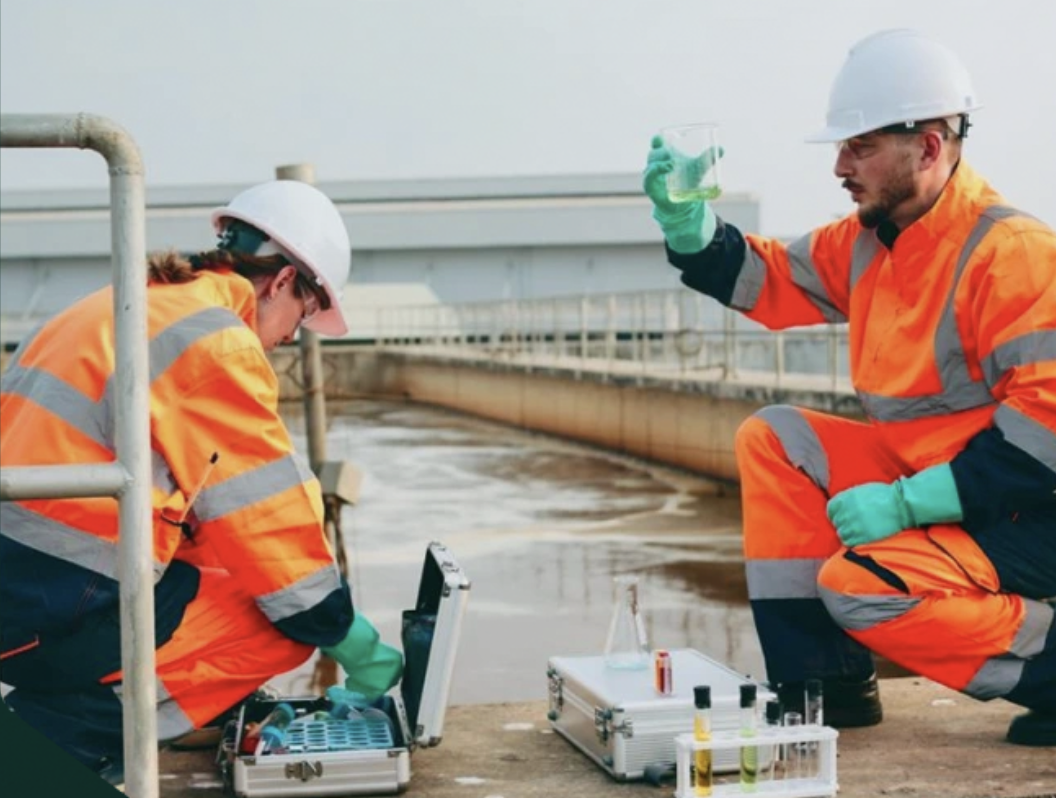
The inspiration behind Green Steel Environmental started with a simple but important question: why are wastewater treatment plants still using large volumes of hazardous chemicals to solve an environmental problem? Teaford traced the company's origins to a University of Colorado-affiliated inventor who had worked in wastewater treatment early in his career and understood how dependent the sector had become on corrosive treatment chemicals. In the interview, Teaford said the inventor believed "there must be a better way," and that search eventually led to steel slag as a possible alternative. The idea was compelling because it did not try to invent a new pollutant-removal mechanism. Instead, it set out to replace an entrenched and costly treatment model with something cleaner and more circular.
The idea became a real business once the team started talking to wastewater operators. Teaford said plant managers told them two things. First, stricter phosphorus regulations were making it harder for existing systems to keep up. Second, they hated using the chemicals they already relied on because they were dangerous and difficult to manage. Teaford described the large vats of treatment chemicals as "the most dangerous part of a wastewater treatment plant," and noted that the fact that Green Steel's product could be both cheaper and environmentally beneficial made the opportunity even more attractive.
The deeper motivation is tied to the circular-economy potential of the model. "What we're doing is taking a waste product and upcycling it," Teaford said, explaining that the company is trying to turn one industry's waste into another industry's solution. That mindset runs through Green Steel's broader mission as well. The company describes its purpose as eliminating hazardous chemicals from wastewater treatment and replacing them with clean, upcycled materials that protect the water ecosystem. Taken together, the interview and the company's own language reveal a leader motivated not only by market opportunity but by a conviction that industrial systems can be redesigned to waste less and protect more.
In the short term, Teaford said pilot testing showed that Green Steel PSR reduced phosphorus and sulfur in treatment systems, producing cleaner water leaving the plant and more efficient renewable natural gas because sulfur is captured before it can contaminate the gas stream. The company reports that PSR can remove up to 80 percent of soluble phosphate from digester sludge and cut sulfur in anaerobic digesters by 80 percent or more before it converts to hydrogen sulfide.
The environmental significance of that impact is impossible to overstate. The EPA calls nutrient pollution one of the country's most widespread and challenging environmental problems and identifies excess nitrogen and phosphorus as primary drivers of algae growth that can harm aquatic ecosystems and human health. When those blooms die, the EPA notes, the decomposition process consumes dissolved oxygen and can make water bodies uninhabitable for aquatic life. Green Steel's solution is designed to interrupt that chain earlier, before excess phosphorus leaves the plant and contributes to the problem downstream.
The long-term impact could be broader still. Teaford stated that Green Steel had recently established its first customer and anticipated that once the initial deployments demonstrate their effectiveness, widespread adoption will occur throughout the industry. He also described a future in which phosphorus captured during wastewater treatment could be extracted and reused as fertilizer rather than sent to a landfill. That would move the innovation beyond pollutant removal and into true resource recovery, turning wastewater infrastructure into part of a more regenerative system.
This innovation benefits Green Steel Environmental because it gives the company a product that solves a real and expensive problem inside a large, existing market. In the interview, Teaford said wastewater treatment plants in the United States spend roughly $2 billion a year on hazardous chemicals to remove phosphorus and sulfur. By sourcing the steel slag, which he described as essentially free, and processing it into a consumable treatment, Green Steel has built a business model that can compete against conventional chemicals while offering customers both lower costs and environmental benefits.
Teaford made clear that the economics were a major reason he believed in the business. "There's no way someone can manufacture chemicals less expensively than I can pick this product up and use it," he said, explaining that the company's main expenses are grinding the slag and shipping it. That cost structure helps Green Steel avoid the trap many sustainability ventures face, where customers are asked to pay a premium simply to do the right thing. The business case here is stronger because the company offers better economics and better environmental performance at the same time.
The innovation has also moved the company from concept to commercial launch. After roughly three years of development, Green Steel has successfully deployed its product with its first customer and is now moving from development into implementation, with the goal of becoming cash-flow positive and forecasting positive revenue within the year. This is the story of an early-stage company finding its footing in a conservative industry, not an established firm rolling out a new line. Teaford noted that many wastewater operators are closely monitoring Green Steel’s progress as they actively seek alternatives to the chemicals they currently use. By turning a low-cost industrial byproduct into a marketable wastewater solution, Green Steel has built a path to commercialization, market expansion, and long-term scalability.
Green Steel Environmental's innovation benefits society and the environment by helping wastewater treatment plants reduce hazardous chemical dependence, protect water quality, and use industrial materials more responsibly. One of the clearest environmental benefits is phosphorus control. Teaford explained that when phosphorus remains in wastewater discharge, it feeds toxic algal blooms in nearby waterways. The EPA and USGS reinforce this concern, noting that excess nutrients can drive eutrophication, harmful algal blooms, oxygen depletion, and broader ecosystem degradation. By helping plants remove phosphorus more effectively, Green Steel's product supports cleaner rivers, lakes, and other receiving waters.
The innovation also captures sulfur before it can become hydrogen sulfide, a toxic and corrosive gas. Teaford explained that removing sulfur in the wastewater stream improves renewable natural gas production and reduces contamination in those systems. In other words, the product supports cleaner energy recovery while protecting downstream infrastructure. OSHA identifies hydrogen sulfide as a serious hazard, and Green Steel's own materials emphasize that upstream sulfur removal can reduce odor, corrosion, and scrubbing demands at the plant.
There is a social benefit as well in the company's effort to reduce the handling of dangerous treatment chemicals. Teaford said many plant managers view the chemical vats as the most dangerous part of their facilities, and Green Steel's approach offers a safer, easier-to-handle alternative. More broadly, the company reflects a more hopeful model of sustainability. Rather than treating industrial waste as useless residue, it turns that waste into part of the solution. As Teaford put it, if businesses can "create value out of waste," they can do "a lot of good for the ecosystem." That is what makes this story bigger than wastewater chemistry. It is about redesigning industrial systems so that one sector's byproduct can help solve another sector's environmental challenge.
Get stories of positive business innovations from around the world delivered right to your inbox.
Jon Teaford, CEO

Green Steel Environmental is a wastewater treatment technology company based in Boulder, Colorado. The company produces upcycled cleantech additives for the wastewater and biogas/RNG industries, helping operators remove phosphorus and sulfur more safely, sustainably, and cost-effectively. Its core product, Green Steel PSR™, repurposes a steel-manufacturing byproduct into a circular alternative to hazardous treatment chemicals.