

Dayana Salmeron

Jose Iza

Karina Martínez
David Ramos

Escuela Superior Politecnica del Litoral, ESPOL

Jorge Rodriguez Rodriguez


Keep this story going! Share below!
Imagine having access to the water you desperately need, but having nowhere to store it. In the Galápagos Islands, where every drop of freshwater is worth gold, a coffee farmer faced a cruel paradox: during the rainy season, thousands of liters of water fell onto his farm and seeped into the ground unused, while during the dry season, he paid a fortune for water tanker trucks coming up from Puerto Ayora. The cost of transporting water exceeds that of the coffee itself.
With $3,000 (USD), three plastic tanks, and recycled bottles turned into pipes, this man—who never studied engineering—created a system that not only changes how a business operates, but also changes how an entire community addresses water scarcity in one of the most fragile ecosystems on the planet.
The Path Toward Water Self-Sufficiency
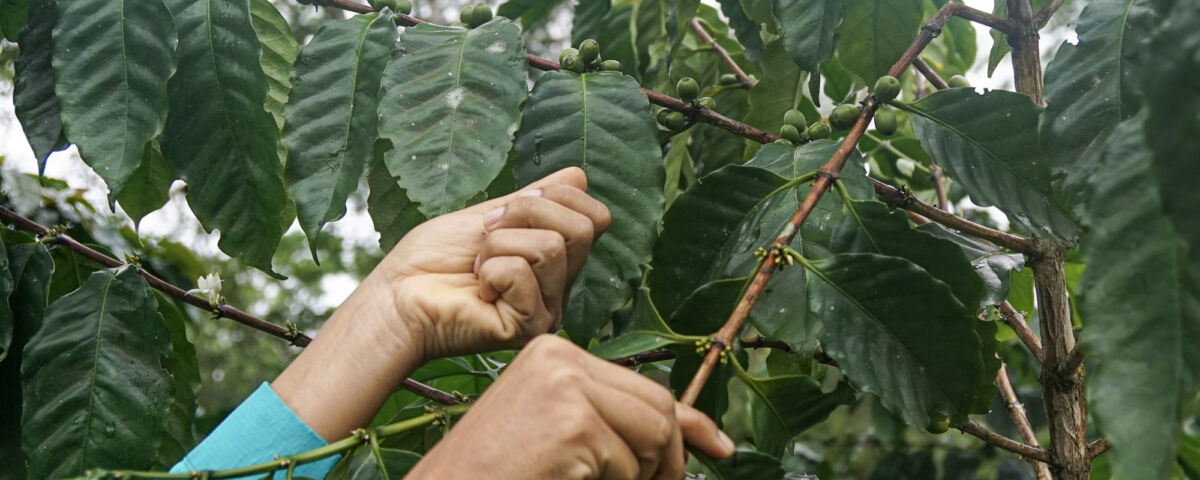
“I am not an engineer or an agronomist; I simply inherited the land and had to feed my family,” explains the owner of this small coffee enterprise located in the highlands of Bellavista, on Santa Cruz Island. His five-hectare farm, La Envidia, produced good-quality organic coffee but faced a structural problem: the lack of sufficient and consistent water for wet coffee processing.
Wet processing requires large amounts of clean water to wash the beans and ensure product quality. Without water, coffee cannot be properly processed; without processing, the product loses quality, market value, and access to specialty markets.
For years, the producer depended almost entirely on water transported by tanker trucks from Puerto Ayora, significantly increasing production costs. According to the 2022 evaluation of the Futuro Circular project by Fundación ACRA, reliance on transported water raised costs, limited processing capacity, and created a high dependence on external factors. During the dry season, supply was irregular, forcing the producer to halt processing and sell unwashed coffee.
When coffee is properly processed, it can be sold for approximately $4.00 to $ 5.00 (USD) per kilogram. When sold unwashed, the price can drop to $2.00–$2.50 per kilogram (USD), significantly reducing income. This price gap became one of the main drivers behind the search for an alternative solution.
The innovation was born from simple observation. “He noticed that rainwater was being wasted while his farm suffered during the dry season,” explains Marco Acosta, consultant at Grupo Acosta, who supported the project. The question was obvious yet revolutionary: what if he could capture that water and store it for the dry months?
When he learned about competitive grants from the Italo-Ecuadorian Fund for Sustainable Development (FIEDS), he decided to apply for a simple, realistic project: purchasing three tanks and a pump to store rainwater. The proposal was straightforward: provide $3,000.00 (USD) for basic infrastructure, and he would contribute his labor and ingenuity.
With technical support from Grupo Acosta and Fundación ACRA, he installed three plastic tanks on a concrete base that he built himself. However, PVC connections were beyond the budget. This is where true creativity emerged. “The owner’s creativity in reusing plastic bottles for pipe joints highlights his ingenuity and commitment,” notes the final report. With artisanal patience, he cut, shaped, and connected recycled plastic bottles to create a homemade piping system.
And it worked. “The farm captured sufficient water during the rainy season, reducing the need to purchase water from tanker trucks,” confirms the impact assessment.
The innovation did not stop there. In line with circular economy principles, the system also incorporates the use of coffee waste for composting and organic practices that reduce pesticide use. The residues from wet processing, once discarded, are now converted into compost that enriches the soil, closing the nutrient cycle.
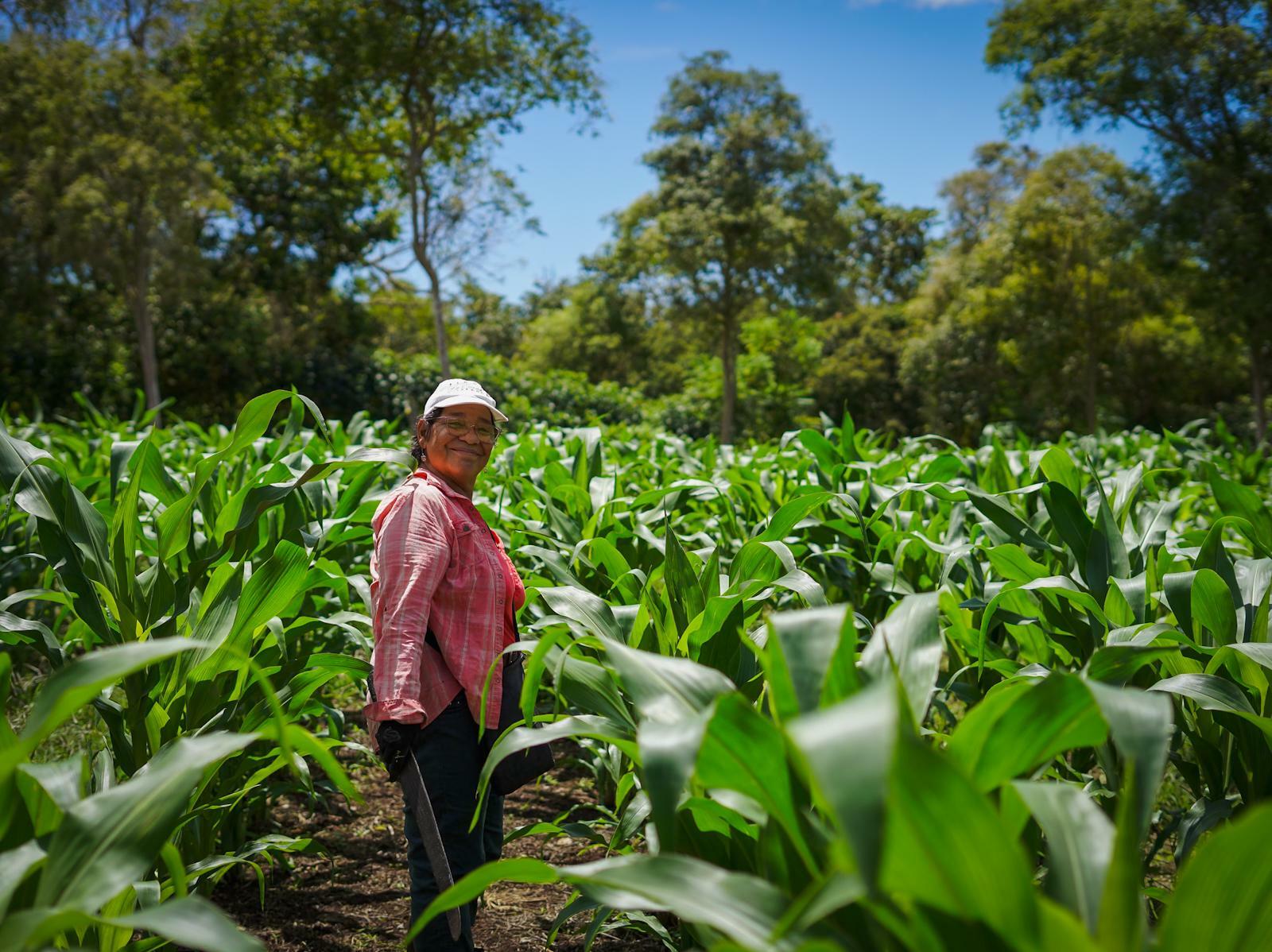
“His motivation was to ensure continuity in coffee processing, reduce costs, and demonstrate that solutions can be simple and affordable,” explains Marco Acosta.
The inspiration did not come from an engineering textbook, but from desperation mixed with hope. During the dry season, he watched neighbors abandon coffee processing, losing up to 60% of their crop value. Living in the Galápagos carried a special responsibility: he did not want a sophisticated solution dependent on imported technology, but something any small producer could replicate.
Without a budget for new pipes, he experimented with plastic bottles accumulating on his farm. Why buy new materials when discarded plastic could serve the same purpose? His goal was not only economic survival, but to demonstrate that circular economy principles can be applied at a micro scale.
The rainwater harvesting system stores approximately 30–45 m³ of water per season, enough to cover most wet-processing needs during the dry months. This has significantly reduced the purchase of water from tanker trucks and stabilized production throughout the year.
Beyond a single farm, the impact has spread. By offering milling services to other coffee producers and sharing its infrastructure, the microenterprise has generated additional income and become a local reference point. Around 15–20 local producers have visited the farm to evaluate the feasibility of replicating the system, and three neighboring producers have already installed similar systems.
The environmental impact is equally significant. Reduced water transport lowers fossil fuel use and CO₂ emissions, avoiding an estimated two tons of CO₂ per year. Reusing plastic bottles and composting coffee waste reduce solid waste and improve soil fertility—critical benefits in the Galápagos, where waste management is a major challenge.
The reduction in water purchases and continuous access to clean water have increased profit margins. Annual savings of approximately $1,500 (USD) allow the initial investment to be recovered in less than two years. Improved coffee quality enables access to specialty markets with prices up to 40% higher. Sustainability has become part of the brand narrative, attracting tourists and opening doors to certifications and future financing.
This innovation demonstrates that prosperity and conservation can coexist in the Galápagos. Farms adopting this model are less vulnerable to drought and high water prices, strengthening community resilience. The initiative aligns with SDG 6 (Clean Water and Sanitation), SDG 12 (Responsible Consumption and Production), SDG 13 (Climate Action), and SDG 15 (Life on Land).
The microenterprise is reshaping the development narrative in the Galápagos, proving that powerful solutions do not always require complex technology—sometimes, they only require looking up during the rainy season and having the courage to catch what is already falling from the sky.
Get stories of positive business innovations from around the world delivered right to your inbox.
Marco Acosta Morales, Environmental Advisor, Grupo Acosta

Drupa Real (La Envidia Farm) is a small-scale social enterprise dedicated to the production of organic coffee in the highlands of Santa Cruz Island, Galápagos. The business focuses on sustainable farming practices while supporting local livelihoods through permanent and seasonal employment. In addition to coffee production, the farm provides milling services to other small producers, strengthening the local coffee value chain.