

Natalie Hage
Ava La Fauci
Ethan Shikiya
Anthony Igl

Loyola Marymount University
Jeff Thies


Keep this story going! Share below!
VusionGroup is transforming the way physical retail stores operate through a suite of IoT technologies, including electronic shelf labels, real-time inventory tracking, and AI-powered analytics, that make stores smarter, more efficient, and more sustainable. By enabling retailers to monitor inventory in real time, reduce emergency logistics, fight food waste through timely promotions, and use existing stores as e-commerce fulfillment centers, VusionGroup helps its partners significantly reduce their carbon footprint and operational waste. These innovations directly advance SDG 12 (Responsible Consumption and Production), SDG 13 (Climate Action), and SDG 8 (Decent Work and Economic Growth) by embedding sustainability into the everyday operations of retail at a global scale.
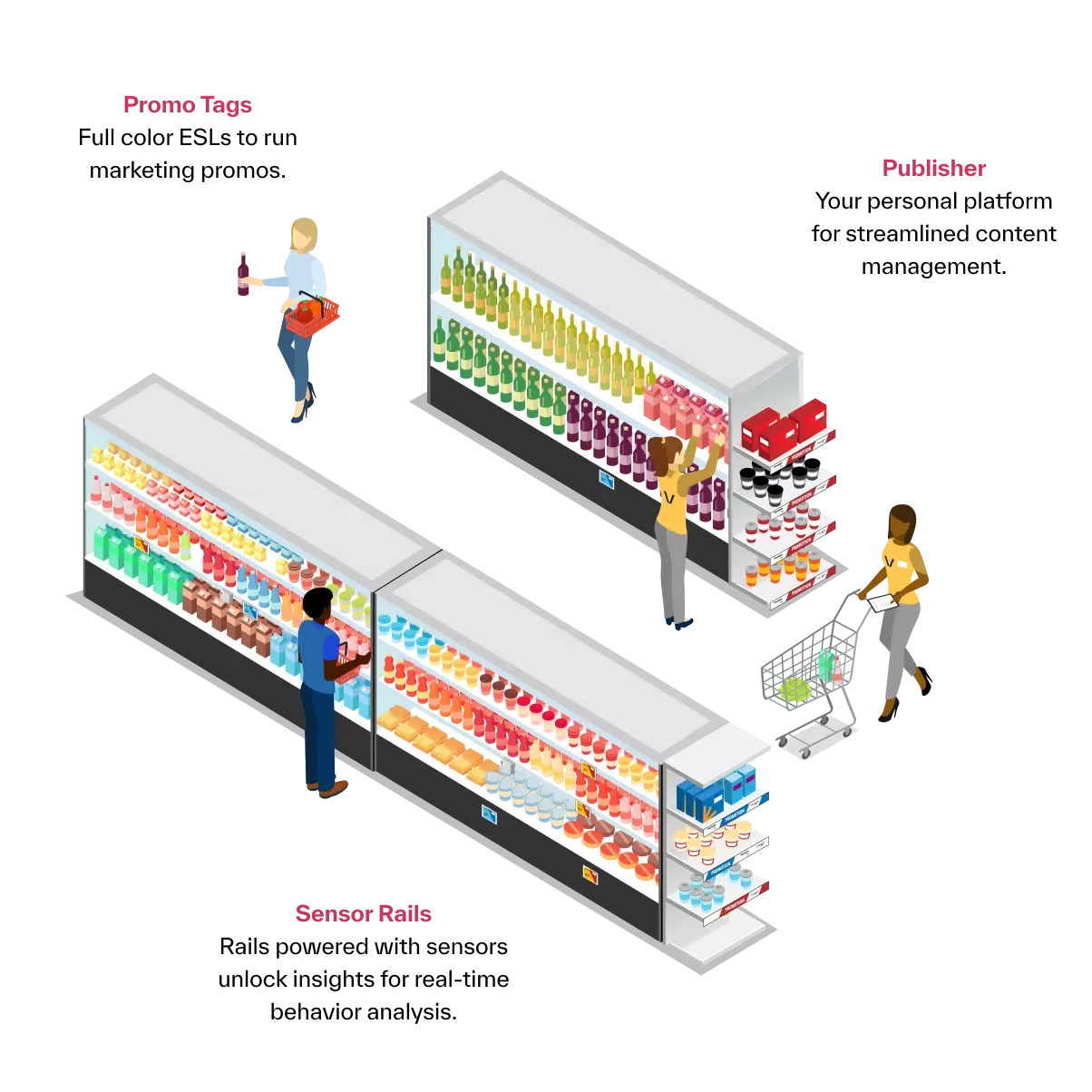
VusionGroup's core innovation is the development and deployment of Electronic Shelf Labels (ESLs) and a broader retail IoT platform that connects every product, shelf, and price in a physical store to the cloud in real time. Rather than relying on paper price tags and manual shelf-checking processes, retailers using VusionGroup's technology can update pricing, monitor inventory levels, and manage in-store operations digitally and instantly. This shift from analog to digital retail infrastructure is not just an operational upgrade; it fundamentally changes how stores consume resources, manage waste, and serve both workers and customers.
One of the most significant sustainability innovations embedded in VusionGroup's platform is its ability to reduce food waste and improve logistics efficiency. Because store associates can see exactly what is on the shelf at any given moment, retailers can organize timely promotions for slow-moving fresh food before it spoils, dramatically reducing the amount of product that goes to waste. The real-time inventory visibility also allows for smoother logistics planning, reducing the frequency of emergency deliveries and the transportation emissions that come with them. Additionally, by enabling stores to function as fulfillment centers for both in-store and e-commerce customers, VusionGroup helps retailers avoid the enormous carbon cost of building new automated warehouses and distribution centers.
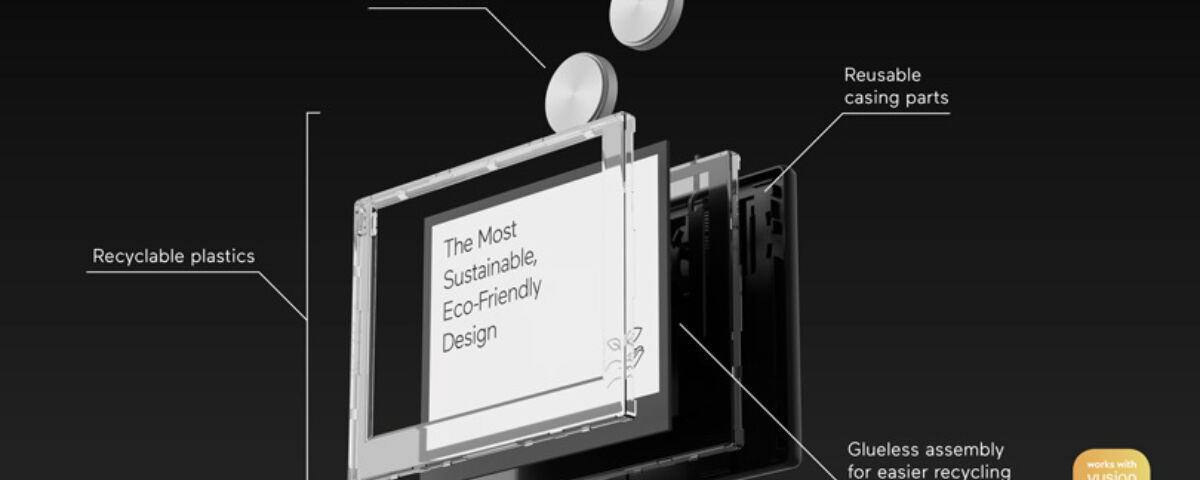
VusionGroup further embeds sustainability into its own product lifecycle through its "Second Life ESL" program, which refurbishes and redeploys used hardware rather than discarding it, and through an R&D strategy in which 50% of its patented portfolio focuses on energy efficiency. These efforts reflect a company working to align its sustainability commitments with its financial and engineering operations, ensuring that doing good and doing well are not competing priorities but complementary ones. As Dubreuil put it, this kind of integration does not happen overnight: "It's embedded step by step, slowly infusing in the core business model... it takes years for businesses to embed sustainability into the core business model."
The inspiration behind VusionGroup's sustainability strategy is rooted less in idealism and more in a pragmatic recognition that lasting change only happens when environmental goals are aligned with financial ones. As Pascale Dubreuil, Group Chief Sustainability Officer, explained during our interview, "You will not succeed with just the willingness to do good. It has to go hand-in-hand with financial purposes, R&D, or social purposes." For Dubreuil, sustainability is not a department that operates in isolation; it is a discipline that must learn to speak the language of every other part of the business in order to be effective.
Dubreuil also points to the broader regulatory and financial environment as a powerful driver of innovation. European regulations such as CSRD, combined with pressure from investors and banks required to allocate capital to green projects, have created real structural incentives for companies like VusionGroup to treat sustainability not as a choice but as a business imperative.
In the short term, VusionGroup's technology has had a measurable effect on the daily experience of retail workers and the operational efficiency of its retail partners. The Walmart deployment stands as one of the most visible examples, where store associates who previously spent hours manually checking and updating shelf information could complete the same tasks in minutes. As Dubreuil noted in our interview, "things that took hours to check manually now take one minute, allowing them to focus on higher added-value actions." Beyond worker satisfaction, the platform's real-time inventory visibility allows retailers to organize timely promotions on slow-moving fresh products before they spoil, directly reducing food waste at the store level.
The medium and long-term impacts extend well beyond individual stores. By enabling physical retail locations to serve as fulfillment centers for e-commerce orders, VusionGroup helps retailers avoid the significant carbon cost of constructing new automated warehouses and distribution centers. The company also addresses its own product lifecycle impact through its "Second Life ESL" program, which refurbishes and redeploys used hardware, and through an R&D portfolio in which 50% of patents focus on energy efficiency, extending device longevity and reducing the environmental burden of lithium battery disposal.
Looking further ahead, Dubreuil acknowledges that absolute emissions reductions remain a challenge for a fast-growing company, as volume growth can outpace efficiency gains. The company's long-term roadmap includes formally measuring "avoided emissions" across stores of all sizes and formats by 2026 and 2027, which will allow VusionGroup to substantiate its sustainability claims with audited data rather than estimates, bringing its environmental reporting to the same standard of rigor as its financial disclosures.
Because VusionGroup has built its sustainability strategy around the principle that environmental and financial goals must move together, the company has been able to turn its green initiatives into concrete business advantages. The alignment of lighter, more energy-efficient product designs with cost reduction targets has allowed VusionGroup to remain competitive in a crowded market while simultaneously lowering the carbon intensity of its products. As Dubreuil explained, when engineers recognized that a simplified, lighter design was both more cost-effective and less emissive, sustainability stopped being a constraint and became a driver of product innovation and competitive differentiation.
Because VusionGroup operates as a European-listed company subject to CSRD regulations, its sustainability data is audited with the same rigor as its financial data. Rather than treating this as a compliance burden, the company has leveraged its strong ESG positioning to attract investment from capital markets and financial institutions that are increasingly required to allocate funds to green businesses. This regulatory alignment has opened new investment opportunities and strengthened VusionGroup's relationships with banks and institutional investors who view the company's sustainability commitments as a mark of long-term financial credibility.
Because VusionGroup's platform enables retailers to use existing stores as e-commerce fulfillment centers, it has created an entirely new value proposition for its retail partners, expanding the addressable market for its technology well beyond traditional shelf management. The "Second Life ESL" refurbishment program has similarly opened a new service revenue stream while reinforcing the company's circular economy credentials with customers who are themselves under growing pressure to demonstrate sustainable procurement practices.
VusionGroup's technology creates meaningful environmental benefits by addressing some of the most carbon-intensive inefficiencies in physical retail. By giving store associates real-time visibility into inventory levels, the platform reduces the need for emergency deliveries, which are among the most emissions-heavy forms of retail logistics. The ability to organize timely promotions for slow-moving fresh products before they spoil directly reduces food waste at the store level, a significant contributor to global greenhouse gas emissions. While Dubreuil acknowledged that formal measurement of these "avoided emissions" is still in progress, with large-scale data collection planned for 2026 and 2027, the directional impact is clear and the methodology to substantiate it is already being developed in compliance with GHG Protocol standards. For Dubreuil, this measurement work is non-negotiable: "You are supporting your customers into avoiding extra emissions, but you cannot pretend doing so if you don't measure it. Otherwise, it's just greenwashing."
Perhaps the most consequential environmental benefit is VusionGroup's role in reducing the need for new e-commerce fulfillment infrastructure. The construction and operation of large automated warehouses carries an enormous carbon footprint, and by enabling existing retail stores to serve as local fulfillment centers for online orders, VusionGroup helps retailers avoid that cost entirely. This is an innovation with global implications, particularly as e-commerce continues to grow and the pressure to build new distribution infrastructure intensifies.
On the societal side, the platform has meaningfully improved the working conditions of retail employees by eliminating repetitive, time-consuming manual tasks. The Walmart deployment illustrated this directly, with staff freed from hours of manual shelf-checking to focus on more meaningful customer-facing work. In this way, VusionGroup's innovation advances not only environmental sustainability but also the dignity and quality of work for the hundreds of thousands of retail workers whose stores have adopted its technology.
Get stories of positive business innovations from around the world delivered right to your inbox.
Pascale Dubreuil, Chief Sustainability Officer


VusionGroup is a global leader in digitalization solutions for physical commerce, serving over 350 large retailer groups across more than 60 countries in Europe, Asia, and North America. Founded in 1992 under the name Store Electronic Systems, the company pioneered electronic shelf label technology and has since evolved into a full-scale retail IoT platform that connects products, shelves, and pricing to the cloud in real time. Through a suite of technologies including smart digital labels, computer vision, AI-powered analytics, and shopper data insights, VusionGroup enables retailers to operate more efficiently, reduce waste, and create smarter in-store experiences. The company is headquartered in Paris, France, and is listed on the Paris stock exchange.