

Emma Reemst
Ayub Abdulkadir
Aisha Van der Sluijs

Avans University of Applied Sciences
Eric Moes


Keep this story going! Share below!
In the following article, you will read about Too Good To Go. Too Good To Go is an inspiring company that connects consumers with businesses to promote responsible consumption. The company identified its strengths and decided to build on them to support responsible consumption. This led to incredible and life-changing results across multiple SDGs, such as SDGs 12 and 13. In this interview, you can find questions regarding their goals, impact, and motivation.
Too Good To Go is a mobile application that connects restaurants, bakeries, supermarkets, and other food businesses with consumers to sell surplus food that would otherwise be thrown away. Users purchase “Surprise Bags” at a heavily discounted price, reducing food waste while giving businesses extra revenue and customers access to affordable meals. ‘It helps them sell leftover food and attract new customers.’ Says Daniël.
The idea started in Denmark in 2015–2016 when the founders noticed that buffet restaurants were throwing away a lot of perfectly good food at the end of the day. They realized that a simple app could help restaurants sell this leftover food to customers instead of wasting it.
The company was founded by Thomas Bjørn Momsen, Stian Michael Hånes Olesen, Klaus Bagge Pedersen, and Adam Papalia Sigbrand. Later, entrepreneur Mette Lykke joined as CEO and helped scale the business internationally. A growing team—now over 1,200 employees—has supported the platform's expansion across multiple countries. Too Good To Go made a sustainable change that changed the lives of many consumers.
Too Good To Go defines itself as a mission-driven social impact business and is certified as a B Corporation. Their mission is to inspire and empower everyone to fight food waste together. The innovation is built around environmental purpose, corporate responsibility, and social benefit. With these qualities, they are focused on honest consumption and on a long-term mission to further evolve and invest in a better world.
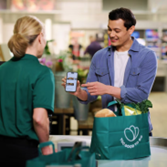
In our interview with Daniël, he told us that the original inspiration came from an experience at a buffet: ‘The founders witnessed large amounts of leftover buffet food being discarded at the end of the day. They wondered why there wasn’t a simple way for people to buy that food instead of letting it end up in the trash.’ They saw the issue and made a plan that changed the lives of many people.
The motivation was both environmental and social: They wanted to reduce CO2 emissions caused by food waste and, at the same time, give consumers access to affordable food. Not only this, but local businesses can turn their waste into revenue. The company also raises awareness about the global problem of food waste. Their dream is to help people with honest labour and climate action.
The company’s involvement has reached a global network of 100+ million users and 175.000 business partners across 19 countries. This resulted in over 400 million meals being saved from being wasted. In the meantime, more than 1.1 million tons of CO2 emissions were prevented. These incredible results demonstrate both environmental and economic impact on a large scale. It is safe to say that Too Good To Go has had a significant impact on both consumers and businesses. And they are just getting started.
As I said, the company’s innovations delivered substantial business benefits as well. In the short term, Too Good To Go helps businesses earn money from food they would normally throw away. It also reduces waste-disposal costs and brings new customers into their stores.
In the long term, the innovation strengthens a business’s sustainability profile, increases brand loyalty, and builds a reputation for environmental responsibility. Many stores report gaining regular customers who originally discovered them through the app. Daniël states: ‘I’ve discovered several new bakeries and cafés thanks to the app.’
Besides business benefit, the company also had a huge benefit regarding social and environmental matters. Too Good To Go makes good food affordable for more people and raises public awareness about food waste. It also connects communities with local shops and encourages a more sustainable food culture. The app reduces the amount of edible food that ends up in the trash, helping lower CO₂ emissions and saving resources used in food production. Every meal rescued prevents unnecessary environmental impact.
The effects of these benefits were clear: consumers are saving money on food, while businesses are earning extra income. But it is not just about saving money; it’s also about raising awareness about food waste. This leads to more responsible food habits among consumers and businesses in the long run. And for Too Good To Go, this is only the beginning of a much larger impact on food waste.
Get stories of positive business innovations from around the world delivered right to your inbox.
Daniël, Consumer