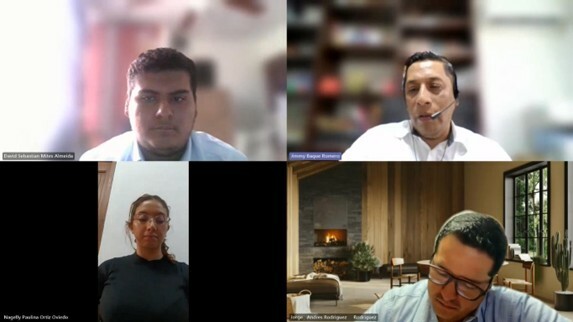

David Mites

Nagelly Pulina Ortiz Oviedo

Matias Ponton
Derian Baque

Escuela Superior Politecnica del Litoral, ESPOL

Jorge Rodriguez Rodriguez


Keep this story going! Share below!
In 2006, Novared was founded when the company Novacero recognized the urgent need to structure a national network of micro-entrepreneurs to collect ferrous scrap metal and secure its raw material. However, what began as a supply strategy soon revealed a deeper truth: the waste was not just a material, but the link to generating a triple impact (social, economic, and environmental).
After a decade of development, in 2016, the organization legally became Novared - Negocios y Reciclajes S.A. Under the leadership of its General Manager, Jimmy Baque Romero, the company established its base of operations in Durán and adopted a purpose that would transform its identity: "We empower people to clean the world, generating value."
Novared's ability to "see value where others see trash" extends to multiple materials. The company has developed the Novalit line, which manufactures thermoacoustic roofing from recycled plastic blends. These roofs are not only an environmental solution, but also a social one, offering a durable and economical alternative to traditional zinc for vulnerable communities.
Furthermore, their infrastructure allows for the processing of:
Glass: Transformed into high-purity cullet (crushed glass) for the packaging industry, reducing energy consumption and sand mining.
Paper and Cardboard: Processed into pulp for new packaging and egg cartons.
Cutting-Edge Technology: The implementation of film washing lines and optical sensor sorters has allowed materials that were previously discarded due to dirt or color to become high-quality raw materials.
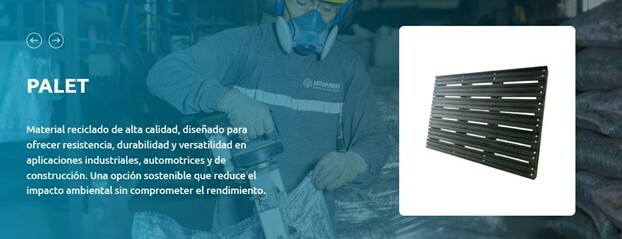
Novared's solution combines cutting-edge industrial technology with a nationwide social supply network comprised of informal recyclers, collection warehouses, and formalized sorting centers. The technical process begins with the collection of the material, which is ground, washed in industrial vats, and processed using a squeezer, an industrial machine that significantly reduces the plastic's moisture content. Subsequently, the material is pelletized and extruded into profiles for manufacturing highly durable plastic pallets.
However, the most profound innovation lies not only in the machinery but also in the people. As its general manager explains, "The recycler is a key player; they are the essence of the business. They are the Messi of the team."
Currently, Novared has formalized more than 12,000 informal recyclers, integrating them into a structured value chain that guarantees traceability, economic stability, and a constant supply of recycled raw materials. This model allows waste that previously had no commercial value to be transformed into finished products that compete with wood and virgin plastic in cost and durability.
A grassroots recycler is someone who collects and sorts recyclable materials directly from streets, dumps, or collection centers, and who has historically worked in the informal sector. Novared has transformed this role by formally integrating them into its production chain, recognizing them as key players in the circular economy.
What if I told you that the most widely used material for transporting Ecuador's wealth is also responsible for serious environmental pressure? Ecuador is one of the world's leading shrimp exporters, and the shrimp industry uses millions of raffia sacks, primarily made of polypropylene, to transport shrimp feed.
Once used, these sacks become waste with no clear final destination, accumulating at shrimp farms and landfills or being incinerated. For the Ecuadorian industry, an empty raffia sack was considered a logistical problem with no obvious solution.
Faced with this reality, Jimmy Baque, General Manager, identified a strategic opportunity, stating that plastic is here to stay and that the problem isn't plastic itself but how it's disposed of.
The inspiration came from connecting two realities. On the one hand, the massive accumulation of plastic waste is generated by the shrimp industry; on the other hand, there was a need for industrial pallets that did not depend on deforestation, giving rise to a solution aligned with the principles of the circular economy.
Novared's impact is measurable and manifests in three dimensions.
• Environmental: In the last three years, Novared has recovered 4,700 tons of plastic and managed 345,000 tons of scrap metal, preventing them from ending up in landfills or being incinerated, thus reducing CO2 emissions. "We prevent hectares of land from becoming garbage dumps," says Baque.
• Social: Novared provides economic stability and dignified working conditions to between 8,000 and 9,000 informal recyclers nationwide through their formalization and integration into a structured value chain. This model reduces informality, eliminates intermediaries, and guarantees fair prices and payments, as well as access to ongoing technical training.
• Economic: In the short term, Novared has delivered nearly 500 plastic pallets to strategic partners like BioMar, demonstrating the commercial viability of products made from post-consumer waste. In financial terms, the company recorded revenues of approximately USD 6.8 million in 2021, solidifying its position as a profitable and growing business unit. Looking ahead, Novared is preparing for a "landfill mining" scenario, where recycling is emerging as a key viable source of raw materials in the event of oil shortages.
Novared has successfully evolved from an internal cost center to a profitable, independent business unit with B Corp certification, achieving a score of 113 points. This model secures its own raw material supply chain, protecting the company against the volatility of virgin polymer prices.
Under the motto "We empower people to clean the world by generating value," Novared has created an ecosystem where financial profitability depends directly on the health of the environment. Ecuador's biodiversity is protected by reducing plastic pollution, and the local economy is strengthened by including vulnerable communities in the formal industrial sector.
Get stories of positive business innovations from around the world delivered right to your inbox.

In 2006, Novared was founded when the company Novacero recognized the urgent need to structure a national network of micro-entrepreneurs to collect ferrous scrap metal and secure its raw material. However, what began as a supply strategy soon revealed a deeper truth: the waste was not just a material, but the link to generating a triple impact (social, economic, and environmental).
After a decade of development, in 2016, the organization legally became Novared - Negocios y Reciclajes S.A. Under the leadership of its General Manager, Jimmy Baque Romero, the company established its base of operations in Durán and adopted a purpose that would transform its identity: "We empower people to clean the world, generating value."
Novared's ability to "see value where others see trash" extends to multiple materials. The company has developed the Novalit line, which manufactures thermoacoustic roofing from recycled plastic blends. These roofs are not only an environmental solution, but also a social one, offering a durable and economical alternative to traditional zinc for vulnerable communities.
Furthermore, their infrastructure allows for the processing of:
Glass: Transformed into high-purity cullet (crushed glass) for the packaging industry, reducing energy consumption and sand mining.
Paper and Cardboard: Processed into pulp for new packaging and egg cartons.
Cutting-Edge Technology: The implementation of film washing lines and optical sensor sorters has enabled materials previously discarded due to dirt or color to become high-quality raw materials.