

Lenn Vanderheyden
Bram Legein
Hendrik Janssen
Jelle Decoster

Uhasselt

Ruveyda Kelleci


Keep this story going! Share below!
Nelissen Steenfabrieken is a Belgian family-owned business specializing in manufacturing high-quality bricks and differentiating itself through its sustainable innovations. They do so by adjusting their products and processes to reduce emissions and total costs, while maintaining quality. They, for instance, produce a thinner N70-brick which promotes dematerialization, and use less clay, which is less environmentally harmful. Nelissen shows how planet, profit, and people can be improved jointly. This story is based on an interview with Ronald Wijnants, production director at Nelissen Steenfabrieken. The interview was conducted on 30/10/2025.
Nelissen Steenfabrieken has been a proud family business for four generations. They have more than 100 years of experience, yet they remain actively committed to sustainability. In recent years, they have reviewed their business operations to integrate sustainability into the organization's structure. However, this greater focus on sustainability is not the only important factor within the organization, as the director pointed out: “But of course, sustainability is actually the combination of the three Ps: Planet, Profit, and People. And it's always a search for the right combination of the three.” So they try to take these three Ps into account in all their sustainability initiatives. One of these sustainability initiatives is situated in their brick production. They have two major projects here: alternative clay and dematerialization. Dematerialization involves developing thinner bricks (the N70). By reducing the thickness and increasing the length, less mortar is used. This leads to a more efficient construction process while keeping the bricks economically attractive. In addition, Nelissen is working on the use of alternative types of clay with lower CO₂ impact, which is related to SDG 13 (climate action).
Nelissen Steenfabrieken's innovations are also closely linked to three other sustainable development goals (SDGs). The company is modernizing its production with these initiatives, aligning with SDG 9 (Industry, innovation, and infrastructure). SDG 8 (Decent work and economic growth) is also central because Nelissen is a family business that is strongly committed to local employment and well-being at work. In addition, they also strive for circular operations: pallets are repaired, rainwater is reused, and packaging consists of 50% recycled material. The latter therefore falls under SDG 12 (Responsible consumption and production).
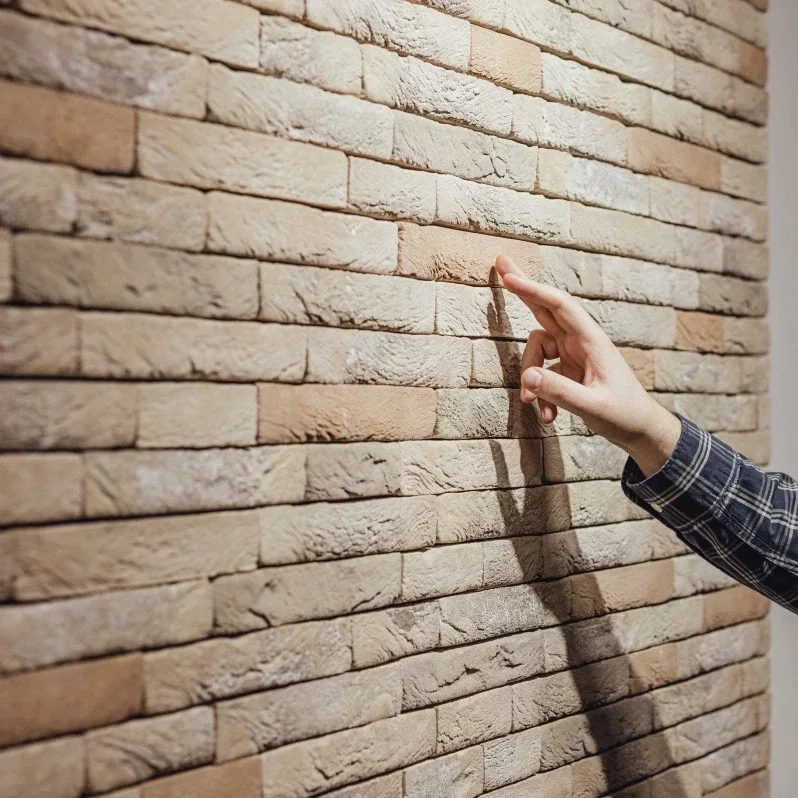
Sustainable innovation has been in the company's DNA since the family business's founding. This is as the director of Nelissen points to: "Sustainability in the broadest sense of the word actually has always been part of our DNA." This not only counts in an ecological sense, but also in a social and economic sense. In other words, it is not only about considering the environment, but also about stakeholders and the continuity of the company. The result of such values is a culture of continuous thought about how processes can be improved, made more efficient, and made more sustainable. There has always been a drive to be economical, with lower energy consumption and reduced waste. It comes from the belief that sustainability is not something that is passing, but the way of working. The director makes sure to stress that sustainable innovation is born not only out of big projects but also through small improvements on the work floor. For example, when an operator finds a better way to work, that is innovative. This demonstrates that sustainability is a shared responsibility at Nelissen. As the building industry changes, the need for energy-efficient materials and circular production processes is increasing. For this reason, Nelissen is constantly innovating, developing alternative clay types and thinner bricks, among others.
The family business operates under the belief that there is only a future when care is taken for people, the planet, and profit. It's by carefully balancing these three factors that Nelissen can be sure of its future sustainability.
Nelissen’s innovation has impacted both the construction and production industries and has taken a major step toward a more sustainable business model. By reimagining how its bricks are produced, from sourcing raw materials to the production process, Nelissen has reduced its carbon emissions by 30% while maintaining high quality. This innovation shows that even a traditional, high-emitting, and manufacturing-heavy industry can adapt to a more sustainable alternative.
By implementing these adaptations, Nelissen sets an example for the rest of the construction & production industry by showing the possibility of being more environmentally friendly while maintaining quality and lowering costs by 10% per square meter. Furthermore, by becoming more sustainable, Nelissen will strengthen its market position, as more and more clients value sustainability before making a partner choice. Here, Nelissen aligns perfectly. These innovations also enhance brand reputation and create additional value for all stakeholders.
On top of that, Nelissen shows that its sustainability efforts are part of a bigger long-term vision. The company's climate roadmap, aligned with the Science Based Targets initiative (SBTi), specifies that these innovations and implementations are part of a clear strategy for the future. By scaling up its eco-formats and involving employees in the transition, it continues to prove that innovation and environmental responsibility can be achieved together. Besides all this, they can build even more trust among their partners and help push the whole industry toward a more sustainable way of working.
The business benefits naturally also play an important role in sustainable innovations, as Nelissen Steenfabrieken pointed out: “Of course, you can do everything within the framework of sustainability, but then you won't make any more profit, and your company won't be able to survive.” But those business benefits are definitely there. Since 2014, for example, they have grown from 80 to 220 employees. That is just one small example of how sustainability and economic growth can grow together.
Nelissen has been implementing projects over the past few years, and the projects we mentioned have positioned them as a leader in sustainable brick manufacturing at a time when EU Green Deal regulations are pushing the industry toward carbon reduction. The company has done this in part by really involving its employees and allowing them to grow through education and training. In addition, they have introduced “think tanks” in which employees from different departments can evaluate what could be improved. In this way, Nelissen enables employees to actively contribute to innovation, thereby improving retention and well-being.
The innovations mentioned above reduced material and energy consumption, improved efficiency, and created a new, attractive product for customers. Thanks to the N70, the company not only saved costs but also opened new markets, including in Germany, where interest in sustainable building materials is growing rapidly. The company’s sustainable image can also attract new investment opportunities and strengthen partnerships with suppliers.
Nelissen Steenfabrieken, a Belgian family business with more than 100 years of experience, proves that tradition and innovation can go hand in hand. As we mentioned before, their mission is clear: “to create sustainable added value” by maintaining a good balance between the three Ps: profit, people, and planet. According to production director Ronald Wijnants, “sustainability has always been part of our DNA.”
On an ecological level, Nelissen is taking major steps toward a sustainable future. The most important innovation is the dematerialized brick, which is narrower but around 2.5 cm longer. Because of this innovation, fewer bricks are needed per m², and less insulation and mortar are required, which leads to a reduction in CO₂ emissions. In addition, Nelissen Steenfabrieken uses an alternative clay with less lime, further reducing CO₂ emissions. With these innovations, among others, the company aims to achieve the 42% CO₂ reduction target set by the Green Deal objectives by 2030, and aims to be climate-neutral by 2050. Furthermore, Nelissen applies circular economy principles by reusing the heat generated from its ovens to dry materials in the drying chambers. Rainwater is also reused in the production process, and packaging materials are partially recycled. These initiatives demonstrate how an ordinary family business can transition into a circular and energy-efficient company.
On the social side, Nelissen Steenfabrieken has also made a strong positive contribution. The workforce has grown to more than 200 employees, mostly local people. Core company values include collaboration and engagement, with employees actively contributing ideas for various sustainability projects.
Get stories of positive business innovations from around the world delivered right to your inbox.
Ronald Wijnants, Production director
Nelissen Steenfabrieken is a Belgian family-owned business specializing in manufacturing high-quality bricks and differentiating itself through its sustainable innovations. They have more than 100 years of experience, yet they remain actively committed to sustainability. In recent years, they have reviewed their business operations to integrate sustainability into the organization's structure.