
lennert Indeherberge
Liam Beckx
Louis Vandeput
jelle konings
Universiteit Hasselt
Ruveyda Kelleci


Keep this story going! Share below!
Steinzeug Keramo focuses on the production of sustainable ceramic pipes for water management and sanitation infrastructure, fully aligned with its mission of “closing the circle.” The company emphasizes energy efficiency by transitioning from heavy fuel to natural gas and eventually to hydrogen. It also reuses water from its production processes and has installed a large number of solar panels. These measures reduce Keramo’s ecological footprint and contribute to several SDGs.
The main innovation at Steinzeug Keramo is the transition from heavy fuel-fired kilns to gas, with the ambition to fully switch to hydrogen by 2030. According to Steven, Maintenance Manager at Keramo: “The kilns used to run on heavy fuel. Now it’s gas, but we’re working on projects to eventually convert everything to hydrogen.” This transition significantly reduces CO₂ emissions and aligns the company with European climate targets. Due to the high costs of this development, Keramo collaborates with the government, which, according to Steven, “is pushing companies toward hydrogen.”
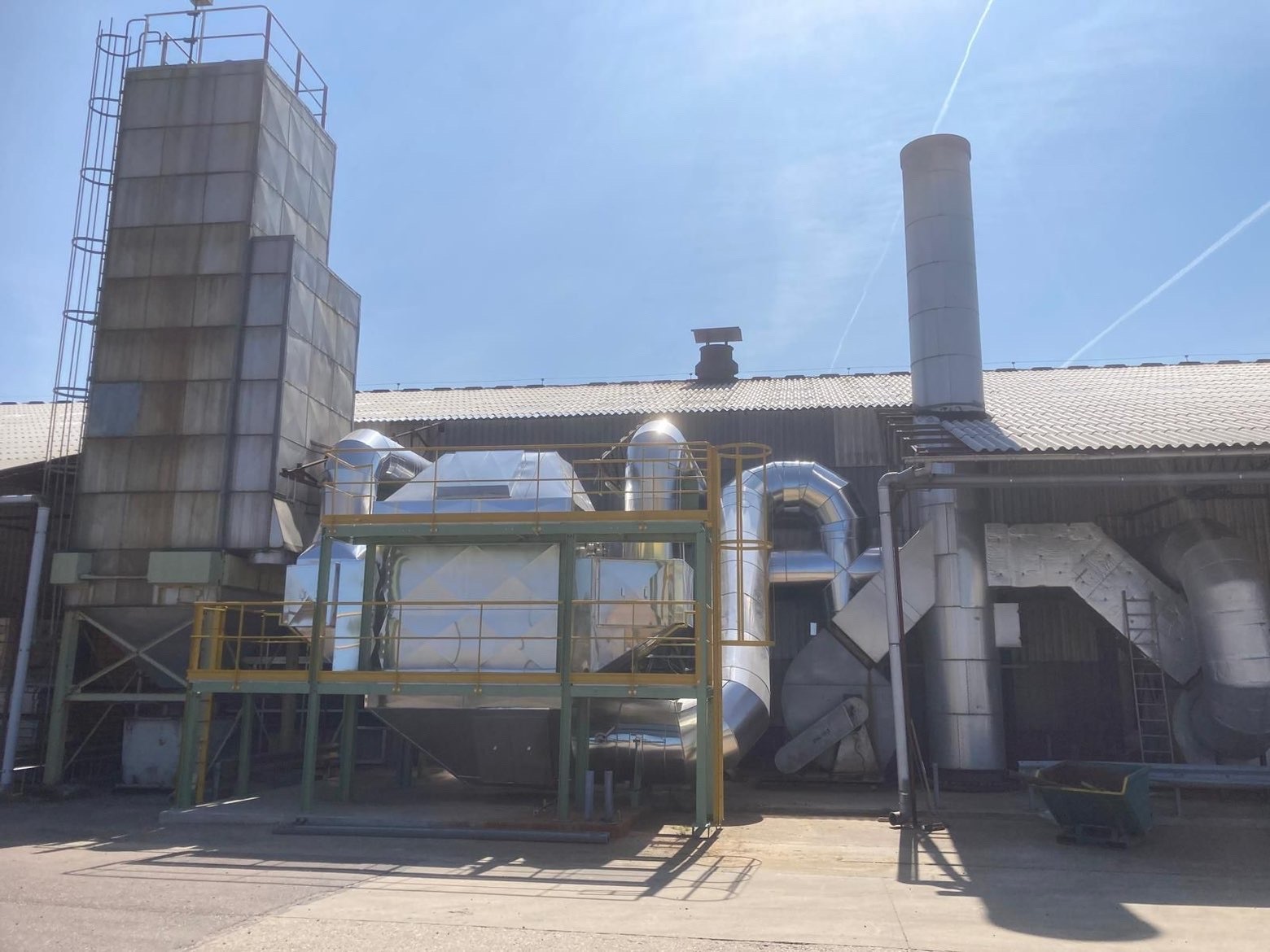
Keramo has also invested in a heat exchanger that reuses hot air from the kilns to preheat incoming air. “This reduces gas consumption by 18%.” This innovation not only benefits the environment but also provides financial advantages. Steven noted: “The investment in the heat exchanger has a cost ROI (Return on Investment) of two years.”
Another key innovation involves water management. The company uses canal water for production processes and collects used water in tanks to reuse it in other stages. “All water that isn’t needed is returned to the canal,” Steven emphasized.
Finally, Keramo is installing 16,000 square meters of solar panels in collaboration with ENGIE, a leading European renewable energy company that specializes in solar, wind, and low-carbon infrastructure. Through this integrated approach to energy efficiency, water recycling, and renewable energy, Keramo significantly reduces its ecological footprint and contributes directly to SDG 6 (Clean Water and Sanitation), SDG 7 (Affordable and Clean Energy), and SDG 13 (Climate Action).
Steinzeug Keramo draws its inspiration from the belief that industry and nature can coexist. As Steven explained: “We extract clay from the ground, make a pipe from it, and put it back into the ground. We call this closing the circle, and environmentally, that’s very good.” This philosophy underpins the company’s sustainable approach to resource use.
Climate change also plays a major role. As flooding becomes more frequent, Keramo adapts by increasing pipe diameters. “So we must keep up with the times, depending on environmental conditions, to protect people from flooding.” This shows the company’s commitment to both public safety and environmental protection.
Additionally, Keramo invests heavily in environmentally friendly energy innovations. Projects involving hydrogen, water reuse, and solar panels illustrate this commitment. These innovations were partly driven by European regulations but also by the need to reduce costs, as Keramo is an “energy-intensive company.”
The innovations at Steinzeug Keramo have had major environmental and economic impacts. The transition from heavy fuel oil to gas, and the ongoing shift to hydrogen, has drastically reduced CO₂ emissions, helping the company meet European climate goals. As Steven stated: “We’re already working on projects to switch to hydrogen, as the hydrogen line behind Keramo is progressing and should be operational by 2030.” This long-term transformation reduces the company’s ecological footprint and positions it as a leader in sustainable industrial production.
The installation of the heat exchanger reduced gas consumption by 18%, resulting in lower energy costs and increased efficiency. Steven highlighted that “the investment paid for itself within two years,” showing a clear financial and environmental return.
Water reuse has also had a substantial effect. By recycling canal water and minimizing discharge, Keramo reduced total water consumption by 10–15% within three years. This supports SDG 6 (Clean Water and Sanitation) and reduces pressure on local ecosystems.
The planned solar installation will further decrease reliance on non-renewable energy. Together, these innovations enhance efficiency, reduce resource usage, and solidify Keramo’s role as a sustainability pioneer in the European ceramics industry.
Keramo switched from heavy fuel to natural gas 20–25 years ago and is now investing in hydrogen and solar energy. These transitions have made production processes more efficient and profitable. As Steven explained: “You have to understand, the kilns used to run on heavy fuel. Now it’s gas. Cost-wise, that’s cheaper, but also better for the environment.” Fuel costs dropped significantly, improving profit margins.
In addition, Keramo reduced energy consumption by 18% through the heat exchanger and lowered water use by 10–15% through its water recovery system. These operational savings strengthened its financial position and ensured long-term business continuity.
Keramo reinvests these savings into sustainable growth and technological innovation. The company also invests heavily in its workforce of 105 employees. Steven emphasized: “We focus strongly on maintaining good mental health.” Team-building activities, training, and well-being initiatives foster commitment and collaboration.
Sustainability projects have also enhanced Keramo’s industry reputation, creating new investment opportunities and increasing trust from governments and infrastructure partners.
Keramo’s innovations create clear benefits for both society and the environment. The transition from heavy fuels to gas and, in the future, to hydrogen has significantly reduced CO₂ emissions. Reusing canal water also minimizes waste and supports circular production. As Steven stated: “We use canal water. And all water that isn’t needed is returned to the canal.”
The installation of thousands of solar panels will further increase renewable energy production, supporting Europe’s climate goals and reducing environmental impact.
Keramo’s ceramic pipes also have exceptionally long lifespans. Steven shared: “Some countries even require governments to use ceramic pipes. Why? They last over 200 years. They’re expensive, but you only have to install them once and they stay good.” This reduces raw material consumption, maintenance costs, and environmental disturbance for decades.
Through these efforts, Keramo contributes directly to SDG 6 (Clean Water and Sanitation), SDG 12 (Responsible Consumption and Production), and SDG 13 (Climate Action). The company supports sustainable infrastructure, reduces environmental pressure, and fosters long-term societal resilience.
Get stories of positive business innovations from around the world delivered right to your inbox.
Steven Konings, Maintenance Manager

Steinzeug Keramo is a European manufacturer of high-quality ceramic pipes used in water management and sanitation infrastructure. The company specializes in long-lasting, environmentally friendly pipe systems made from natural clay. With over a century of expertise, it combines traditional materials with modern, sustainable production methods. Keramo serves municipalities and infrastructure partners across Europe, providing durable solutions that ensure safe water transport and flood protection.