

John Mullin

Emily von Buttlar
Rachel Bermudez
Milad Sanchez-Saadati

Loyola Marymount University
Jeff Thies


Keep this story going! Share below!
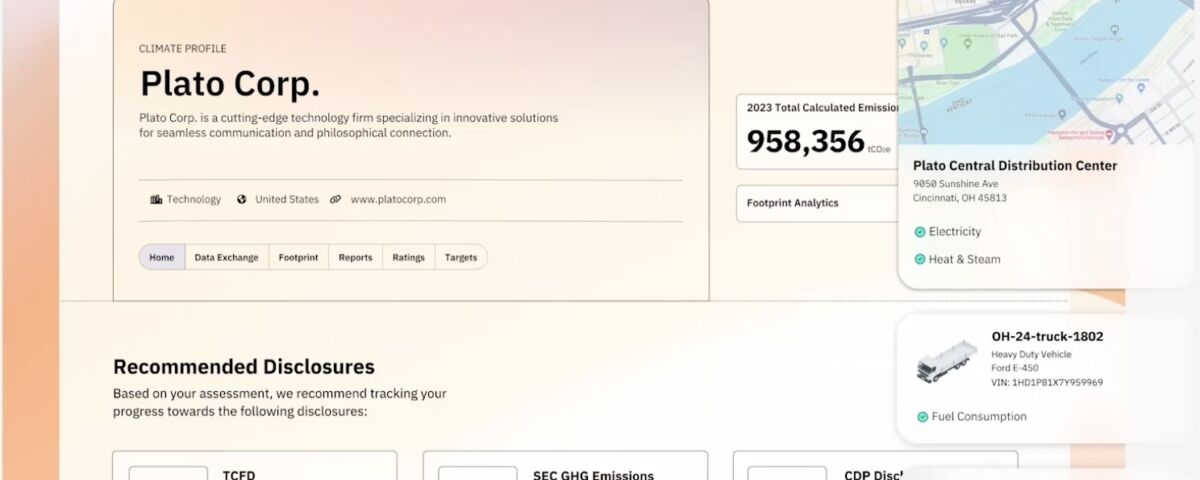
Persefoni offers a software-as-a-service (SaaS) platform that automates carbon accounting and climate disclosure, often described as the “TurboTax of carbon accounting.” The platform replaces manual spreadsheets and consultant-led reporting by enabling organizations to calculate, audit, and disclose Scope 1, 2, and 3 greenhouse gas emissions using data already embedded in their financial systems. By improving transparency, accuracy, and affordability of emissions reporting, Persefoni directly supports SDG 13: Climate Action by helping organizations comply with regulations and reduce their carbon impact.
Persefoni’s innovation is a digital carbon accounting platform designed to translate a company’s existing financial and operational data into verified Scope 1, 2, and 3 emissions reports. Often compared to the “TurboTax of carbon accounting,” the platform addresses a global challenge: converting complex internal cost data such as energy use, travel, and operations into standardized, auditable emissions disclosures. Previously, this process relied on costly consultants and error-prone spreadsheets. As Mike Wallace explained, “All the data that we’re grabbing comes from your own internal systems… but it hasn’t been translated very smoothly into carbon accounting.”
Founded in February 2020 by Kentaro Kawamori, Jason Offerman, and Kim Stroh, Persefoni automates tasks traditionally performed by external consultants. The platform pulls data from finance systems and converts it into emissions calculations aligned with the Greenhouse Gas Protocol. This makes carbon accounting more accessible, affordable, and scalable, supporting global efforts under SDG 13: Climate Action to reduce emissions and improve regulatory compliance.
While the initial idea emerged from challenges in the energy sector, Persefoni’s license-based software model is designed for global use. The platform continuously evolves based on user behavior and regulatory updates, allowing customer feedback to directly shape product development. This adaptability ensures the solution remains relevant as climate disclosure requirements expand worldwide.

The idea for Persefoni emerged when co-founder and CEO Kentaro Kawamori was serving as Chief Information Officer at Chesapeake Energy. Around six years ago, large institutional investors such as BlackRock began demanding transparency around carbon emissions. As the company’s technology leader, Kawamori assumed an enterprise software solution already existed. Instead, he discovered a major gap in the market. As Mike Wallace recalled, “Kentaro talked to IBM, SAP, Oracle and asked, ‘Do you have a carbon calculator?’ And there wasn’t one.”
At the time, companies relied on expensive consultants and static spreadsheets. Wallace described the frustration: “They’ve got these massive spreadsheets that they build year after year, and then we hand them to third-party auditors.” Kawamori realized the underlying data already existed within finance systems but was not being translated efficiently into emissions reporting.
This insight led to the vision of building a scalable, automated solution. Wallace described it as creating the “TurboTax of carbon accounting.” Kawamori understood that climate disclosure requirements would only increase and that software, not consulting, was the only way to scale. As Wallace noted, the standards already existed: “The Greenhouse Gas Protocol has been around for 25 years… all that was missing was the software.” Persefoni was built to fill that gap.
Persefoni has fundamentally changed how organizations measure and manage their carbon emissions. Previously, emissions reporting depended on manual data collection, consultants, and spreadsheets that were costly and difficult to audit. Persefoni introduced a digital platform that pulls emissions data directly from financial and operational systems, making reporting faster, more consistent, and more reliable. This shift reduced dependency on external consultants and allowed companies to respond more effectively to regulatory demands.
In the short term, organizations using Persefoni have saved time and reduced costs associated with emissions reporting and auditing. Wallace highlighted how the platform helped demonstrate that “carbon accounting and carbon risk management is affordable and in the best interest of shareholders.” Persefoni’s work with regulators, including collaboration with the SEC and contributions to California’s SB 253 and SB 261, further demonstrates its early impact.
In the long term, Persefoni enables consistent emissions reporting across industries and geographies. Its flexible software adapts to evolving global regulations, encouraging standardized disclosure and improved decision-making. By making emissions data actionable, the platform supports long-term decarbonization strategies and advances systemic progress toward SDG 13: Climate Action.
By replacing consultant-driven carbon accounting with scalable software, Persefoni experienced rapid growth. The company has raised over $190 million, including a $101 million funding round that set records for climate tech software. This funding supported expansion from fewer than 90 employees in 2021 to around 300 today. As Wallace explained, a software-based model allows the platform to operate globally and continuously while scaling through subscription licenses.
Persefoni also expanded access to carbon accounting. Its free product, Persefoni Pro, enables small and mid-sized businesses to measure emissions without hiring consultants. Additionally, Persefoni developed specialized tools for financial institutions, with four of the world’s top 20 banks now using the platform to measure financed emissions. One private equity firm reduced audit costs by nearly 30 percent after adopting the software.
Internally, the platform benefits sustainability professionals by reducing burnout. Instead of maintaining spreadsheets, teams can focus on reducing emissions. This has improved employee satisfaction and attracted talent to the sustainability field.
Persefoni promotes transparency and accountability by enabling organizations to accurately track and disclose their carbon footprint. This builds trust among stakeholders and allows companies to identify where emissions reductions will be most effective. By structuring emissions data like financial data, the platform helps organizations plan credible paths toward net-zero goals.
By lowering the cost of carbon accounting, Persefoni makes climate action accessible to a wider range of businesses. Small and mid-sized companies can now measure emissions that were previously too expensive to track, encouraging broader participation in decarbonization efforts.
Accurate data is essential for effective climate action. Persefoni’s platform supports long-term emissions reduction by identifying problem areas across Scope 1, 2, and 3 emissions. Increased transparency creates pressure to improve performance, reinforcing a positive feedback loop that advances global climate goals under SDG 13.
Get stories of positive business innovations from around the world delivered right to your inbox.
Mike Wallace, Strategic Market Engagement


Persefoni was founded in 2020 after its founder struggled to find effective software for tracking carbon emissions in his previous role. Today, the company develops digital tools that help organizations measure their carbon footprint and work toward net-zero targets. Persefoni’s team has grown to around 300 people and collaborates with corporations and financial institutions on climate reporting and compliance. Its platform allows clients to collect emissions data, analyze performance, and stay up to date with evolving environmental regulations, replacing the traditional reliance on consultants and complex annual spreadsheets.