

Sebas de Boer

Taahirah Baksh
Tianna Bacchus

Steven van Hal
Sep van Oosterhout

Avans University of Applied Sciences

University of Guelph-Humber
Kathy Ullyott


Keep this story going! Share below!
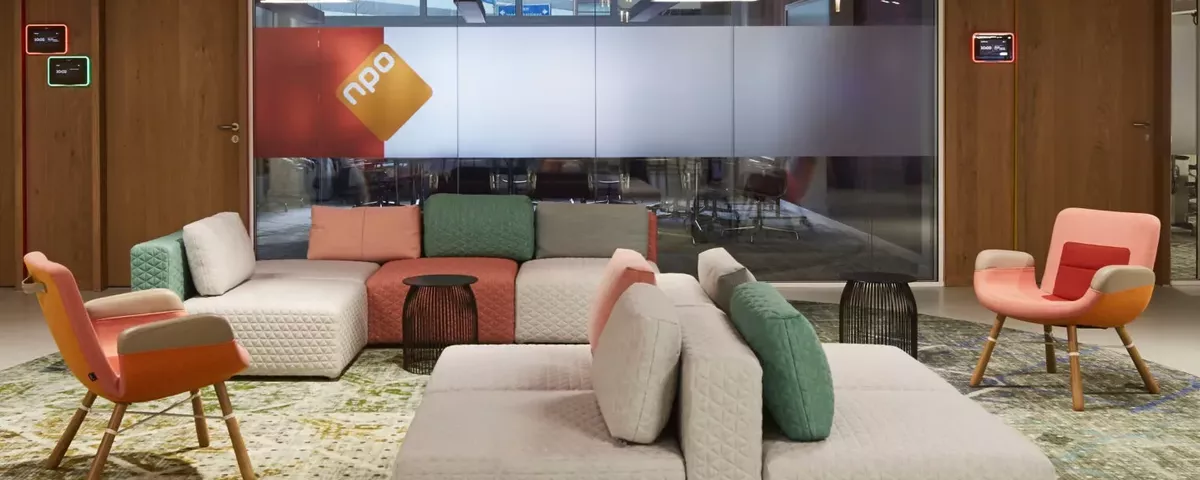
Moduplus is a product line developed by Dutch furniture manufacturer ROFA. It is transforming how offices are furnished and refurbished. Moduplus' modular sofas, acoustic rooms and tables can be endlessly reconfigured and reupholstered without any tools and eventually taken back to be used as new products.
All Moduplus products are made in ROFA’s energy-neutral factory in Tilburg, Netherlands, equipped with solar panels and supplied largely by local partners within roughly a 30-km radius using sustainable and recyclable materials. Moduplus also provides CO₂ passports and product circularity reports so clients can see the precise environmental impact of their interior choices.
By designing “shapeshifting” workspaces that grow and change with organizations instead of being ripped out and replaced, Moduplus advances several UN Sustainable Development Goals: SDG 8 (Decent Work and Economic Growth), SDG 9 (Industry, Innovation and Infrastructure), SDG 11 (Sustainable Cities and Communities) and SDG 12 (Responsible Consumption and Production).
At the heart of Moduplus is a radically simple idea for a circular economy: build interiors from a small set of modular elements that can be endlessly reused, repaired and reconfigured.
The original M+ Sofa is built from just a few base elements, notably a seat and a back that can be linked with metal brackets, without tools, into everything from a pouf or armchair, to a corner sofa, island, daybed or chairs. When layouts need to change, the pieces are unclipped and rebuilt elsewhere rather than discarded. The body is made from lightweight EPP (Expanded Polypropylene) foam, a tough, fully recyclable plastic that is produced without harmful gases and can be reused many times without losing performance.
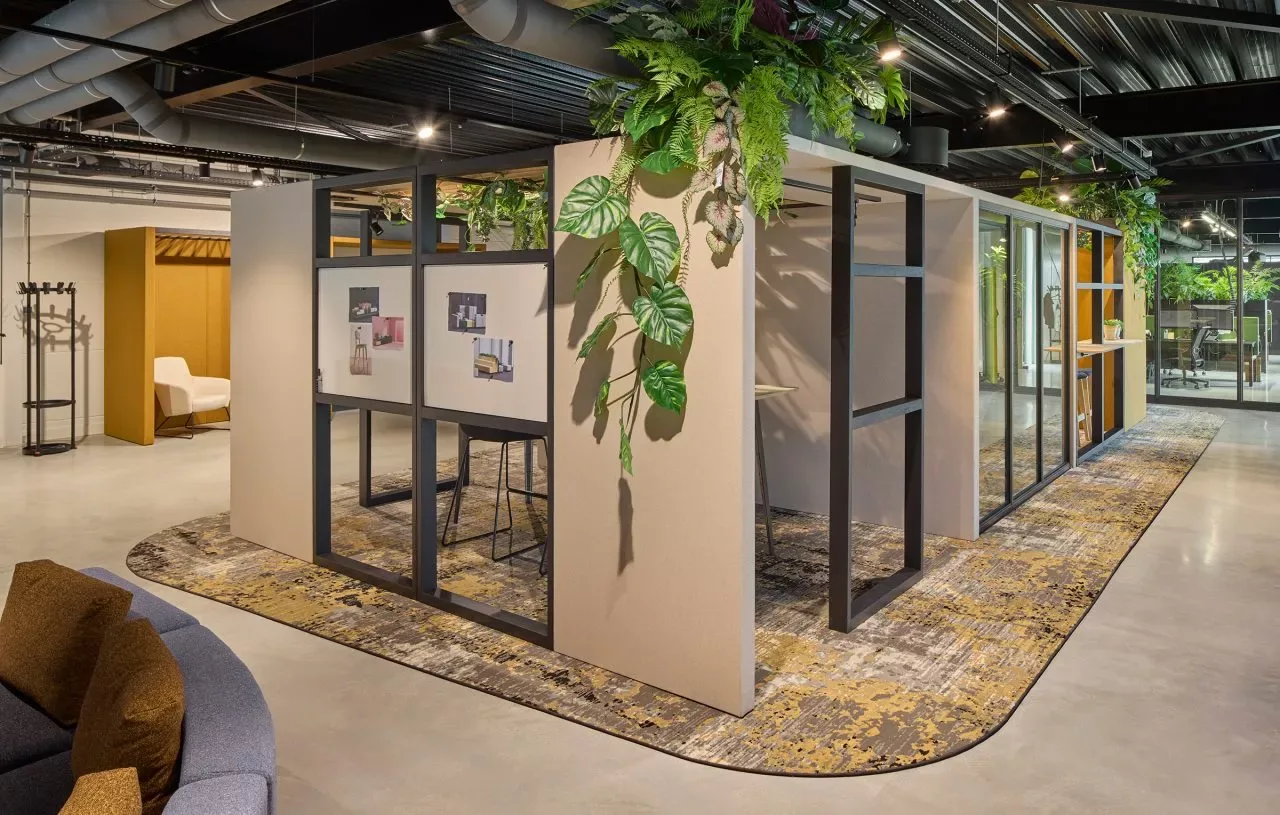
The same logic is applied to the M+ Room, a family of modular acoustic rooms built from wall, ceiling and glass panels that are assembled and moved without tools. These rooms use certified sustainable wood, recycled acoustic insulation, and quality fabrics without any cutting waste, and they are produced in ROFA’s energy-neutral plant in Tilburg using predominantly local materials.
To make impacts transparent, Moduplus issues CO₂ passports for the basic elements of M+ Room. These documents calculate the emissions for each product, including raw materials, transport and production, and even show negative values where bio-based materials like wood and bamboo store carbon. They also allow direct comparison with conventional alternatives.
Circularity goes one step further through a deposit system: customers pay a deposit when purchasing many M+ products. When the furniture comes back at the end of its use phase, ROFA refunds the deposit, disassembles the pieces and reuses or recycles as many components as possible.
Founder and CEO Ronald de Boer started ROFA in 1991, originally focusing on reupholstering office furniture because, in his words, throwing away good furniture “made no sense” when a new fabric could give it a long second life. What began as a cost-efficient mindset quickly evolved into a sustainability philosophy: by designing products that use the full width of fabrics and minimise cutting waste, the company realised it could save both money and materials.
As sustainability moved from niche topic to mainstream, De Boer kept pushing. He said that government and corporate tenders in the Netherlands used to focus almost entirely on price, but in recent years sustainability scores have become as important as cost and often more decisive. This shift rewarded ROFA’s early choices and encouraged the team to codify their circular principles into Moduplus.
The rapid rise of hybrid working after the COVID-19 pandemic added another source of inspiration. Organizations suddenly needed offices that could change function quickly. From rows of desks to meeting hubs, quiet focus rooms and collaboration zones. Moduplus responded with “shapeshifting” furniture and rooms that can be endlessly rearranged as needs evolve.
Moduplus has reshaped ROFA’s position from a traditional upholsterer into a recognised circular innovator in project furniture. ROFA’s energy-neutral building in Tilburg, equipped with 238 solar panels, drastically cuts the operational footprint of production while supporting electric mobility.
Regionally, ROFA/Moduplus has been nominated for the Brabant Circular Innovation Top 2025 and honoured by the city of Tilburg as “Impactmaker of the Quarter,” recognising their leadership in circular design, energy-neutral production and material reuse.
What started as a sustainability ambition has become a clear source of competitive advantage. In major public and corporate tenders, where sustainability now carries significant weight alongside price, ROFA’s circular design, local sourcing and transparent CO₂ reporting often score highly and help win projects. De Boer notes that the company has been particularly successful in these tenders exactly because of its sustainability credentials.
Modularity and circularity also make strong business sense. Designing elements to use fabric and materials efficiently reduces purchasing costs and almost eliminates production waste; the small remaining streams are compacted and sold to partners who turn them into new materials. The deposit system and take-back guarantee create recurring relationships with clients and future revenue from refurbishment and re-manufacturing.
SDG 8 – Decent Work & Economic Growth
ROFA and Moduplus emphasise care for people. The factory is light-filled, well-ventilated and designed for safe, ergonomic work. The company is an officially recognized training firm, offers opportunities to people with a distance to the labour market, provides language courses where needed and even includes a prayer room and washing facilities for employees who wish to use them. Together with sponsoring local sports clubs, this approach supports inclusive local growth while aligning day-to-day business with social well-being.
SDG 9 – Industry, Innovation & Infrastructure
The M+ Room and M+ Sofa provide an alternative to building fixed walls or repeatedly refitting interiors. Offices can be re-configured with panels and modules instead of demolition and new construction, reducing resource use and disruption. Investment in energy-efficient technologies, CO₂ accounting tools and innovative materials such as bamboo and EPP shows how industrial design can pair high performance with low environmental impact.
SDG 11 – Sustainable Cities & Communities
By helping organizations reuse existing buildings more flexibly, Moduplus supports more compact, adaptive cities rather than continual new construction. Acoustic rooms improve comfort and productivity in open-plan offices, while local production and supplier networks keep economic value and employment in the Tilburg region.
SDG 12 – Responsible Consumption & Production
Moduplus is built entirely around circular design principles. Products are modular, easy to repair and designed for multiple life cycles, with most materials from EPP cores to textiles and wood. Chosen for recyclability or reuse. CO₂ passports and product circularity reports give customers concrete data on emissions and circularity, turning procurement into an informed, responsible choice rather than a guess.
Get stories of positive business innovations from around the world delivered right to your inbox.
ROFA is a Dutch developer and manufacturer of sustainable project furniture, specialising in industrial upholstery, modular seating systems, acoustic solutions and reupholstery services. Moduplus is ROFA’s circular, modular product family, including sofas, walls, rooms and tables. Their products are designed and marketed as “shapeshifting furniture” that allows office spaces to be reconfigured repeatedly with minimal environmental impact.