

Adriana Apesteguia
Ramon Aguilar
Maria Alvarez Olarte
Josue Villanueva

Universidad de Navarra

Dominican University

Isabel Rodriguez Tejedo

Anjali Chaudhry


Keep this story going! Share below!
Our business operates local grocery stores with a model that combines accessibility, social impact, and environmental responsibility. They create stable jobs and actively hire and train people at risk of social exclusion, while transitioning to renewable energy, reducing emissions, and improving energy efficiency in their stores. This directly supports the UN SDGs on decent work and economic growth, reduced inequalities, affordable and clean energy, responsible consumption and production, and climate action.
The innovation is led by Óscar, a franchise owner of three Carrefour convenience stores in the region of Pamplona, in northern Spain. Eleven years ago, he left his job as a taxi driver and created his own limited company to enter a sector that was totally new to him. His model operates under the Carrefour franchise system: he runs each store with significant managerial autonomy — from hiring and training staff, to choosing suppliers, to adapting product selection to the needs of each neighborhood. This structure allows him to act locally while benefiting from the resources, training, logistics, and financial stability of a major international retailer.
The “how” of the innovation is twofold: social and environmental. On the social side, his company actively hires and trains people at risk of exclusion, including people with disabilities, recent migrants who do not yet speak Spanish, and young students trying to access their first work experience. By creating real, paid opportunities for these groups, the business directly promotes dignity in work, inclusion, and upward mobility. On the environmental side, he aligns with Carrefour’s sustainability commitments: cutting plastic, reducing greenhouse gas emissions, replacing refrigerants with CO₂ systems that meet EU standards, and moving toward 100% renewable energy by 2030 through Power Purchase Agreements.
This approach supports several UN Sustainable Development Goals in a concrete, day-to-day way: decent work and economic growth through fair employment and training; reduced inequalities through access to jobs for vulnerable groups; responsible consumption and production through more sustainable store operations; and climate action through emissions reduction and energy transition.
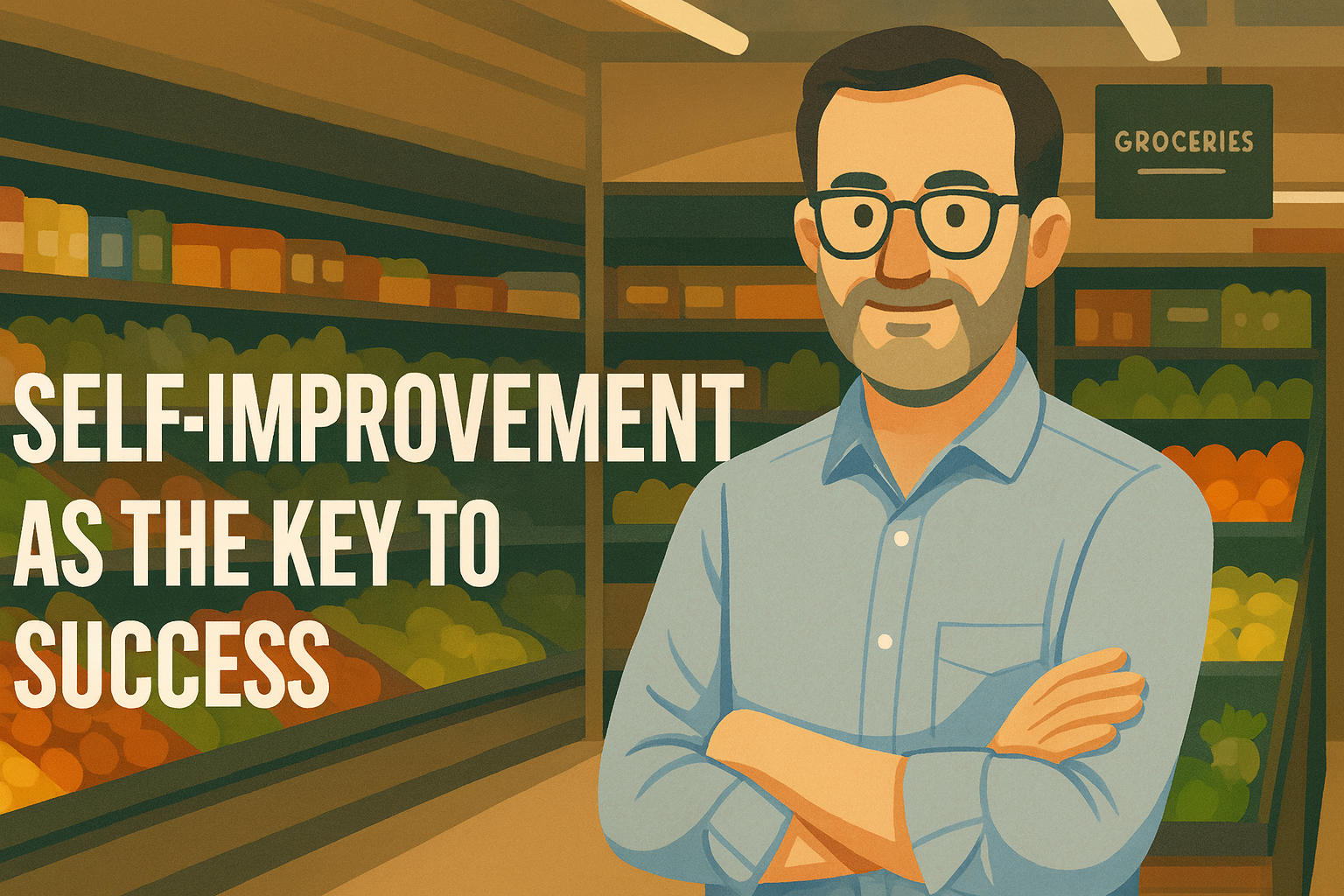
The leader, Óscar, was inspired first by ambition and the desire to change his life. He explains: “It was the desire to aim higher and try new things. I believe ambition is something one should never lose.” He left “a stable job in the transport sector” to “change the direction of my career and get involved in hospitality — this time as my own boss,” even though it was “a world completely unknown to me.”
Another source of inspiration comes from attitude in the face of adversity. He says, “All beginnings are tough… however, I believe the key was not losing motivation and facing adversity with a good attitude.” That mindset became even more important when, “three years ago, when I was at my best both professionally and personally, I was diagnosed with an illness that changed my life completely.” At that moment, he had to “stop everything,” put work “in the back seat,” and “establish a list of priorities.”
What ultimately drives him now is purpose beyond profit: people and dignity. He insists, “The success of a good company lies in the people who make it up — not in artificial intelligence or in capital,” and warns that “seeing your workers as a means to achieve your goals instead of as people is the first step toward failure.”
He wants his legacy to be “perseverance, effort, and the motivation to expand and grow,” but also to be remembered for “the attitude I maintained despite adversity,” always putting “health (both physical and mental) and your loved ones” first.
In the short term, the innovation created direct social and economic impact in the Pamplona region. When Óscar opened his first Carrefour Express franchise eleven years ago, he immediately generated local employment under his own management structure. He runs his own recruitment, selects products based on each neighborhood, and keeps “a very healthy work environment where nobody feels inferior to anyone else regardless of their position.” This autonomy lets him respond fast to local needs: he can hire people who might otherwise struggle to access the job market, including people with disabilities, recent migrants who don’t yet speak Spanish, and young students seeking their first experience. He explains that offering them a real paid position “can give them a boost,” and even short temporary contracts are designed so they “learn the fundamentals and make the most of their abilities.”
In the long term, the impact scales in two directions: stability and sustainability. Economically, what began as one store in a small town outside Pamplona has grown into “three branches in different parts of the region,” showing that this model is viable, repeatable, and able to sustain growth over more than a decade — even through personal crisis and market pressure.
Environmentally, the business participates in Carrefour’s decarbonization push, which includes targets like using 100% renewable energy by 2030 through Power Purchase Agreements and reducing emissions 50%, including by replacing traditional refrigerants with new CO₂-based systems aligned with EU regulations. This means the stores are not only supporting Decent Work and Reduced Inequalities now, but are structurally tied to Climate Action and Responsible Production going forward. The evidence of impact is visible: continued expansion, maintained employment, integration of vulnerable workers, and concrete operational steps to cut waste, plastic, and emissions.
Because the business chose to operate multiple neighborhood supermarkets under a single, self-managed structure, it has been able to generate steady local revenue and reinvest that revenue into growth instead of remaining as a single location. That decision translated into opening additional stores in different areas, negotiating directly with suppliers, and adapting the offer to what each community actually buys. This expansion effect is important: every new shop is not just a point of sale, it’s another point of stability — salaries, contracts, schedules, training — all financed by the performance of the business itself rather than outside speculation. In practical terms, the company created its own internal pipeline: income from one site supports the launch and consolidation of the next.
Because the business directly recruits, trains, and manages its own staff instead of outsourcing that responsibility, it has been able to both hire and keep people. That improves retention, but it also creates a workplace culture where employees are more likely to stay because they feel seen and protected, especially during personal or health difficulties. Protecting wellbeing in that way isn’t just “nice,” it reduces turnover costs and keeps know-how inside the company. This has a compounding effect: experienced employees stabilize day-to-day operations, which frees leadership to focus on opening and running more stores, which in turn creates more roles and more chances for internal promotion. In other words: by treating employment as long-term, the business unlocked growth opportunities that would not exist with constant churn.
This innovation benefits society first through inclusion in the labor market. The company does its own hiring and intentionally gives opportunities to people who are often excluded: individuals with disabilities, recent migrants who arrive without language skills, and students who have never had a job. They are not treated as “cheap labor,” but as people to train, support, and develop so that they “learn the fundamentals and make the most of their abilities.” This matters socially because access to stable paid work is one of the strongest protective factors against long-term vulnerability. By creating those contracts in local supermarkets, in specific neighborhoods, the business is directly improving the dignity, independence, and prospects of these groups — right now, not as a future promise.
It also benefits society by defending healthy working conditions from the inside. The company culture is explicitly built on the idea that “the success of a good company lies in the people who make it up,” and that seeing workers only as a tool for profit is “the first step toward failure.” That approach protects mental and physical health: after a serious illness forced the founder to stop and reorder his priorities, he now places wellbeing, balance, and respect at the center of management, not as an accessory. This is a social impact in itself: it creates workplaces where staying is compatible with being well, which improves retention, financial stability for employees, and by extension stability for their families.
Environmentally, the business participates in a shift toward cleaner operations: reducing greenhouse gas emissions, replacing traditional refrigerants with CO₂ systems that comply with EU standards, cutting plastic, and moving toward 100% renewable energy through long-term energy purchase agreements. These actions reduce the climate footprint of daily retail activity and align local convenience stores with broader climate and efficiency goals rather than treating sustainability as something “for big companies only.”
Get stories of positive business innovations from around the world delivered right to your inbox.
Oscar Apesteguía Urzainqui, Boss
Carrefour is a French multinational business that focuses on the distribution and sale of food, nowadays it is considered one of the world’s leading food retailers.
It operates in four different markets—Europe, Asia, Latin America, and, more recently, Africa. Due to its significant expansion, it has been exploring new horizons, retaining its core identity while adding new product categories, including electronics.
It is a public limited company; however, it is structured so that entrepreneurs can enter the market by establishing their own private limited company as franchisees. In this case, such franchises are designed for retail food sales and are known as “Carrefour Express.”
Each of them enjoy managerial and operational autonomy: they run their own recruitment processes, choose their store layout based on guidance from professionals within the company, negotiate with suppliers; and they have a certain degree of freedom to introduce products they believe may succeed, considering the characteristics of the area in which each of them operate.