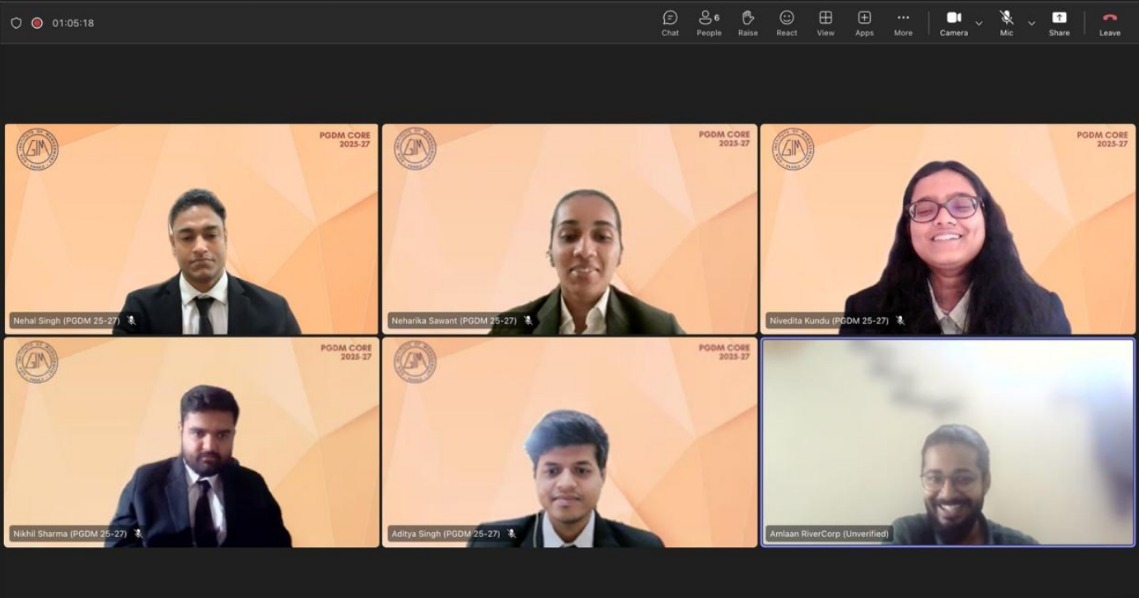

Aditya Singh

Nivedita Kundu
Nikhil Sharma
Neharika Sawant
Nehal Singh
Goa Institute of Management

Divya Singhal


Keep this story going! Share below!
Amlaan RiverCorp’s innovation, CataClean 2.0, is India’s first indigenously built water trash skimmer designed to remove floating waste from rivers, lakes, and canals where conventional systems fail. By integrating waste collection with a circular “trash-to-cash” model that converts recovered plastic into upcycled products and green jobs, the solution directly advances SDG 6 (Clean Water and Sanitation), SDG 12 (Responsible Consumption and Production), SDG 14 (Life Below Water), and SDG 8 (Decent Work and Economic Growth). The innovation transforms polluted waterways into engines of environmental restoration, livelihood creation, and sustainable blue economy development.
Amlaan RiverCorp’s core innovation is the development of CataClean 2.0, India’s first indigenously built industrial-grade water trash skimmer designed specifically for shallow and mid-sized water bodies such as lakes, ponds, irrigation canals, and urban rivers. Unlike large 18-ton government skimmers that can operate only in deep rivers, or small, remote-controlled robots that lack efficiency at scale, CataClean 2.0 fills the critical gap by operating in water bodies as shallow as 1.5 meters deep. The vessel is equipped with an AI-enabled trash detection module that maps floating waste, identifies its type, and optimizes collection routes-similar to a navigation system for garbage collection. This ensures higher operational efficiency and real-time data reporting on the volume and type of waste collected.
The innovation goes beyond collection. Amlaan integrates a circular economy model where collected waste is sorted, recycled, and upcycled into usable products such as planters, bags, and souvenirs. This creates a self-sustaining revenue loop while reducing landfill burden. The solution contributes directly to UN SDG 6 (Clean Water and Sanitation) by improving water quality, SDG 12 (Responsible Consumption and Production) through recycling and upcycling, SDG 14 (Life Below Water) by preventing plastics from entering marine ecosystems, and SDG 8 (Decent Work and Economic Growth) by creating green livelihood opportunities. By combining indigenous engineering, AI-driven efficiency, and circular waste management, Amlaan RiverCorp offers a scalable and impactful solution for restoring India’s water ecosystems and promoting sustainable urban development.
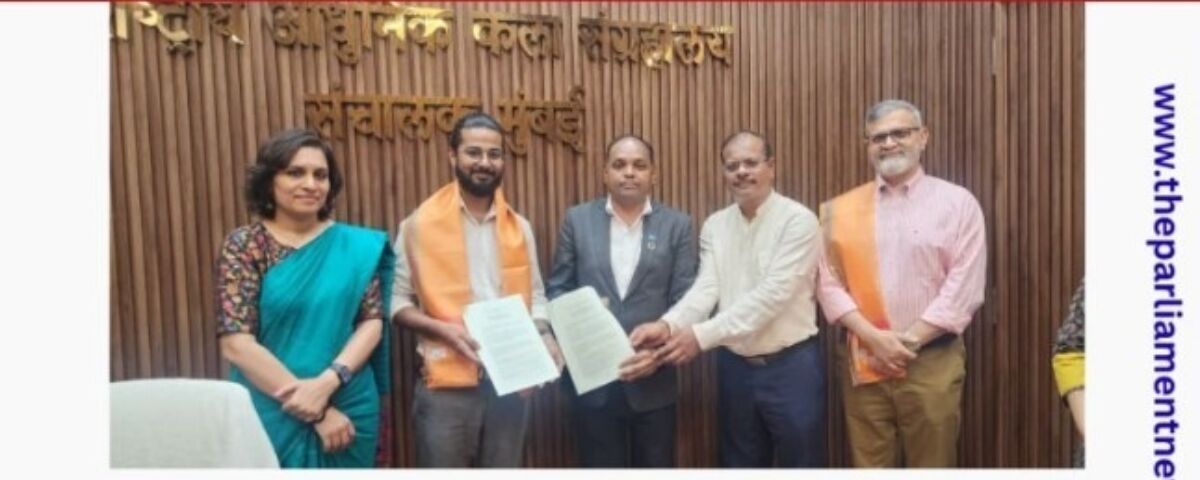
Swachhata Abhiyan Din 2025 x Seva Parv @ National Gallery of Modern Art, Mumbai Ministry of Culture Govt. of India
The idea for Amlaan RiverCorp was born during the stillness of the COVID-19 lockdown in 2020. Stranded at home while the world paused, the CEO, then a naval architecture student, suddenly found himself with time to think deeply. He recalls, “The moment lockdown hit, my mind was like you wanted time, you now have so much time. I should make something productive and purposeful out of it.”
His academic training played a decisive role. While studying marine engineering, he learned how submarines and aircraft carriers manage waste efficiently within closed systems. “We were taught how to build the highest efficient system of waste management on marine vessels,” he explains. That sparked a powerful question in his mind: if ships in the middle of oceans can manage waste systematically, why can’t we apply similar thinking to rivers filled with plastic?
The idea began as a college paper. When a professor rejected his submission, it became a turning point rather than a setback. “He told me I rejected it because if you had got the chance, you would have won it. That rejection became the biggest step of success.” Instead of abandoning the idea, he chose to build it.
At the same time, witnessing polluted water bodies deeply affected him. During early volunteer efforts, before any machine existed, “students, locals, dreamers pulled two tons of trash.” That moment cemented his resolve. This was no longer an academic concept; it was a responsibility.
As he says, “This will not be an import. It will be ours, powered by our innovation, our sweat, our hope.”
What began as a student’s lockdown reflection became a mission to restore dignity to rivers and the people who depend on them.
Amlaan RiverCorp’s innovation has already shifted how polluted waterways are perceived and addressed in India, transforming an environmental challenge into a community centered opportunity. In the short term, the company mobilized volunteers, students, and local residents to remove tons of floating waste, even before the water skimming vessel was fully operational. As the CEO shared, “So far, my collaborator network, students, locals, dreamers, has pulled two tons of trash, before we even have a real machine.” This early human-powered impact not only cleaned water bodies but also awakened environmental ownership among communities historically burdened by waste.
As the innovation matured, the first prototype of the indigenous skimmer designed for shallow canals and lakes where conventional machines can’t operate became operational, capturing and segregating waste more efficiently. Beyond physical cleanup, Amlaan RiverCorp closed the loop by partnering with recyclers and upcyclers to convert collected plastics into useful products like planters and souvenirs. The CEO emphasized this circular approach, saying, “We collect it, we sort it, we give it to recyclers… that becomes the raw material for upcyclers.” This created a replicable, sustainable model linking environmental restoration with economic value creation.
In the long term, the innovation’s impact extends to livelihoods and policy influence. By generating green jobs and nurturing community engagement, Amlaan helped strengthen local economies and sense of stewardship. Its work aligns with global sustainability goals such as Clean Water and Sanitation (SDG 6), Decent Work (SDG 8), Responsible Production (SDG 12), and Life Below Water (SDG 14). Evidence of impact includes tons of waste removed, CSR funding secured, community partnerships forged, and a clear prototype ready for wider deployment. As the CEO reflects, “This innovation isn’t just about water it’s about restoring dignity and hope.”
Amlaan RiverCorp’s innovation benefits the business by addressing a clear technological and operational gap identified by the founder. Existing government trash harvesters are extremely large (around 18 tons) and cannot operate in shallow water bodies such as lakes, ponds, and irrigation canals. At the same time, small remote-controlled robots lack the efficiency required to tackle India’s scale of floating waste. By developing CataClean 2.0, an indigenously built industrial-grade trash skimmer that can function in water depths as low as 1.5 meters and collect up to 2 tonnes of floating waste, the company positions itself in a “middle segment” where no viable solution currently exists. This creates strong differentiation.
The AI-enabled trash detection module strengthens this positioning. It maps floating waste, optimizes collection routes, and generates data on the quantity and type of debris collected. This data-driven reporting increases operational efficiency and supports a measurable impact, which is important in the Business-to-Government (B2G) model the founder is pursuing.
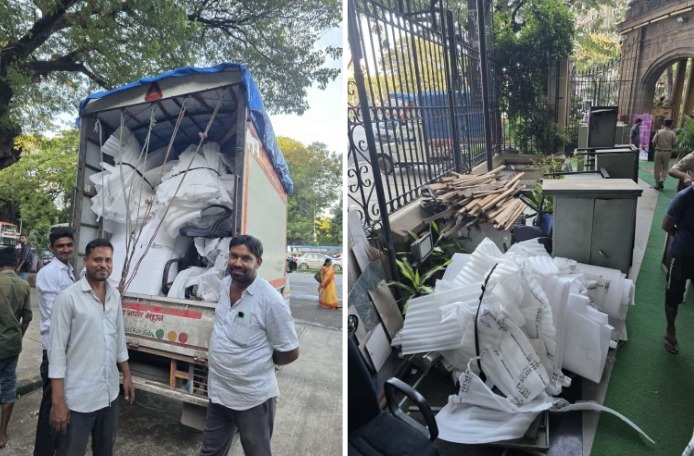
While the vessel is under construction, the company has implemented a backend circular model. Waste collected from institutions such as the National Gallery of Modern Art is segregated, recycled, and upcycled into products like planters and bags, creating a revenue loop. The initiative operates with 17 volunteers and interns working pro bono and is mentored by two IAS officers. It has received ₹20 lakh in CSR funding from HDFC Bank and ₹30 lakh from the Ministry of Social Justice and Empowerment, strengthening financial sustainability.
For many communities in India, polluted rivers have become a painful part of everyday life. Water once used for drinking, farming, and worship is slowly becoming a floating landfill. Amlaan RiverCorp’s innovation was born from a refusal to accept this reality. Led by its CEO and powered by students and volunteers, the initiative began with people standing in dirty water, pulling out plastic with their bare hands. As he recalled, “Before we even had a machine, students and locals were removing trash because they believed these rivers deserved better.” That belief became the foundation of lasting change.
Through its indigenous skimmer, CataClean 2.0, Amlaan now removes floating waste from shallow lakes, canals, and rivers that large machines cannot reach. Every bottle removed is one less threat to fish, birds, and families who depend on these waters. Cleaner waterways mean safer food, healthier children, and revived ecosystems. Over time, these restored habitats allow life to return quietly, proving that healing is possible.
But the innovation goes beyond environmental repair. It restores dignity. Through its “trash-to-cash” model, waste is transformed into planters, bags, and souvenirs, creating income for local workers and pride in honest, green livelihoods. The CEO explains, “This is not just about cleaning water, it’s about giving people hope and ownership.”
In the short term, rivers look cleaner, and communities feel empowered. In the long term, Amlaan is nurturing a culture where protecting water is a shared responsibility. What once symbolised neglect is slowly becoming a symbol of resilience a reminder that when people care enough to act, even the most polluted waters can begin again.
Get stories of positive business innovations from around the world delivered right to your inbox.

Amlaan RiverCorp is a social enterprise dedicated to restoring India’s rivers, lakes, and coastal waters through innovative water-cleaning technologies and community driven action. The company designs and deploys indigenous water trash skimmers while building a circular economy that converts collected waste into valuable, upcycled products. By combining engineering, environmental stewardship, and livelihood generation, Amlaan RiverCorp creates sustainable solutions for pollution management. Its mission is to protect aquatic ecosystems while empowering local communities and promoting a thriving blue economy