

Juan Bareiro Ochipinti
Jayrie Hernandez
Gabriela Jacome-Quinteros
Juan David Meza Van Strahlen
Yunchi Zhang
Hanlin Zhao

Universidad de Navarra

University of Glasgow

Dominican University

Isabel Rodriguez Tejedo

Paul Quigley

Anjali Chaudhry


Keep this story going! Share below!
CECEP Solar Energy Co., Ltd. (CECSEC) considered by some the photovoltaic arm of China Energy Conservation and Environmental Group Corporation (CECEP), stands at the center of China's low carbon transformation. The company develops, constructs and operates photovoltaic power plants across China and abroad, while also engaging in engineering, procurement, and constructions (EPC) services, operation and maintenance (O&M) regarding the photovoltaic module recycling. Driven by the conviction that clean energy and economic affluence, are mutually reinforcing, CECEP solar energy integrates photovoltaic technology into diverse applications, such as large scale desert installations that have rehabilitated degraded land or even the circular recycling system that reclaims valuable materials from retired modules.
The company’s innovations support several United Nations Sustainable Development Goals (SDGs), including SDG 7 (Affordable and Clean Energy), SDG 12 (Responsible Consumption and Production), SDG 13 (Climate Action), and SDG 15 (Life on Land). Through these innovations, the company advances renewable energy access, promotes circularity and contributes to ecosystem restoration. In this way, CECEP Solar Energy’s innovation spans the following fields:
Desert Photovoltaic Restoration:
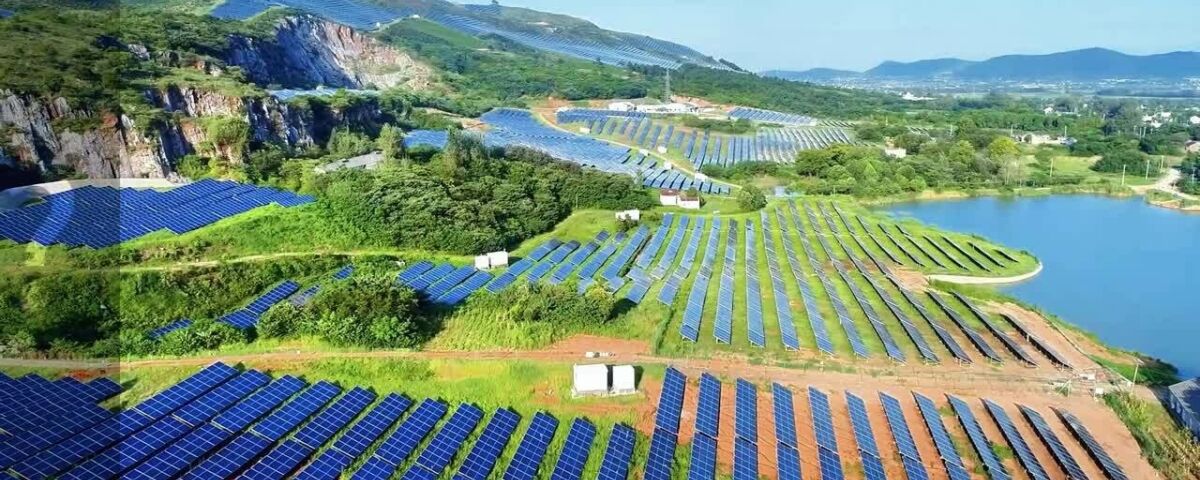
In north-western China, CECEP Solar Energy has transformed the Gobi terrain and created productive energy ecosystems. Beneath the solar panels, previously lifeless, there is now land that supports vegetation. As the interviewee mentioned, “Land that was once barren is now covered with vegetation beneath the solar panels. This shows a clear improvement in the microclimate and soil conditions. This way, the company literally redefines the land use; generating electricity while also, simultaneously, promoting carbon sequestration and biodiversity recovery. This project aligns with SDG7, aiming to increase the global share of renewable energy, and SDG 15 which focuses on combating climate change (desertification), and restoring degraded land. This way, the company literally redefines land use: generating electricity while simultaneously promoting carbon sequestration and biodiversity recovery.
Circular Economy Recycling:
CECEP Solar Energy leads China's move toward a closed-loop PV industry. Thus, this approach integrates circular economic principles into the solar panel lifecycle: from manufacturing to recycling said solar panels through an end-of-life (EOL) module reducing general waste. CECEP implements this idea through the “reverse disassembly”. First, by removing junction boxes and aluminum frames, then recovering copper, glass and trace metals. As the interviewee said: “Recycling and reusing photovoltaic modules is a key step towards a circular production model. This process supports SDG 12, reducing waste generation through recycling and reusing, while also contributing to SDG 9 by upgrading the industrial process to a more sustainable production system.
Digital and operational excellence:
The company employs drone-based inspection and zone-based management, and AI supported maintenance in remote solar farms. This way they reduce their environmental footprint, cut cost, enhance safety and allow real time tracking of performance throughout thousands of panels. These digital tools promote operational efficiency and optimization, indirectly supporting SDG 9 (Industry, Innovation and Infrastructure) by integrating advanced technologies.
Collaborative Finance and Partnership:
CECEP Solar Energy finances roughly “70%-80% through banks and investors while covering the remaining 20-30 percent with our own equity.” Its strong policy alignment and credibility turn it into an attractive and favorable investment option, as well as successful lending terms and government support; this way they prove that sustainability can coexist with financial prudence. The company’s partnership with banks and government bodies reflect SDG 17 (Partnerships for the Goals); collaboration enables financial sustainability for clean energy initiatives.
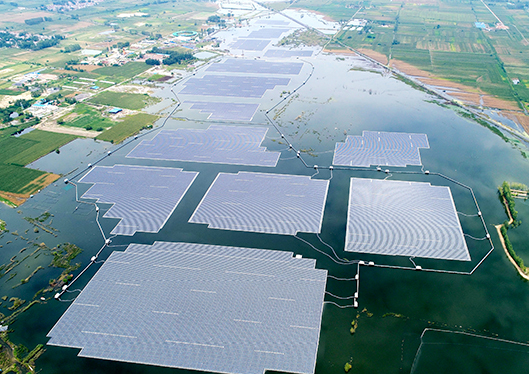
The company’s origins lie in the intersection between moral duty (corporate responsibility) and strategic foresight. When the Chinese government announced ambitious renewable energy targets, CECEP recognized a national mission compatible with its own founding values. “Our parent company… has energy conservation and environmental protection as its core mission”, connecting the corporate ethos with China’s environmental agenda.
As the representative explained, “Our aim is to be a leading global enterprise in energy efficiency and environmental sustainability.” This sense of responsibility was strengthened by the company’s participation in national energy goals, as mentioned before. The interviewee also described the “rushing for June 30th” (known as Qiang 630) as a defining moment that taught the company determination and teamwork.
Although photovoltaic technology already existed, the combination that the company has implemented improved efficiency; and national subsidies around 2009 gave CECEP the opportunity to industrialize clean energy at scale. The decision to enter the PV sector in 2009 signaled not compliance, but a conviction that innovation in clean energy would shed light on the company's future.
The dual inspiration (ethical and pragmatic) has allowed CECEP Solar energy to be identified both as a commercial enterprise and a steward of sustainable development.
The measurable and qualitative impacts of CECEP Solar energy reach across economies, environments, and social dimensions. CECEP directly contributes to:
SDG 7 (Affordable and clean energy): Generating low carbon electricity and increasing the global share of renewable energy given by the CECEP’s expansion of solar generation capacity.
SDG 8 (Decent work and economic growth): Supporting community employment.
SDG 11 (Sustainable cities and communities): Making solar panels to reduce the dependence on fossil fuels and cut greenhouse gas emissions.
SDG 12 (Responsible consumption and production): Promoting renewable energy use, and innovation and manufacturing processes that substantially minimize carbon footprints and material waste (CECEP’s reverse disassembly recycling system).
SDG 13 (Climate Action): Reducing emissions and integrating climate measures into national policies alignment with China’s carbon neutrality roadmap.
SDG 15 (Life on Land): Combating desertification and restoring ecosystems with the desert PV restoration projects.
SDG 17 (Partnerships for the Goals): Collaborating with the Chinese government, and local authorities for solar projects.
Each impact corresponds to SDG targets: 10-megawatt plant contributes to SDG 7; CO₂ reduction fulfills SDG 13, and its desert greening works in favour of SDG 15. Together these achievements reflect a deep integration of environmental, economic, and social outcomes within the SDG framework.
These are excerpts from the interviewee himself, taken directly from the recorded interview which reflect some of the Sustainable Development Goals previously mentioned and that are most relevant to the company and place particular emphasis on them.
Carbon and Energy Metrics - SDG 7:
A 10-megawatt plant operating 2,000 hours annually generates “about 20 million kilowatt-hours” of clean electricity, avoiding approximately “20,000 metric tons of CO₂ emissions each year.” With China installing 100-200 GW of new solar capacity annually, such figures scale dramatically.
Ecological Transformation - SDG 15:
By shading and stabilizing sandy soil, panes reduce wind erosion and are able to maintain more moisture, enabling plants and vegetation to grow beneath them; an unintended but powerful form of desert restoration.
Socioeconomic progress - SDG 8, 11, 12:
“Since the arrival of the renewable energy industry, local incomes have grown significantly - through land leases, agriculture, and employment opportunities” the interviewee explained. Renewable objects have revitalized the underdeveloped western provinces in China.
Qualitatively, the enterprise`s desert projects rejuvenate ecosystems and stimulate local economies through jobs and land-lease income, as previously mentioned. The company`s integrated approach illustrates how a single organization can create a multi layered value across the entire SDG framework.
Sustainability functions as the company's engine for competitiveness. This way, they function in such a way:
Reputation and Market Access
“Engaging in clean energy projects has strengthened our reputation and made us a preferred partner across industries”. This credibility allows and facilitates new contracts, joint ventures, overseas expansion…
Cost Optimization:
Digital inspections and material recycling reduce operational and production costs, directly improving the margins, and allowing for more investment.
Investor Confidence:
The business model of the company, and the objectives behind their economic activity blended with the clean energy alignment ensures a steady financing and long term growth. This especially applies to CECEP, taking into account the importance China is starting to place in sustainability related companies; such as those who follow the SDGs.
Globalization and Soft Power:
The Interviewee observed that Chinese solar panels now power homes across Europe and beyond western geographical barriers. “When you travel to Europe… You'll often see solar panels made by Chinese manufacturers. This shows how our technology is serving global needs”. On top of that, their sustainable model of work record eases entry into overseas markets, especially now with the trade war happening in the international markets.
Since implementing its large-scale PV projects, the company has been able to expand the capacity of its gigawatts, generating jobs in construction and O&M, improving investors' confidence and opening overseas markets. Because of the invested clean energy innovation, it strengthened its competitiveness, margins and long term financial partnering.
Therefore we conclude that through their own business model, and these mechanisms, CECEP Solar Energy proves that green investment is not a constraint, rather a catalyst for sustainable profit.
CECEP Solar Energy`s impact on the people and planet is tangible and multidimensional. The firm demonstrates that renewable energy enterprises can achieve more than carbon reduction; they can restructure local economies and ecosystems, while also reshaping cultural attitudes toward sustainability.
As aforementioned, in north-western China, where most photovoltaic plants are located, local communities have benefited from the activity of the company. Said local communities once relied on limited agriculture and faced economic stagnation. The introduction of the project provided a new source of long term income. Besides, by leasing previously unused land for solar arrays, rural families now receive steady compensation while new technical and maintenance positions allow youngsters to remain in their hometowns. They also contribute to local tax revenues, which are reinvested in public infrastructure.
The company's projects show a strong demonstrative effect. The visible success of desert greening solar plants helps local populations understand that environmental protection and industrial progress is not contradictory. Collaborating with educational institutions, the company organizes technical training, internships and public education campaigns. These initiatives cultivate a generation of workers who are able to see sustainability as a professional and civic responsibility. By providing income opportunities in underdeveloped rural areas, the company contributes to SDG 10 by reducing economic inequality between regions
One of the most exceptional environmental transformations occurs below the solar panels. The installation of the PV arrays stabilizes loose soil, reduces wind erosion and conserves more moisture, allowing hardy vegetation to take root. Mr. Zhang talks about this vividly: “Land that was once barren is now covered with vegetation beneath the solar panels. This shows a clear improvement in the microclimate and soil conditions.” This microecological improvement has been expanding outward, and is now supporting insect life and preventing desertification. The panels function simultaneously as energy generators and environmental shields. Such actions and benefits embody SDG 13 (Climate action) and SDG 15 (Life on Land).
CECEP environmental contributions extend across the entire lifecycle of solar technology, as mentioned in the beginning; from production to operation and end–of-life cycle and recovery. The company's recycling and reuse program transforms potential photovoltaic waste into a continuous resource stream. At the same time, the enterprise's operational projects deliver substantial emission reductions and air quality improvements. Each 10-megawatt of solar energy offsets approximately 20,000 metric tons of CO₂ emissions annually, replacing fossil fuel generation that would eventually become abrasive pollutants. Beyond climate impact, these reductions also enhance public health by cutting particulate and sulfur emissions, particularly in regions previously dominated by coal power. This way, they are directly addressing SDG 3 (good health and well-being); specifically of the surrounding communities, SDG 12 (Responsible Production) and SDG 13 (Climate action).
Get stories of positive business innovations from around the world delivered right to your inbox.
Mr. Zhang, Chairman

CECEP Solar Energy is a leading state‑owned clean‑energy company in China, dedicated to large‑scale photovoltaic generation, circular‑economy recycling of solar modules, and integrated solutions for a low‑carbon future. Part of the China Energy Conservation and Environmental Protection Group (CECEP), we drive innovation across technology, ecology and society to help power a sustainable world.