

Nadja Westerholm
Selma Fagerholm
Ellen Hallaskari
Oghenetega Oke
Hanken School of Economics
Martin Fougere


Keep this story going! Share below!
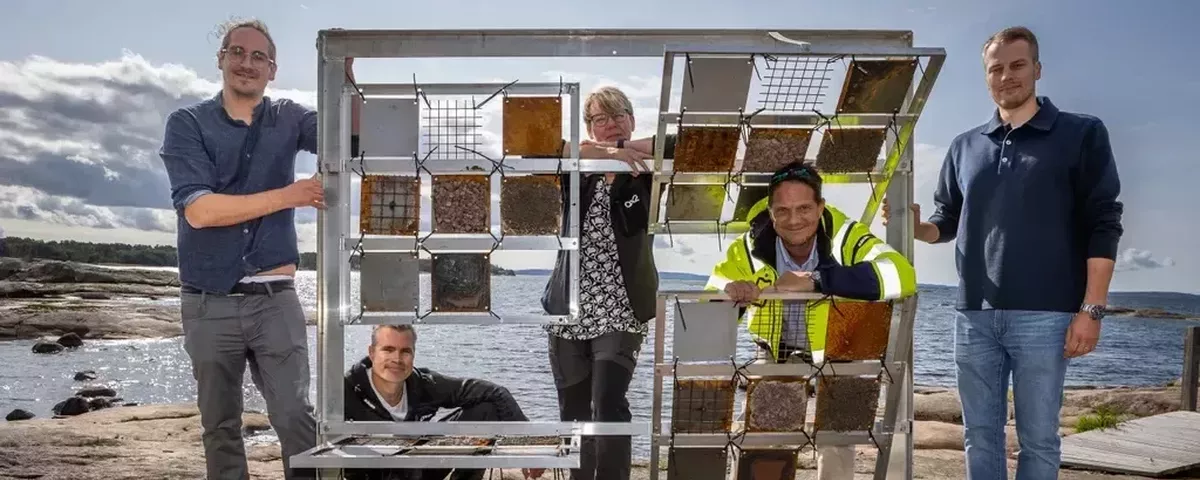
Project Björkskär’s focus is developing and testing nature-based methods, such as the farming of biomass and establishment of new hard substrates on wind farm infrastructure, with the aim of increasing biodiversity in offshore environments and enhancing marine ecosystems. Through their nature-based solutions, Project Björkskär supports the UN Global Biodiversity Framework and the SDGs, strengthening the resilience of the Baltic Sea to climate change and increasing biodiversity in marine areas.
Project Björkskär is investigating ways to strengthen biodiversity by adding hard bottom substrates for marine species on foundations and erosion protection, and by testing “cod hotels” through holes drilled into the foundations. In addition, Project Björkskär is exploring how these areas can be used for both energy production and the farming of biomass, such as algae and mussels, for food, other industries and feed for marine wildlife.
To build local solutions, Project Björkskär works with natural materials, such as ropes, nets and wooden structures. Project Björkskär is constantly developing new tools and methods to strengthen the ecosystem, these efforts mainly focusing on blue mussels, gutweed, bladderwrack and sea lace, while also continuously exploring new Baltic Sea species. In addition to the current solutions, Project Björkskär is in the process of creating a financial incentive for restoration, linking marine ecology to the economy to bring new resources and investments into restoring the Baltic Sea.
Project Björkskär has made their business case all about biodiversity, making sustainability the core of their strategy. Through nature-based solutions, they contribute to a better world and support SDGs 7, 8, 9, 12, 13, and 14.
The inspiration behind Project Björkskär stems from a strong commitment to nature positivity. As Lotta Nummelin herself explains in the interview, this value has served as a guiding principle for her personally, OX2 as a company and the project itself.
“We have an ambition within OX2 that all our projects should be nature positive and that is kind of the reason why I work because of this value driven approach” (Nummelin, personal communication, 2025)
This ambition became more tangible over time:
“When I started here it was kind of my mission to make that nature positive also happen in our offshore” (Nummelin, personal communication, 2025).
This problem needed a solution – how could this vision be realized in practice? By chance, Lotta Nummelin from OX2 met Joel Lindblom from Under Ytan, and they discovered that they shared similar ideas. Lindblom had already initiated a collaboration with Magnus Hanstén from Nemo Seafarms. This connection paved the way for OX2 to join the partnership, and it was through this network that Project Björkskär began to take shape.
The project is thus rooted in a unique blend of shared values, strategic network and the concretization of business ideas. It brings together administrative expertise and practical know-how, forming the foundation for a nature-positive offshore initiative.
Project Björkskär is an ongoing process, meaning its impacts are still developing. As a part of the offshore vision of OX2, Björkskär has made a test structure called LifePin. LifePin is designed from the surface materials that were proven most successful in previous projects. LifePin makes it possible to simultaneously explore the best depth of the wind turbines for the key species in the Baltic Sea. Nummelin described LifePin as a combination of everything they have learned in Björkskär, offering a clear target of both short-term goals and long-term vision.
Implementation and innovation are the guiding words of 2025. We believe that these short-term goals reflect Nummelin’s approach to failure: failure and challenges as something beneficial and needed, as they are a fast way to know if something is working or not. This mindset is needed for fostering learning and innovative thinking, to ultimately support the long-term vision of Project Björkskär.
The long-term aim for Project Björkskär is to make biodiversity a part of all kinds of offshore infrastructure and make biodiversity industry standard. We would argue that Project Björkskär has long-term overall impact on the following Sustainable Development Goals (SDGs), as outlined by United Nations: 12 (responsible consumption and production), 13 (climate action), and 14 (life below water). This since Project Björkskär, based on nature-based solutions, contributes to building the resilience of the Baltic Sea in terms of climate change, seeing biodiversity as a goal in its own right. This is a promising project since it contributes to further development of renewable energy and wind parks, since biodiversity and ecosystems-supporting actions are going to be actual in implementing renewable energy in the future.
Project Björkskär is a collaborative initiative between the business sector, public sector and research, aimed at advancing a sustainable “blue economy”. By integrating ecology and economy, the project creates incentives for investment in the Baltic Sea. This partnership encourages investment and innovation, aligning with SDG 17 on partnerships for sustainable development.
According to Nummelin, Project Björkskär has played a key role in shaping core business concepts of participating companies. For instance, Under Ytan and Nemo Seafarms have evolved from producing biomass for other industries to developing a new business model. Nummelin further explains that the project has helped transform biodiversity into a central business concept, turning ecological value into a market advantage.
These business benefits have grown throughout the project’s development. Aligned with the SDG 9, Project Björkskär initially utilized cost-effective materials, enabling scalable and adaptable solutions. Aiming to extend the concept into more offshore installations, Nummelin emphasizes the importance of integrating financial incentives into climate-positive initiatives. When businesses see economic value in sustainability, it opens up new opportunities for funding and resource allocation.
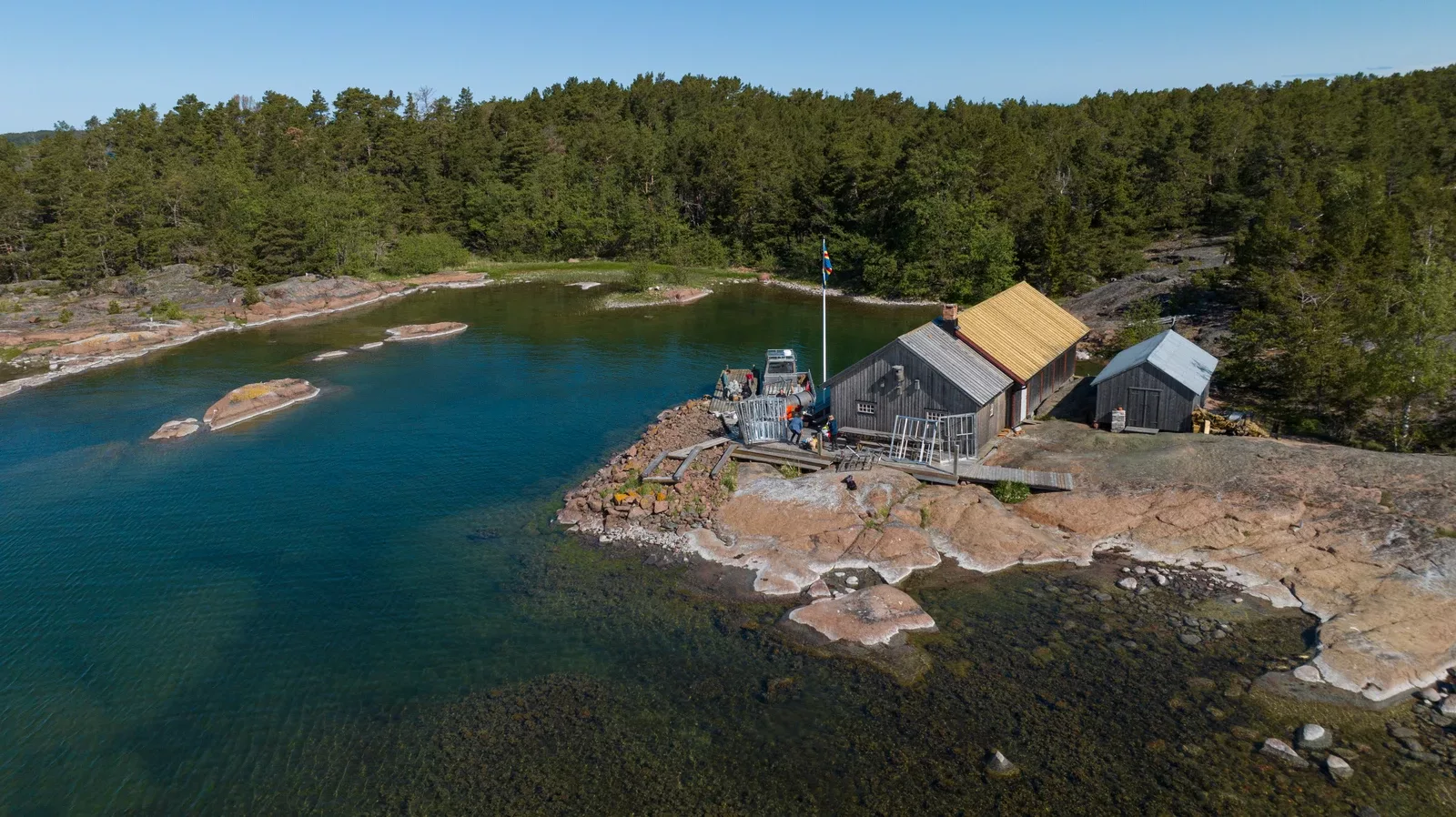
Given the offshore location, far from the mainland of Åland Islands, Björkskär provides a unique platform for business development, learning and environmental stewardship. It enables experimentation, monitoring and innovation in areas that would otherwise remain unused.
Looking ahead, Nummelin envisions the potential to further capitalize on biodiversity by introducing higher pricing for electricity that is both renewable and biologically diverse. One proposed mechanism is the creation of “biodiversity credits”, which would reflect the added ecological value of the energy produced. This concept supports SDG 8, promoting inclusive and sustainable economic growth.
There are several benefits to OX2:s operations and specifically the Björkskär project. The environmental benefits are evident as, for example with the development of LifePin, they are aiming to both strengthen living water ecosystems and create habitats that currently do not exist. With these actions they are creating places for ecosystems to flourish, as well as creating potential for these habitats to spread to surrounding areas. Thus, OX2 Åland’s ambition to fight climate change is realized by developing processes where offshore wind power harnessing is biodiversity positive, yet also in line with SDG 7 - affordable and clean energy.
The environmental benefits go hand in hand with the societal benefits of Björkskär, as the results of the project can inspire more knowledge and specialization within the energy sector. Ultimately, this further opens up possibilities for green energy and green jobs. With more market options, energy pricing will also become more modest. The prevalence of nature positive and economically beneficial businesses in society can furthermore influence individuals to engage with sustainable innovations and make eco-friendly choices. These actions can push the wind power industry, as well as other industries, to make biodiversity a standard and a priority.
Get stories of positive business innovations from around the world delivered right to your inbox.
Lotta Nummelin, Permit Manager
Project Björkskär is a biodiversity lab in collaboration between OX2, Under Ytan Ab and Nemo Seafarms Oy, located in the archipelago of Åland Islands. The aim of the project is to develop and test methods for increasing biodiversity in offshore environments. Our interviewee Lotta Nummelin represents OX2, a renewable energy company based in Stockholm with 500 employees active in 10 different market in Europe and Australia. OX2 creates and manages projects within wind power, solar power and energy storage to secure sustainable energy solutions.