

Andrew Spector
Olivia Bonnette
Jonathan Burton

Case Western Reserve University - Weatherhead School of Management

Chris Laszlo
Anasha Kannan Poyil


Keep this story going! Share below!
Brightline addresses the U.S. public transit deficit, dominated by cars, by developing an intercity railway system. This initiative supports UN Sustainable Development Goals 9 and 11: building resilient infrastructure, fostering sustainable industrialization and innovation, and making cities safe and sustainable. Their core model focuses on sustainable transportation, with active environmental monitoring.
Brightline’s business model itself is an innovation on the transportation scene, especially when it comes to integrating environmental impact with their business activity. Where the automotive industry may take passive steps to analyze their emissions, Brightline actively monitors their ecological footprint, driving their resulting business solutions. The results have been nothing short of impressive, as Brightline removes up to 72K metric tons of carbon dioxide from the atmosphere daily, while also removing 3 million cars off the road each year in favor of public transportation (SDG 13). Throughout construction, work is also done to preserve the environment surrounding the rail corridor. In the process of expanding to Orlando, Brightline actively preserved over 600 acres of wetland and relocated 191 fragrant prickly apple trees and 944 Gopher tortoises, both species being native to Florida (SDG 15).
A more formidable display of the business model’s impact is in Brightline’s station designs and operative potential. Up and down the corridor, Brightline has kept sustainability in mind when planning the construction of their stations. In their newest Orlando station, sustainable materials and processes are actively employed to preserve water, eliminate waste, and utilize renewable materials (SDG 12). At its Aventura Station, Brightline and its design partner SOM employed a 26kW solar canopy, sustainably powering the station. In pursuing seamless operations, Brightline optimized its customer experience by investing in first-mile, last-mile mobility service, fielding a fleet of electric-powered transportation options to get riders to and from the station. This includes Brightline-branded Teslas, electric golf carts, and electric vans (SDGs 9, 11).
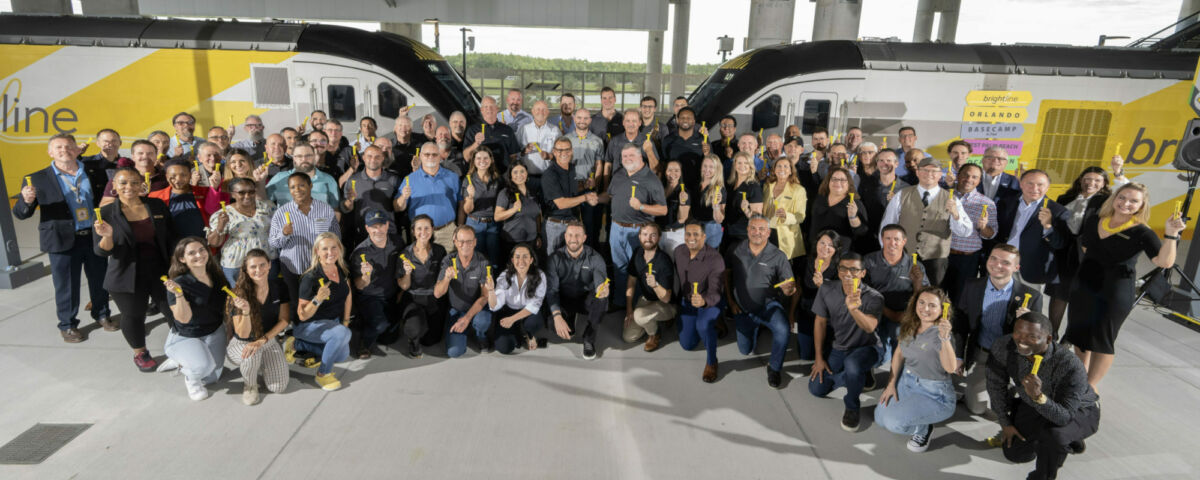
In speaking about what inspired Brightline’s innovation, the CEO kept returning to one core idea: mission matters more than money. He explained that people usually come to work for one of two reasons, as “missionaries or mercenaries.” In his view, mercenaries are motivated by “title, cv, money,” while missionaries are people who genuinely “believe in the mission.” That distinction seems to shape not only how Brightline hires, but also how the company innovates. Rather than seeing innovation as something driven only by technology or profit, he argued that “innovation is a natural byproduct of a mission-driven org.” That is a powerful idea because it suggests Brightline’s success comes from intentionally building a team of people who care deeply about the company’s purpose.
For Brightline, that purpose is bigger than transportation alone. He described it as “a worthy and value-driven effort to take cars off the road and reduce pollution and provide people a safe way to travel,” while also helping to “elevate train transportation for the country.” What stood out to me most was that his inspiration was deeply collective. When reflecting on one of Brightline’s biggest milestones, he said the real high point was being able to stand with the team after accomplishing something difficult together. That shows his leadership is rooted in shared purpose, not individual ego. Overall, the CEO seems most inspired by building a company full of missionaries, people who are values-aligned, committed to the mission, and therefore naturally driven to push the innovation forward.
Brightline’s innovation is not just “a train.” It is a modern, private, intercity passenger rail system built to compete with both driving and short-haul flying on crowded corridors. Founded in 2017, Brightline now operates an approximately 235-mile rail corridor between Miami and Orlando, positioning itself as the only privately owned and operated intercity railroad in the United States. What makes the model innovative is that it combines transportation infrastructure with a hospitality-style customer experience: easy digital booking, high-quality stations, smoother boarding, and a travel product designed to feel convenient and appealing rather than outdated. In our interview, the CEO made it clear that Brightline’s mission is to “take cars off the road and reduce pollution and provide people a safe way to travel,” while also elevating rail transportation in the United States.
What Brightline is really doing, then, is reimagining rail as both a sustainability solution and a user-experience solution. The CEO described innovation at Brightline as constant “continuous improvement,” from reducing friction in the booking flow to improving signage, baggage timing, and physical train design features like the platform gap filler that makes boarding easier and safer. That matters because one reason Americans often avoid trains is not just speed, but convenience and perceived quality. Brightline is trying to solve both problems at once: build better rail infrastructure and make people actually want to use it.
Brightline’s innovation has created clear business value because the company did not just build a train line. It built a premium transportation product that people are actually willing to use again and again. By February 2026, Brightline Florida reported $18.3 million in monthly revenue, up 8% from February 2025, while long-distance revenue rose 11% and total ridership increased 11% to 274,110 trips. Average daily ridership reached a record 9,790, and ancillary revenue also grew, including especially strong growth in baggage fees. That matters because it shows the model is producing more than ticket sales alone; it is generating repeat customer demand and additional revenue streams around the travel experience. Brightline Rewards had grown to about 598,000 members by that point, and 59% of long-distance riders were repeat customers.
The innovation has also opened new markets and expanded the company’s reach. Brightline said its corporate travel program had 239 corporate agreements in place in February 2026, while third-party booking volume was up 21% year over year. The company also said its Amadeus integration should help it sell more tickets through travel agents, airlines, cruise lines, and corporate travel managers, which is important because it moves Brightline beyond leisure travel and into business and partnership channels. On a broader level, Brightline says it is committed to creating and sustaining more than 2,000 jobs in South Florida, and its Florida expansion has been credited with generating more than 10,000 jobs and over $6.4 billion in economic impact.
A huge business benefit is also financial: Brightline’s model opened new investment opportunities through green bonds and tax-exempt municipal-style transportation bonds. In our interview, the CEO explained that Brightline has used “private equity and tax-exempt bonds and debt,” and specifically described tax-exempt municipal bonds approved by the state as attractive to investors. Brightline’s own reporting says it issued Green Bonds in December 2020 to finance or refinance eligible green projects, and in December 2024, the Florida business issued an additional $286 million in tax-exempt bonds. The U.S. Department of Transportation explains that private activity bonds lower the cost of capital and increase private-sector involvement in transportation projects. That is why this innovation is so important: because Brightline built a transportation solution with environmental and social benefits, it also created a structure that could attract large-scale capital and support future growth.
The immediate and most direct beneficiaries of Brightline's innovative railway system are the residents and frequent travelers of Florida, particularly those utilizing the primary route connecting the state's major hubs. This route spans from the vibrant city of Orlando, extending south through West Palm Beach, Boca Raton, Fort Lauderdale, and Aventura, culminating in Miami. These individuals now have a premium, high-speed rail alternative for their inter-city travel needs, offering a significant advantage in convenience, time savings, and a more relaxed travel experience compared to driving on congested Florida highways.
Looking ahead, Brightline is planning for a substantial expansion, with plans to introduce new routes that will extend the benefits of their passenger rail service to an even broader group of people. A primary focus for future development is a highly anticipated route linking Las Vegas, Nevada, and Los Angeles, California. Given the dense population and high frequency of travel between these two cities, establishing a high speed rail corridor here should deliver substantial convenience and efficiency benefits to millions of travelers, easing air traffic and road congestion.
Beyond the immediate customer base, Brightline's operations contribute positively to the global effort to combat climate change by significantly decreasing overall carbon emissions associated with intercity travel. As more routes are developed by Brightline and more people can rely on their trains for their transportation needs the more their positive impact on the environment grows. They are on track to becoming a carbon neutral company in the near future. This model shift from personal vehicles to efficient diesel-electric rail transportation plays a crucial role in reducing the transportation sector's carbon footprint across the United States.
Get stories of positive business innovations from around the world delivered right to your inbox.
Patrick Goddard, CEO

Brightline currently operates intercity rail service from Miami to Orlando, FL, focused on sustainable transportation in corridors that are "Too Long to Drive, Too Short to Fly". By providing this crucial service, Brightline revives a long-dormant market keen on making social impact. Unlike previous intercity rail ventures, the company strives to make the experience genuine and seamless for their travelers, building travel lounges and comfortable spaces into their stations. By employing a business model rooted in sustainable operations and customer satisfaction, Brightline brings to the table a business model of genuine value and memorable experience.