

Insanul Qisty Azzahara Dzulhijah
Cheryl Jusuf
Adriana Gomez
Marta Janer

Babatunde Agboola

Babajide Owoeye
IPMI International Business School

Universidad de Navarra

University Of South Wales

Amelia Naim Indrajaya

Isabel Rodriguez Tejedo

Liam Newton


Keep this story going! Share below!
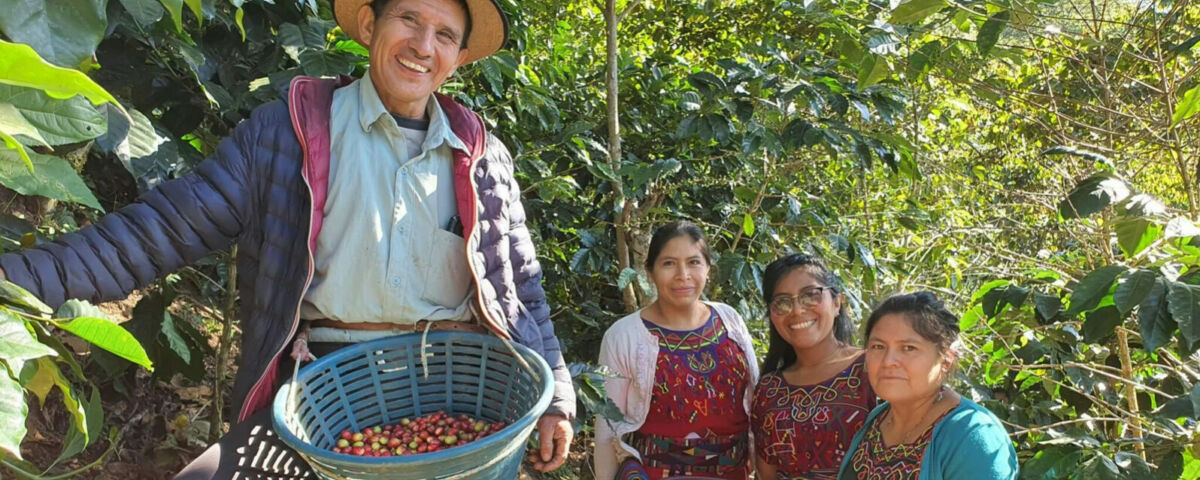
Beneficial Returns is an impact investment fund that provides affordable, mission-aligned loans to social enterprises working in sustainable agriculture, clean water, renewable energy, and livelihood creation. By directing capital toward initiatives that empower smallholder farmers, expand access to clean water, and promote affordable clean energy, the organization accelerates progress toward SDG 1 (No Poverty), SDG 6 (Clean Water and Sanitation), SDG 7 (Affordable and Clean Energy), and SDG 8 (Decent Work and Economic Growth). Through this approach, Beneficial Returns enables inclusive, sustainable growth across Latin America and Southeast Asia.
Beneficial Returns has developed an innovative financial model that bridges the gap between philanthropy and conventional investment, creating a sustainable flow of capital for enterprises advancing the UN Sustainable Development Goals (SDGs). Founded to address the lack of affordable financing for impact-driven businesses, the organization provides mission-aligned loans to social enterprises working with low-income farmers and underserved communities. Unlike traditional lenders that prioritize maximizing investor returns, Beneficial Returns begins with what borrowers can realistically afford, ensuring that capital remains inclusive, patient, and effective. This borrower-centered approach allows enterprises to grow without compromising their social or environmental mission.
A core element of this innovation is Beneficial Returns’ relationship-driven lending model. CEO Ted Levinson and Managing Director Alex Tee maintain close relationships with borrowers through regular site visits, impact verification, and streamlined due diligence processes. As a result, deal cycles can be completed in as little as eight weeks, significantly faster than industry norms. This proximity builds trust and transparency, ensuring that financing decisions are grounded in real, on-the-ground outcomes rather than abstract metrics alone.
One illustrative example is Beneficial Returns’ partnership with Borrower A, a social enterprise in Thailand that trains rice farmers in regenerative and organic agriculture. This initiative supports SDG 1 (No Poverty) by improving farmer livelihoods and SDG 2 (Zero Hunger) by strengthening sustainable food systems. By eliminating chemical fertilizers, the project protects biodiversity, restores soil health, and revitalizes local ecosystems. Farmers benefit from safer working conditions, improved yields, and visible ecological renewal, including the return of fish and dragonflies to their fields. Through flexible repayment structures and accessible financing, Beneficial Returns fills a critical market gap and enables Borrower A to scale its impact.
At a broader level, Beneficial Returns converts idle philanthropic capital, of which private foundations in the U.S. are typically required to deploy only 5% annually, into active loan capital that contributes directly to poverty alleviation and sustainable development. This model addresses financing gaps in emerging markets while accelerating progress toward SDG 1, SDG 6, SDG 7, and SDG 8. By supporting enterprises delivering clean water, renewable energy, and livelihood opportunities across Latin America and Southeast Asia, Beneficial Returns demonstrates how finance can be re-engineered as a force for systemic, equitable change.

Harvesting rice with pride — Asian borrowers cultivating a greener and stronger community.
During the interview, Koko De Vera, Credit Director at Beneficial Returns, shared that her motivation to work in impact investing stems from a desire to make finance more meaningful and inclusive. She emphasized that traditional financial systems often overlook those who need capital the most, like smallholder farmers, local entrepreneurs, and communities at the base of the economic pyramid. As she explained, “We wanted to prove that finance can be a tool for empowerment, not just for profit.”
Koko’s background in corporate finance exposed her to the limitations of conventional lending models, where social impact is rarely a central consideration. This experience shaped her determination to help build a system in which capital serves both financial discipline and human development. Reflecting on her work, she noted, “Poor people are often the ones who work the hardest. We need to believe in and invest in their potential.” Her perspective aligns closely with Beneficial Returns’ mission of combining rigorous financial practices with empathy, partnership, and long-term impact.
Through its financing model, Beneficial Returns supports enterprises working in sustainable agriculture, renewable energy, clean water access, and livelihood creation, sectors that are often underserved by traditional lenders. In the short term, these loans enable smallholder farmers, clean energy startups, and water solution providers to expand operations, create jobs, and improve local living standards. According to Koko De Vera, impact is measured “through the impact of our borrowers,” using baseline data such as the number of beneficiaries, farmers supported, or hectares under sustainable management, and tracking progress throughout the loan lifecycle. Borrowers also benefit from improved financial discipline, including stronger reporting systems and clearer performance indicators.
Over the long term, Beneficial Returns’ model has driven sustained social and environmental change. The organization now operates in 16 countries across Latin America and Southeast Asia, supporting enterprises in sustainable agriculture, indigenous-led businesses, and renewable energy. Thousands of smallholder farmers have improved productivity and resilience, while environmentally harmful practices have been reduced. Affordable capital enables farmers to move away from exploitative intermediaries, strengthening their independence and long-term economic security.
The outcomes are tangible and cumulative. Many borrowers eventually access traditional financing, signaling increased organizational maturity and resilience. This creates a multiplier effect, allowing Beneficial Returns to recycle capital into new projects. In Thailand, regenerative farming practices have improved incomes, strengthened local economies, and restored biodiversity. Overall, the innovation demonstrates that impact-first lending can deliver durable social, economic, and environmental benefits.
By channeling philanthropic capital, traditionally disbursed at only about 5% annually in the U.S., into affordable, mission-aligned loans, Beneficial Returns has created a sustainable financing bridge between donations and commercial lending. Rather than pricing loans based on investor return expectations, the organization structures financing around borrower affordability. This approach has enabled Beneficial Returns to expand its portfolio across 16 countries in Latin America and Southeast Asia, including Mexico, Peru, Brazil, Thailand, Indonesia, and Vietnam. The ability to close deals within approximately eight weeks allows for rapid deployment of capital and enhances operational efficiency.
The model has also attracted philanthropic investors seeking measurable impact alongside capital preservation. By focusing on impact-first enterprises, such as organic rice farming in Thailand, Beneficial Returns has built a strong reputation as a trusted financing partner. Regular on-site engagement strengthens borrower relationships, improves underwriting quality, and reduces portfolio risk. Many borrowers return for follow-on financing, indicating high retention and long-term partnership value.
This relationship-driven approach reduces customer acquisition costs and supports responsible growth without reliance on large marketing budgets. Strong borrower performance and trust-based engagement allow Beneficial Returns to scale while maintaining portfolio health, financial discipline, and mission integrity.
This innovation directly translates into tangible benefits for local communities and the environment. By providing affordable capital, Beneficial Returns enables social enterprises to implement sustainable farming practices, expand operations, and improve community resilience, directly supporting SDG 1 (No Poverty) by increasing income stability for low-income farmers and SDG 8 (Decent Work and Economic Growth) by creating new jobs and business opportunities. One key example is the borrower A organic rice project in Bangkok, Thailand. By moving away from conventional chemical-based farming to regenerative agriculture, farmers experience a significant reduction in chemical exposure, improving safety while promoting economic empowerment. Increased soil fertility and higher yields provide steady income streams, allowing farmers to invest in better living conditions and long-term community development. Beneficial Returns specifically works with bottom-of-the-pyramid communities, ensuring that financial empowerment is integrated into the business model, not added as an afterthought, helping address structural poverty in rural areas across Latin America and Southeast Asia.
Beneficial Returns also contributes to SDG 6 (Clean Water and Sanitation) by supporting practices that reduce chemical runoff and protect local water sources, and SDG 7 (Affordable and Clean Energy) by financing renewable energy and energy-efficient enterprise solutions. By linking philanthropic capital to social enterprises across Latin America and Southeast Asia, the organization strengthens partnerships, knowledge sharing, and collaborative networks, fulfilling SDG 17 (Partnerships for the Goals). Communities are not passive recipients of aid, they become active participants in sustainable value chains, strengthening long-term resilience and fostering scalable, inclusive development.
Get stories of positive business innovations from around the world delivered right to your inbox.
Koko De Vera, Credit Director


Beneficial Returns is an impact investment fund that provides affordable loans to social enterprises across Southeast Asia and Latin America. Its mission is to use finance as a force for good by supporting businesses that reduce poverty, promote environmental sustainability, and empower marginalized communities. Unlike traditional lenders, Beneficial Returns prioritizes social and environmental outcomes alongside financial sustainability, offering flexible, below-market financing tailored to each enterprise’s capacity. By channeling philanthropic and donor capital into fixed-asset loans, the organization ensures that every dollar generates lasting, measurable impact. Through this model, Beneficial Returns bridges the gap between charity and commercial finance, enabling purpose-driven enterprises to scale responsibly while maintaining financial health.