

Marko Stolic
Hudsyn Arnold
Ornella Corradini
Desiree Gomez
usman ali
Muhammad Sarwar

Grant MacEwan University

University Of South Wales

Universidad de Navarra
Yang Hoong

Isabel Rodriguez Tejedo

Liam Newton


Keep this story going! Share below!
In Panama and around the world, vulnerable communities face a complex web of challenges- from limited access to healthcare and education to unsafe roads and exclusion from the job market. These are not just social issues; they are fundamental risks to human well-being. It is this landscape of preventable hardship that inspired the unique business innovation at the heart of the MAPFRE Insurance Group. The firm combats these institutional shortcomings by applying numerous United Nations SDGs to its everyday business activities.
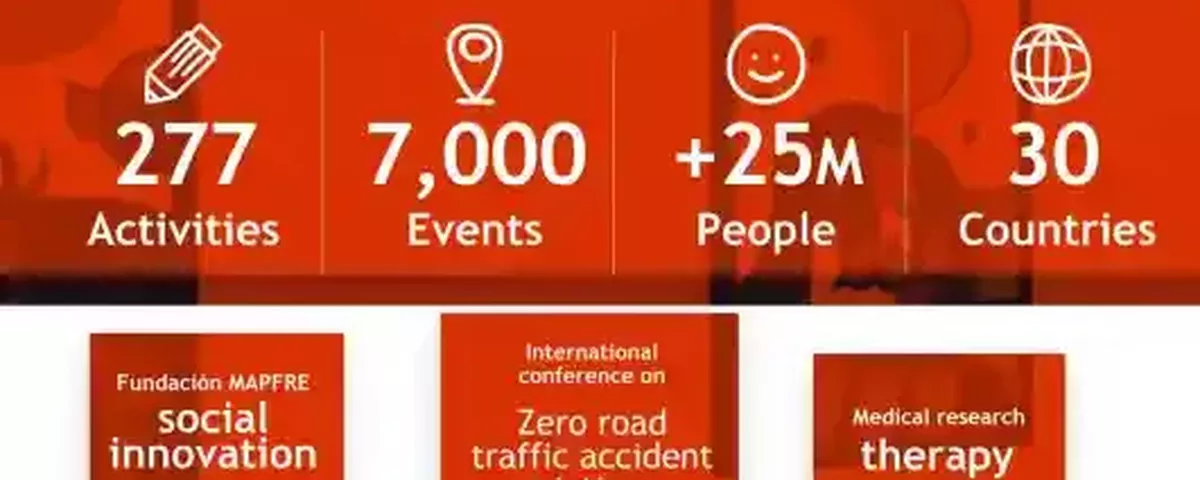
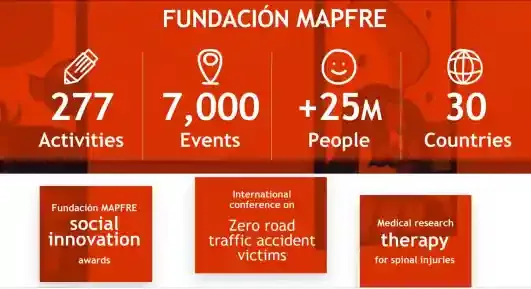
They are a public organization established in 1975, "and what Fundación MAPRE does is invest all the profits from MAPFRE worldwide into sustainable projects”, commented Nabiha. MAPFRE is a separate entity, an insurance firm headquartered in Madrid, Spain, with a multinational presence. This organization focuses on enhanced social well-being and quality of life for all individuals worldwide. As Nabiha explained in our interview, "it is the inclusion that resonates most with [her] because from the start we are conscious of being able to diversify and include all types of people". The foundation has a strong team of nearly 10,000 volunteers and over 2,000 collaborations with various organizations. Since its inception, MAPFRE has invested over 1€ billion in numerous initiatives that benefit people across multiple countries.
As noted previously, MAPFRE operates numerous programs that align with many of the SDGs, enabling it to address various issues affecting vulnerable populations. The groundbreaking innovation of the MAPFRE Group is its ownership structure: the company is owned by the nonprofit foundation. This means that 100% of the profits from its global insurance business are reinvested through the Fundación MAPFRE into social projects that directly tackle the root causes of risk in the communities it serves. As mentioned in our interview, "instead of treating [sustainable development initiatives] as a cost, [they are treated] as an investment".
Their ACCEDEMOS employment grants, for instance, have been ongoing since 2013 and are directly aligned with the UN's Sustainable Development Goals 8 and 10. The focus of this study is to combat workplace inequalities and promote hiring diversification for affected individuals. In 2025, "450 grants will be awarded to promote employment… primarily in rural areas, and to facilitate access to the labour market for groups with the greatest difficulty finding employment: those under 30, those over 50, and other vulnerable groups." (MAPFRE, 2025)
Nabiha illustrated how SDG 5 is also extremely prevalent in this organization because “MAPFRE doesn’t just support gender equality externally, it embeds it within its own operations. In Panama, 41% of management positions are held by women, surpassing their 2030 global target of 36%”. These figures are direct proof of complete integration. Moreover, “their ‘Take Care of Your Heart’ campaign, in alliance with the Ministry of Health, provides free blood pressure and health screenings in metro stations, directly benefiting over 80,000 people and raising awareness about preventable heart disease”. This action aligns directly with SDG 3 and promotes good health for all by making health services widely accessible to the most vulnerable global populations.
MAPFRE's commitment to social responsibility and the belief that wealth should directly benefit society serve as major driving forces behind its operations. The concepts of prevention, protection, and resilience are all fundamental to MAPFRE's heritage as an insurance company, serving as the foundation for its charitable activities. These concepts relate to the fourth SDG, as the firm offers classes related to financial and insurance education, providing people in society with the proper resources to make informed decisions in life. By integrating these objectives into MAPFRE's operations, it serves as a shining example of how private organizations utilize business expertise to address global social concerns while still generating both financial and humanitarian benefits.
The foundation's diverse projects have resulted in measurable, discernible progress in many areas. Fundación MAPFRE's health education campaigns, job programs, road safety campaigns, and social inclusion projects help millions of individuals every year. In 2024 alone, its health and safety programs benefited almost 3.5 million individuals globally. Beyond its financial performance, the organization's greatest impact is that it inspires other public and private entities to adopt inclusive and socially conscious business practices. MAPFRE's long-term investments help build more resilient communities, better living conditions, and stronger local economies, particularly in rural and underdeveloped areas.
“Strategically supporting the company's entire market positioning and commercial sustainability is Fundación MAPFRE, the social arm of MAPFRE Group. MAPFRE’s reputation as a trustworthy and responsible global insurance company by providing money for social, health, and education initiatives which increases investor trust and customer loyalty” (Fundación MAPFRE, 2025a).
As Nabiha from MAPFRE Panama revealed, “in NPS Surveys or climate surveys, what often comes out is that the collaborator stays with us because of the sense of social responsibility [that] the company has”. This direct link between their innovation and employee commitment is undoubtedly a tangible business advantage.
Additionally, through social programs like ACCEDEMOS and Juntos Somos Capaces, the corporation not only fulfills its corporate social responsibility commitments but also contributes to the development of safer, healthier, and more sustainable communities through investment and innovation. These results are consistent with MAPFRE's main insurance business strategy (MAPFRE, 2024). Improving public safety, financial inclusion, and workforce development reduces long-term risk exposure and expands the potential insurance markets.
Additionally, Fundación MAPFRE's global partnerships and support for the UN's Sustainable Development Goals enhance MAPFRE's visibility worldwide, facilitating stronger relationships with policymakers, officials, and consumers. By enhancing MAPFRE's competitive advantage and long-term financial stability, the foundation’s initiatives fundamentally provide shared benefits that foster social progress.
MAPFRE works directly to improve social justice, health outcomes, and environmental awareness. Socially, initiatives for road safety and health education reduce accident rates, which in turn save lives. Moreover, employment projects provide overlooked individuals with access to social inclusion and a stable income. Environmentally, MAPFRE supports initiatives that promote sustainable transportation, responsible consumption, and climate resilience, all of which align with SDG 11. Nabiha said that “At their Panama office building, the installation of solar panels has already led to significant energy savings, an achievement the company quantifies as ‘117 trees saved’ so far this year, a tangible metric on their path to net-zero.” Through these integrated efforts, MAPFRE demonstrates that social welfare and environmental preservation can coexist with economic prosperity, setting up a model for sustainable corporate philanthropy.
Get stories of positive business innovations from around the world delivered right to your inbox.
Nabiha Sanchez, Human Resources Director

They are a public organization established in 1975, and Fundación MAPRE invests all the profits from MAPFRE worldwide in sustainable projects. MAPFRE worldwide is a multinational insurance firm that works for the betterment of people around the world. From limited access to healthcare and education to unsafe roads and exclusion from the job market, these are not just social issues; they are fundamental risks to human well-being that are addressed through their business practices.