

louk melsen
lars de vetter

Vivian Rubini
Elyse Jacobs

Avans University of Applied Sciences
Randie Andersen


Keep this story going! Share below!
Humber College is redefining what a modern, future-ready learning institution looks like. Through a campus designed as a living sustainability laboratory and programs that integrate environmental responsibility into daily student life, Humber advances SDG 4: Quality Education and SDG 11: Sustainable Cities and Communities. Guided by Sandra Leutri, Head of the Sustainability Office, the college demonstrates that educational excellence and sustainable infrastructure are inseparable. From green buildings that model sustainable cities to the Campus Container Program that instills circular economy habits, Humber’s innovations recently earned the prestigious Green Gown Award, recognizing global leadership in sustainable campus development.
Innovation
Humber’s signature initiative is the Campus Container Program, replacing single-use food packaging with durable, returnable containers. Students receive meals in reusable containers, return them to drop-off stations, and the containers are cleaned and recirculated. This system has diverted hundreds of thousands of disposable containers from landfills, reducing environmental impact and lowering waste management costs. Leutri emphasizes that the program is “not just about reducing waste; it allows students to actively participate in a circular economy, seeing sustainability as a shared responsibility rather than a theoretical concept.”
Humber’s innovation extends to its green-built campus, featuring energy-efficient HVAC systems, sustainable materials, water optimization, and smart lighting aligned with global green building standards. Treated as “living classrooms,” these buildings allow students to analyze real-time data on energy use, natural light, temperature control, and waste diversion, positioning Humber as a leader in experiential sustainability learning.
Inspiration
Leutri explains that Humber’s sustainability efforts are driven by the goal of preparing students for an unpredictable, rapidly changing future. “Our responsibility is to graduate students who understand sustainability as a core part of how communities and businesses function.” By integrating sustainability into daily practices, courses, and campus systems, Humber inspires students to engage critically with environmental challenges and develop problem-solving and leadership skills.
This approach aligns with SDG 4, equipping learners with knowledge and skills to promote sustainable development, while also reflecting SDG 11 by demonstrating how educational institutions can model inclusive, resilient, and sustainable communities.
Impact
Educational Impact (SDG 4)
Students engage with sustainability daily, learning to make environmentally responsible decisions that prepare them for the green economy. By participating in recycling systems, monitoring energy usage, and analyzing sustainability data, they develop competencies employers increasingly demand. Humber ensures students implement sustainability, becoming innovators and leaders who can contribute to low-carbon, sustainable workplaces.
Students also gain hands-on community experience. For example, one class monitors the Humber River, collecting and analyzing environmental data to propose real-world solutions. Humber partners with culinary students through the Gourmet Express program, where meals are sold in reusable containers. Students scan a barcode to make a small deposit, which is refunded when they return the container, reinforcing circular economy practices while providing hands-on experience in sustainable food service operations. Humber has been able to recycle 615 containers thus far, further demonstrating how through small changes they are making a significant impact.
Business Benefit
Humber’s sustainability initiatives provide long-term institutional advantages. Reusable containers reduce procurement and waste disposal costs, while energy-efficient buildings lower utility expenses. Sustainability strengthens talent attraction, as students increasingly choose institutions aligned with their values, and supports partnerships with government, industry, and community organizations. Most importantly, students graduate with practical sustainability experience, enhancing employability and reinforcing Humber’s reputation for producing future-ready, sustainability-literate graduates.
Social & Environmental Benefit
Humber’s initiatives blend social wellbeing, environmental responsibility, and educational advancement. Students become empowered learners (SDG 4), gaining sustainability literacy, hands-on skills, and leadership through campus systems. The campus also models sustainable community design (SDG 11), showing how public spaces can be built efficiently, inclusively, and responsibly. These initiatives reduce environmental impact while fostering collective responsibility, as students, faculty, and staff actively participate in decision-making and sustainable practices. As Leutri emphasizes, “Sustainability is something you live every day,” and Humber ensures everyone on campus experiences it firsthand, preparing students to contribute meaningfully to a greener economy and resilient communities.
Get stories of positive business innovations from around the world delivered right to your inbox.

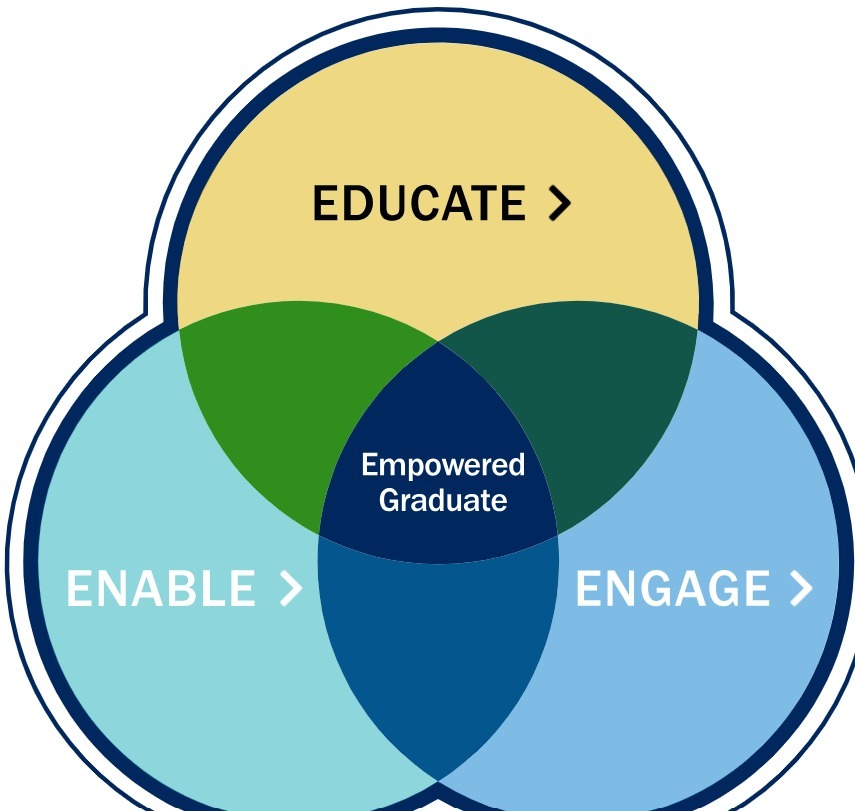
Humber Polytechnic’s vision is to empower students to shape a better future by fostering innovation, education, and practices at Humber grounded in sustainability principles.