

Mushfiqur Rahman

Chinn-Faang Ho

Aashna Gupta

TIAS School for Business and Society
Benito Giordano


Keep this story going! Share below!
Aarong, established in 1978 by BRAC in Bangladesh, began as a social enterprise to empower rural artisans and provide fair market access for handcrafted goods. Initially focused on handmade clothing, the brand innovatively diversified into product lines including jewellery, leather, metal and wood. Rooted in sustainability, Aarong introduced environmentally responsible practices, including renewable energy use, water recycling, and energy-efficient production. Its commitment to fair trade ensures artisans receive equitable pay and safe working conditions. Through design innovation and continuous adaptation, the brand evolved into a model of inclusive business that preserves cultural heritage while promoting economic and environmental sustainability.
Aarong, a renowned lifestyle brand, originated in 1978 in Bangladesh, with the goal to empower rural artisans and help them rise above poverty. Their business model entails giving flexible working environment for artisans to create handcrafted materials which was later sold to urban population. Initially focused on handmade clothes and, through innovation over the years, diversified into a range of products, including clay pots, jewellery, silk and cotton products, brass, wood, metal, leather items and dairy products. Over time, Aarong prioritised eco-friendly products and emphasised sustainability by using materials such as organic cotton and implementing processes like water and energy saving.
“Anyone who works at Aarong knows that the goal is not simply to increase sales or have a bigger market impact. Our focus is on the well-being of the artisans and their livelihoods, and we ensure they are protected.”
What started as pilot projects in rural regions, the brand grew and expanded nationwide, combining traditional techniques with modern retail practices to preserve cultural heritage and promote economic growth. Today, the innovation has empowered thousands of artisans, especially women, and has established a model for social enterprise across South Asia.
Aarong’s ongoing innovations over the years, with sustainability in mind, have led to many initiatives such as:
• Reducing carbon footprint – The company actively minimises its environmental impact through energy-efficient technologies and sustainable practices across its manufacturing processes. The interview with Aarong’s representative revealed that the company had been eco-friendly over the years and addressed its carbon footprint by using renewable energy sources and optimising logistics to reduce emissions.
• Fair trade practices – They recognise the value of ethical production and ensure fair wages, safe working conditions, and equitable treatment for artisans who work on their products.
“Aarong compensate the artisans before the products are sold. The only company in Bangladesh to do so. As long as they submit their deliverables, the products meet the requested quality, they receive the full payment. Aarong doesn’t delay payment for 3 or 6 months or even a year. They pay in full immediately after handing over the products.”
• Innovation in design – The company emphasises durability and timeless aesthetics in its products. This includes designing for longevity, ensuring that products have extended lifespans, and reducing the need for frequent replacements. Aarong also uses various printing methods in its design products. They used water-based prints with a commitment to recycling printing water, ensuring that nearby water bodies remain unpolluted.
• Collaborations and partnerships – Aarong promote sustainability through its active collaborations and alliances. These collaborations facilitate the exchange of expertise, resources, and innovative solutions, accelerating the brand’s eco-friendly initiatives. They also enable freelancers and experts to contribute to their craftsmanship freely.
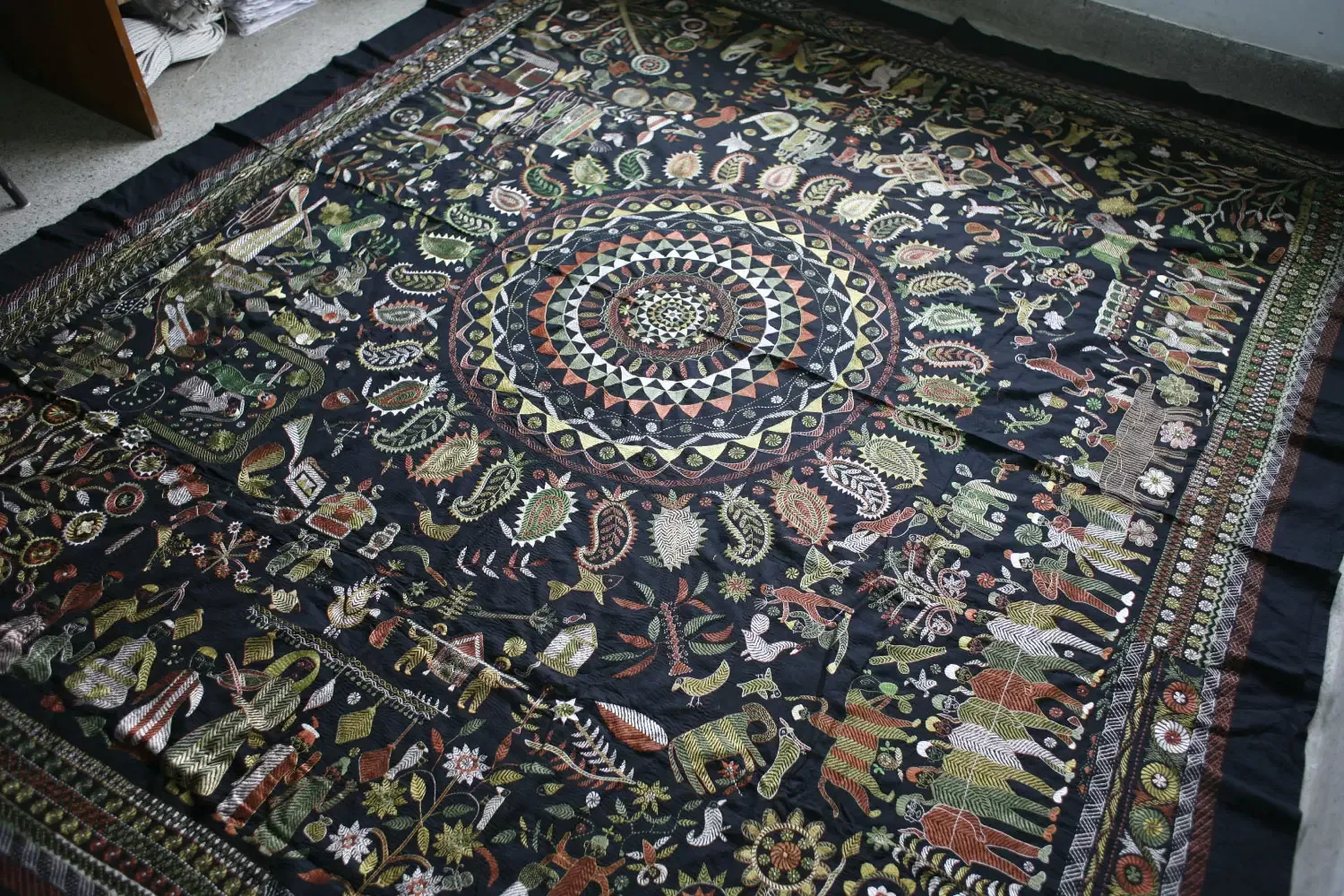
Aarong was an initiative by BRAC, the world’s largest development organisation. The idea originated when BRAC realised that many rural artisans, especially women, possessed excellent crafting skills but struggled to earn a livelihood because they lacked access to urban markets or fair prices for their products.
“After gaining independence in 1971, the country was in ruins, lives were lost, towns and villages had been destroyed, and people were struggling to make ends meet. Sir Fazle Hasan Abed, the founder of BRAC, established the development organisation to assist people during their times of need. From there, the idea of involving women artisans to help them work on their skills and earn a livelihood was born.”
To address this, BRAC established Aarong (which means “village fair” in Bangla) as a marketplace where these artisans could sell their handmade goods directly to urban consumers. The aim was to help them achieve financial independence and safeguard traditional crafts such as weaving, embroidery, pottery, jewellery-making, and wood and metal craftsmanship.
Aarong’s motivation for doing the innovations expanded by seeing how environmental and social challenges evolved globally. It wanted to ensure that its growth does not harm people or the planet. Aarong’s continued innovation is driven by its commitment to social responsibility, environmental sustainability and cultural preservation. Its purpose is to balance economic growth with ethical and ecological values, ensuring that the brand remains a force for good in the fashion and craft industry.
Aarong’s primary goal for business growth is to create more opportunities for rural artisans across Bangladesh. The innovation lies in integrating people at the root level into a sustainable value chain and making them the backbone of the brand. Aarong ensures the well-being of its artisans, safeguards their livelihoods and maintains fair, ethical working conditions. It ensures that the artisans have access to healthcare and interest-free loans to enable entrepreneurship. It regularly provides training to enhance the artisans’ skills. The brand measures its success by the ongoing empowerment and sustainability of the artisan communities it supports.
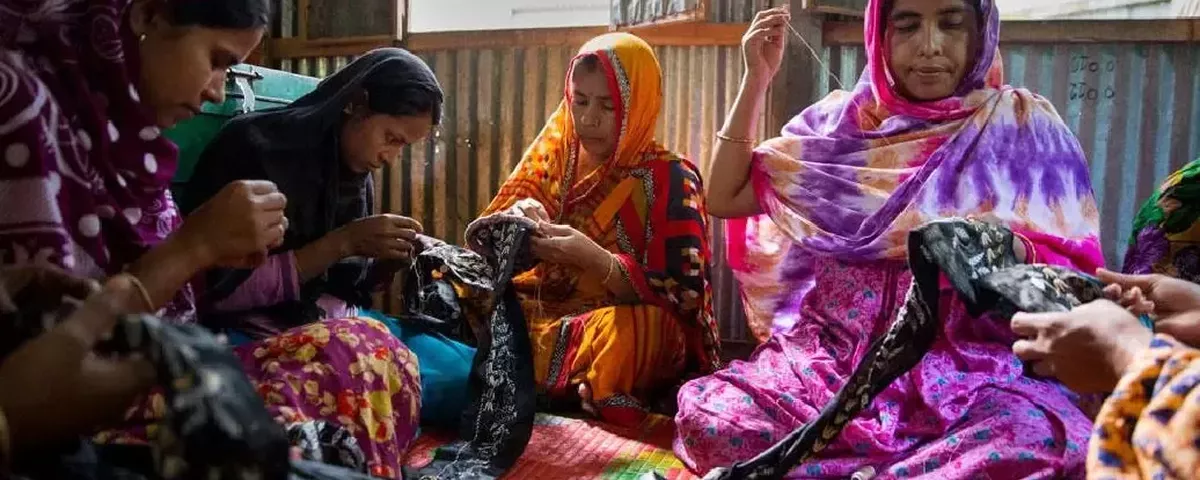
Aarong’s skilled artisans are 90% rural women balancing their craft with family responsibilities at home. These women cannot work in formal factory settings due to their household responsibilities. Aarong rents under-utilised spaces in village homes and transforms them into sub-centres—safe, flexible workplaces where artisans can work at their own pace. The company sends materials such as fabric to these centres for embroidery and other detailed craftsmanship, and the finished products are later transported to Aarong’s main production hubs. Aarong engages nearly 27,000 artisans across 15 main centres and over 820 sub-centres, along with 60,000 independent artisans, including potters, weavers, jewellers, and crafters, who work to preserve Bangladesh’s rich tradition of handmade artistry. This enables people to work from home or within close proximity and balancing their work and family responsibilities while earning for their families.
This model can be replicated in any country or region, as it provides the necessary flexibility for people in hard-to-reach areas or those with mobility challenges to work from home and contribute to society.
Although Aarong operates as a business entity, profit has never been its main goal. The company’s founding mission is to empower rural artisans, especially women. This people-centred approach has fostered strong employee loyalty, supply chain stability, and a trusted national brand image rooted in ethical craftsmanship. Many have spent decades with the organisation, a rare phenomenon in today’s fast-paced, results-driven corporate world. With over 2,000 regular employees and around 4,000 sales associates, Aarong continues to grow steadily while maintaining a significant social impact across Bangladesh.
“The person who sits next to me has been in Aarong for 34 years. That is the entirety of the time I have been in this world. He is not the only one; there are many others like him. They are planning to retire after their time at Aarong. This tells you what kind of organisation Aarong is.”
By embedding sustainability as a core strategic pillar and progressing towards formal ESG reporting, Aarong positions itself as a pioneer of responsible business and inclusive growth, demonstrating that social empowerment and commercial success can thrive together. Aarong prioritises natural fibre yarn, focusing on handcrafted items rather than machine-made products. It aims to use 12%-15% renewable energy, reducing chemical waste and carbon emissions during production processes. They have always provided paper-based bags for retail purposes instead of plastic and have now further reduced their use. Aarong has successfully reduced 5 million shopping bags by not providing free bags at checkout. They are also continually adopting energy-efficient practices as part of their future sustainable plan.
“While most garment factories depend on chemical dyes and energy-consuming processes, Aarong adopts natural dyes and eco-friendly production methods. Instead of using electricity-powered pressing machines to dry fabrics, Aarong chooses sun-drying. The organisation also operates treatment plants that neutralise the chemicals used in fabric production, ensuring water is purified and reused within the system. Aarong consistently demonstrates its strong commitment to protecting the environment and promoting responsible craftsmanship.”
The main challenge for Aarong regarding sustainability is to determine which activities are part of a sustainable approach and which are not. They have a large production facility and a distributed production network across the entire country. The organisation is working to categorise and record these processes to enable them to measure their impact.
Get stories of positive business innovations from around the world delivered right to your inbox.
Mohammad Tariqul Islam, Senior Manager

Aarong is a social enterprise that empowers rural artisans and provides fair market access for handcrafted goods. The brand adopts environmentally responsible practices, including renewable energy, water recycling, and energy-efficient production. Its commitment to fair trade ensures artisans receive equitable pay, a flexible working environment, and safe working conditions.