

Julio Cevallos

Danilo Nicolas Drouet Rodriguez
Paúl Perdomo
Josep Ruano

Escuela Superior Politecnica del Litoral, ESPOL

Jorge Rodriguez Rodriguez


Keep this story going! Share below!
Ecuador generates approximately 5.3 million tons of solid waste per year (according to data from the Ministry of Environment, Water, and Ecological Transition for 2024), with a per capita generation of 0.81 kg per inhabitant per day. Of this figure, only between 6% and 11.8% is recycled according to different studies, with Ecuador leading Latin America in waste recovery according to the Yale University Environmental Performance Index 2024. Behind these figures are approximately 20,000 grassroots recyclers throughout the country, 70% of whom are women working in precarious conditions. ReciVeci has developed a technological solution that connects citizens with recyclers, closing the gap between the intention to recycle and actual action.
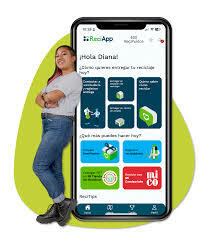
The central innovation of this model is ReciApp, a technological tool that revolutionizes inclusive recycling. This platform allows citizens to deliver waste (PET, glass, cardboard) directly to a grassroots recycler, who is identified in real time through geolocation.
According to Lorena Gallardo, the core of the project is human connection: they discovered that citizens are more motivated by the opportunity to directly help a person than by the abstract environmental cause. To encourage this participation, ReciApp integrates a system of rewards and incentives that motivates users to be more proactive in separating and delivering their waste.
Beyond the benefits for citizens, the app acts as a driver of development for grassroots recyclers:
• Resource management: It allows them to obtain the materials they need to carry out their work efficiently and achieve their business goals.
• Healthy competition: The system includes recognition and awards that encourage continuous improvement and professionalism among workers.
• Visibility and recognition: ReciApp gives recyclers a face and an identity, giving them the place they deserve within the recycling value chain.
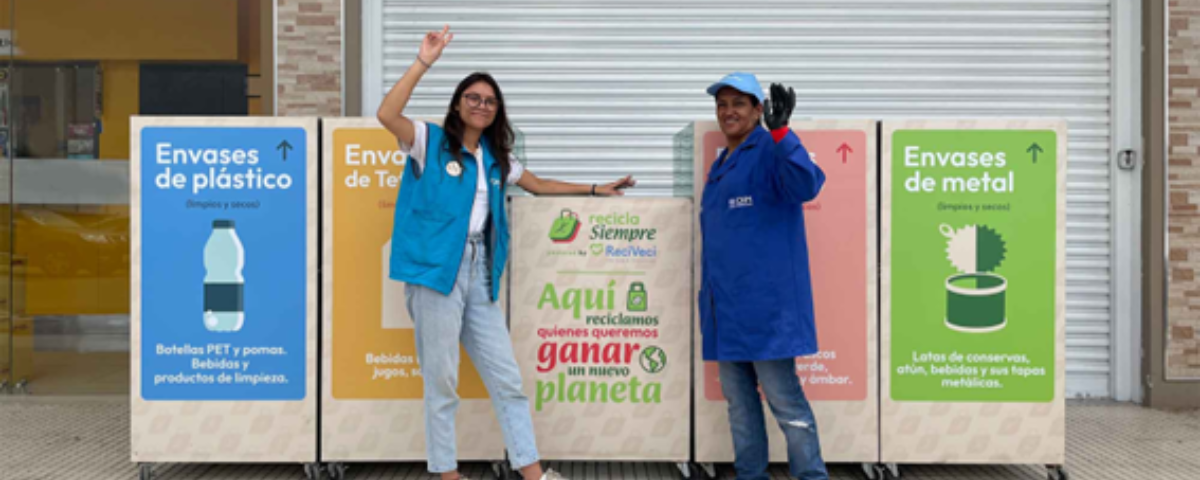
RECIVECI was founded in 2015 as a genuine response to the need to make the work of grassroots women recyclers visible and to positively impact the environment. What began as a neighborhood initiative driven by 20 volunteers faced the typical challenges of projects based solely on solidarity. Without remuneration or a formal business structure, participation depended on volunteers’ spare time, making consistency and growth difficult.
The true transformation occurred when the three current pillars of RECIVECI recognized the latent potential of this support network. Their vision enabled the project to evolve from sporadic aid into a functional, sustainable, and paid work model.
This evolution was marked by key milestones:
Today, ReciVeci’s inspiration lies in transforming a goodwill gesture into a technological tool that dignifies lives and modernizes waste management in Ecuador. The ultimate goal is to lead Ecuador’s transition from a linear economy to a circular one.
To achieve this, the organization works to raise awareness about waste responsibility, promoting circular recycling: a model that encourages rethinking products even before manufacturing, planning what will happen to them at the end of their useful life so they never become waste, but rather new resources.
The model generates triple impact:
Social Impact:
ReciVeci formalizes grassroots waste pickers, transforming their work into a professional and recognized environmental service. Through ReciApp, waste pickers receive clean and pre-sorted materials directly from households, significantly optimizing their work. Studies in cities such as Cuenca show that waste pickers walk between 5 and 17 kilometers per day, working more than 7 hours. With this model, labor conditions improve by reducing distances and time spent searching for materials.
Waste pickers report an average 30–40% increase in monthly income by receiving higher-quality materials under more dignified conditions. Additionally, the platform raises citizen awareness and promotes active recycling through rewards, strengthening the bond between communities and waste pickers. According to the 2022 INEC Census, 64% of Ecuadorians engage in some form of environmental practice, with waste separation being the most common, highlighting the platform’s adoption potential.
Environmental Impact:
The recovery of tons of recyclable materials reduces pollution in cities such as Quito, which generates more than 2,200 tons of waste daily, and Guayaquil. In Ecuador, grassroots waste pickers recover between 50% and 85% of the material entering the recycling industry, significantly contributing to CO₂ emissions reduction. This effort supports the transition to circular recycling by educating citizens on waste management to prevent disposal in landfills and reintegrate materials into productive cycles.
Business Impact:
The model generates significant cost savings for corporate partners. It supports the transition to a circular economy by enabling companies to efficiently manage resources and plan the end-of-life of their products.
RECIVECI demonstrates that sustainability is not only an ethical commitment but also a profitable and efficient business model through a robust B2B service offering. The success of this model lies in companies financing operations, allowing the technological tool to be completely free for citizens and democratizing access to inclusive recycling.
This value proposition for the corporate sector is built on three strategic pillars:
ReciVeci’s innovation acts as a catalyst for change, directly addressing reduced inequalities (SDG 10) and climate action (SDG 13), creating an ecosystem where social justice and planetary health converge.
Social Benefit: Justice and Dignification
By formalizing the work of grassroots waste pickers, the stigma associated with “waste” is broken, transforming the occupation into a recognized professional environmental service. This process ensures economic autonomy and empowerment for women, who represent 70% of the sector and up to 78% in highland cities.
The impact on well-being is tangible and measurable: participants report a 30–40% increase in monthly income, rising from approximately USD 218 to USD 290–305. Beyond income, the model significantly improves occupational safety conditions. Waste pickers receive training in safe material handling, personal protective equipment, and reduce exposure to risks by no longer scavenging in containers or landfills. RECIVECI also works to facilitate access to social security and healthcare for formalized waste pickers, a fundamental step toward fully dignifying the profession.
Environmental Benefit: Resilience and Circularity
The impact translates into a substantial reduction in pollution by diverting tons of materials that would otherwise end up in landfills. In Cuenca alone, 1,285.22 tons of recyclable materials were recovered, preventing the emission of 7,519 tons of CO₂ equivalent.
Get stories of positive business innovations from around the world delivered right to your inbox.
Lorena Gallardo, Co-founder
ReciVeci is an Ecuadorian social enterprise and inclusive recycling startup that promotes sustainable waste management and the circular economy by connecting citizens, businesses, and grassroots recyclers through technological and social innovation. Essentially, ReciVeci uses its mobile platform ReciApp to facilitate proper recycling practices, improve the traceability of recyclable materials, and directly connect recyclable waste generators with grassroots recyclers, helping to recover materials that might otherwise end up in landfills. The company also offers services and programs for businesses to implement customized recycling systems, organize collection events, and advance their environmental and social responsibility goals, while strengthening the role and working conditions of local recyclers.