

Katrien Kerkhofs
june lauwers
Mano Martens
Lene Maes
Anouk Haels

Uhasselt

Ruveyda Kelleci


Keep this story going! Share below!
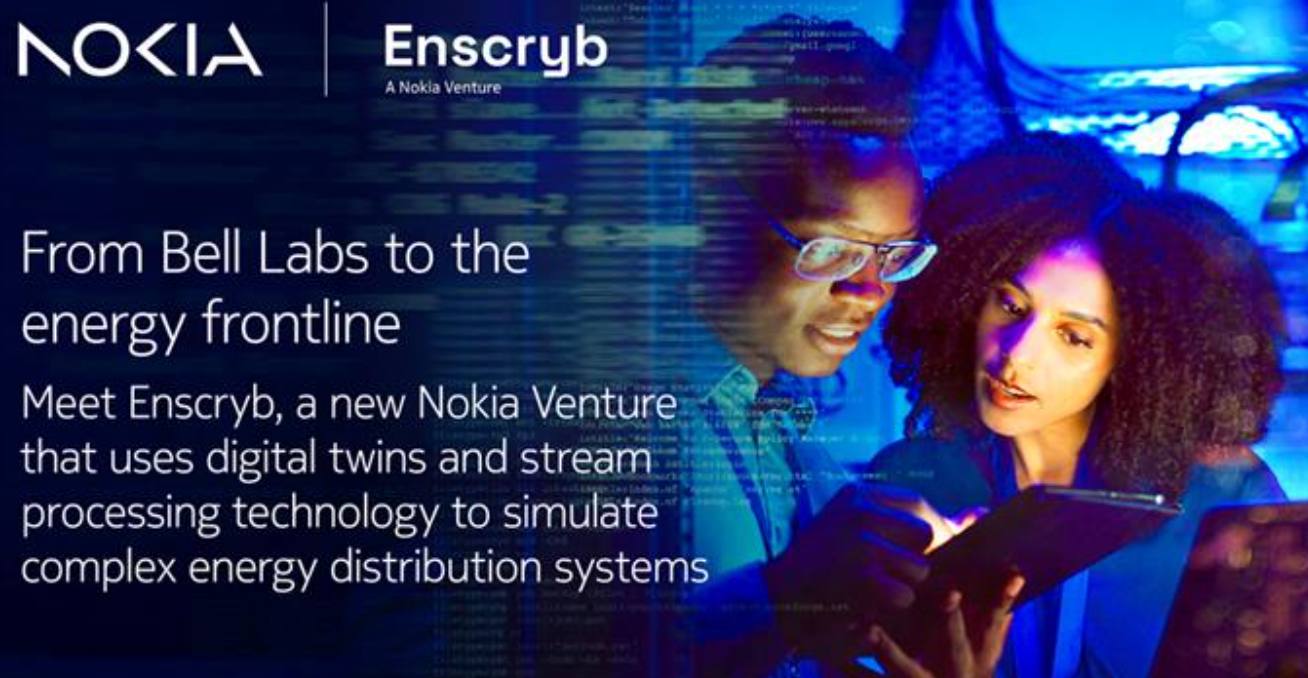
Enscryb is an advanced software platform that leverages digital twins and real-time optimization to balance the supply and demand of renewable energy. By enabling smart and flexible energy management, it mitigates today's expensive grid reinforcements, enhancing both efficiency and stability. This innovation supports Sustainable Development Goals 7, 9, and 11 by promoting affordable and resilient energy, reducing CO2 emissions, and strengthening local energy communities. The following insights are based on an interview conducted on October 13, 2025, with Liana Ault, General Manager at Enscryb (a Nokia venture).
Developed by Nokia’s Bell Labs, Enscryb is an advanced software platform that originated in Belgium and is now led by a global team. It addresses challenges in grid and energy instability, caused by the increasing integration of renewable energy resources, such as wind and solar. The inherent variability of these resources, combined with grid constraints, often prevents renewable energy from being available precisely when it is needed. Enscryb solves this through techno-economic modeling. The platform generates a digital twin of a commercial and industrial customer’s energy assets and simulates the financial and technical impact of these assets or proposed modifications. This enables the development of optimized investment and operational strategies, maximizing the value of assets such as local generation, storage, consumption PPAs and contracts. This allows the software to massage the demand to meet the unpredictable supply of renewables, and allows capabilities like load shifting and peak shaving, effectively transforming customers into flexible partners for grid operators. Because of this, they enable algorithmic trading and dynamic co-optimalisation in near-real time.
This software advances several Sustainable Development Goals (SDGs): SDG 7, SDG 9, SDG 11. It contributes to SDG 7, affordable and clean energy, by preventing the limitations of wind and solar power. For SDG 11, sustainable cities and communities, the platform provides greater resilience in the power supply, which is essential for critical services like hospitals and emergency services. And lastly, it contributes to SDG 9: industry, innovation and infrastructure. It enables commercial customers to generate revenues by selling their excess renewable energy, save costs, and stimulates investments in sustainable technologies.
This innovation originated from the growing instability in electricity grids caused by the increasing penetration of renewable energy sources. Traditionally, energy supply (e.g. coal and nuclear power plants) aligned with predictable consumption patterns among users. This pattern, also known as the “duck curve”, shows daily electricity consumption with peaks in the morning and evening. As Liana Ault noted:
“Belgium has a tremendous amount of renewable energy, so much that it is causing problems with the stability of the electricity grid.”
Renewable energy sources, such as solar and wind energy, are inherently variable. The sun does not always shine and wind speeds fluctuate, resulting in periods of surplus or insufficient generation. This variability leads to a mismatch between supply and demand of electricity. For instance, when a lot of wind energy is generated in the North Sea, the existing electricity grid is unable to transport the excess, which sometimes means production has to be shut down.
To solve this problem, Nokia developed Enscryb software to bring more flexibility to the electricity grid. This software ensures that demand aligns with available supply. More specifically, the software enables three major things. Firstly: load shifting and peak shaving, i.e. shifting or reducing electricity consumption during peak hours. Secondly, it can move energy generation closer to the consumer, reducing the load on the main grid. And thirdly, Enscryb also makes the network more resilient. Climate change is leading to more frequent severe storms, which makes the network more vulnerable. The software helps to prevent blackouts and guarantees energy supply.
Enscryb addresses two fundamental challenges in today’s electricity grid: high short-term costs and long-term instability. In the short term, Enscryb introduces "Non-Wire Solutions" for utilities. Traditionally, when a grid becomes overloaded, physical infrastructure reinforcements, such as new poles, wires or substations, are required. As Liana Ault explained:
"It's billions and billions of dollars. What our software does is allow them to use software to orchestrate those assets instead of installing poles and wires."
By acting as a smart ‘traffic controller’ for energy flows, Enscryb enables utilities to avoid or defer these costly investments. Simultaneously, the software reduces financial risk for sustainable projects by simulating operational and investment scenarios through digital twins, making renewable energy deployments more economically viable.
In the long term, Enscryb transforms grid architecture to support thousands of distributed, variable assets (e.g. solar panels, data centers), something the traditional centralized systems struggle to manage. If there is a local problem of a surge in demand, it can’t react quickly enough, resulting in blackouts. Enscryb employs “edge computing”, meaning they install ‘local mini-brains’ all over the grid. This decentralized approach dramatically increases the grid's resilience, making it resilient to the peaks and troughs of solar and wind power while simultaneously preventing billions of dollars in power outages.
The evidence of this impact is clear. Firstly, short-term economic proof is the avoided CAPEX. In the US alone, traditional methods cost $14 billion to meet data center demand. Enscryb's software helps avoid or postpone these expenditures. Secondly, technical proof is the operational shift. The platform shifts operations from a slow, centralized system to a fast, decentralized control system capable of orchestrating thousands of assets. We can imagine Enscryb as the conductor of a chaotic orchestra.
The development of the Enscryb software platform provides Nokia with a significant strategic advantage, primarily by targeting an entirely new and underserved market. The innovation follows a Software-as-a-Service (SaaS) model, resulting in a new, subscription-based revenue stream for the company. Nokia has strategically focused on the Commercial and Industrial (C&I) sector, including hospitals, mines, and manufacturing facilities. As Liana Ault explained:
“Hospitals, manufacturing facilities, construction sites, mines—they all consume a tremendous amount of energy, but they don't really have anyone paying attention to how to help them.”
These organizations often lack the tools to manage energy efficiently, and targeting this sector allows Nokia to generate revenue more rapidly while also establishing a foundation to expand to utility clients over the long term.
Internally, the Enscryb project operates as a flexible startup within the larger Nokia organization. The startup consists of a global team of Bell Labs PhDs, engineers, and commercial specialists. This structure enables agility, rapid innovation, and the ability to push beyond traditional corporate processes. This is further enabled by Nokia’s “secret sauce”: patented technology that allows for dynamic co-optimization of energy flows in near real time. This technological advantage positions Nokia as a leader in the emerging market for advanced energy trading and grid management solutions.
Enscryb has already been deployed in several companies and has shown tangible results. For example, a proof-of-concept was conducted at a Nokia subsidiary in the United Kingdom. By using the software to model the addition of a battery, they were able to reduce net energy costs by 67%. This success not only validates the platform’s technical and commercial value, but also opens new investment opportunities and accelerates the transition to sustainable energy deployment.
The impact of Enscryb extends far beyond technology and business results, generating meaningful benefits for both society and the environment. As Liana Ault from Nokia explained, the goal of the innovation is to achieve the “trifecta” of energy: affordable, resilient, and renewable. By leveraging digital twins and real-time optimization, Enscryb aligns fluctuating renewable energy supply with actual demand. This approach reduces waste, minimizes reliance on fossil-fuel backup systems, and prevents blackouts. For hospitals, supermarkets, and emergency services, this resilience ensures continuous operation even during extreme weather events.
From a societal perspective, Enscryb encourages the development of energy communities: local networks where people can generate, store, and share renewable energy within their own area. As Liana Ault described:
“Instead of balancing the grid across an entire country, you’re balancing in this little tiny area… you can actually shift your electrons to someone else’s storage to use later on. And even more beautifully, if someone has a health issue and can’t work, you could donate your extra electrons to cover their consumption.”
This vision of peer-to-peer energy trading and local cooperation fosters a new kind of social sustainability built on solidarity, equality, and shared responsibility. It empowers communities to become more independent, resilient, and equitable in how they produce and consume energy.
Environmentally, Enscryb significantly reduces the need for costly and resource-intensive grid reinforcements. By maximizing existing renewable capacity, it lowers CO₂ emissions and decreases demand for scarce raw materials such as steel and lithium. In doing so, the platform helps build a cleaner, fairer, and more sustainable energy future where technology and environmental responsibility work hand in hand for the benefit of all.
Get stories of positive business innovations from around the world delivered right to your inbox.
Liana Ault, Enscryb General Manager

Nokia is a global leader in connectivity for the AI era, providing the critical network infrastructure the world relies on.
Every day, we’re powering our customers with advanced connectivity across fixed, mobile and transport networks, delivering the performance and security they need to meet the demands of an AI-enabled future.