
Percival Hill
Polyxeni Tsaplari
Vasiliki Karagianni
Anastasios Drimis

Uhasselt

Ruveyda Kelleci


Keep this story going! Share below!
AberInstruments has altered its business practices by implementing an employee ownership model. Every employee has a real stake in the company’s success, which has helped create a culture of teamwork, shared goals, and long-term dedication. Their unique hybrid model of employee ownership contributes directly to multiple Sustainable Development Goals (SDGs). First of all, it satisfies SDG 8 (Decent Work and Economic Growth) by promoting an environment where people are fairly rewarded and motivated. It also aligns with SDG 9 (Industry, Innovation and Infrastructure) by fostering a culture of collaboration, where decisions are made collectively while keeping sustainable industrial practices in mind. Finally, it advances SDG 12 (Responsible Consumption and Production) by holding each employee responsible for the company’s environmental and ethical standards. This story is based on an interview with Ramy Elabbadi, an employee-owner at AberInstruments.
Founded in 1988 in Aberystwyth, Wales, as a university spin-out focused on advanced biomass measurement, AberInstruments has continuously placed a high value on both scientific excellence and ethical business practices. The founders had always had “an alternative kind of thinking about how businesses should be run” (Ramy Elabbadi, 2025). Their motivation to become employee-owned came from a desire to protect the company’s culture, community, and values for the long term. According to the company’s own statement, the founders saw employee ownership as a way to “pass our legacy on to future generations of employees and keep the company independent and locally owned” (Ramy Elabbadi, 2025).
The company's transition to employee ownership in 2011 was a turning point that guaranteed financial rewards and decision-making authority to those who drive its success. Today, most shares are held in an Employee Ownership Trust (EOT) on behalf of all staff, while individual employees also own shares directly. This hybrid model combines the stability of collective ownership with the opportunities for individual investment. It is supported by a democratic system that ensures all opinions are heard. AberInstruments’ hybrid Employee Ownership model holds the majority of shares in a trust. A three-person board governs the trust: the CEO of the Aber Group, an independent trustee, and an employee-elected representative.
Each subsidiary has its own employee council, composed of elected representatives. These councils feed into a higher-level body called the Senedd, which includes representatives from all subsidiaries and plays a crucial role in governance. Any major decision requires the approval of the Senedd, making it a central democratic mechanism in the company’s decision-making. The chair of the Senedd also serves as the employee representative on the trust board, overseeing the management and distribution of employee shares. Elections for representatives are held every three years, and any employee with six months of service can run.
This governance system has become a powerful driver of sustainable business growth. By encouraging transparency, trust, and inclusion, it motivates employees to innovate and act as long-term stewards of the company’s mission. AberInstruments also commits 1% of its profits to charitable and environmental initiatives, reflecting its belief that business success should benefit society as a whole. Through employee ownership, AberInstruments demonstrates that economic success and social responsibility can flourish together.
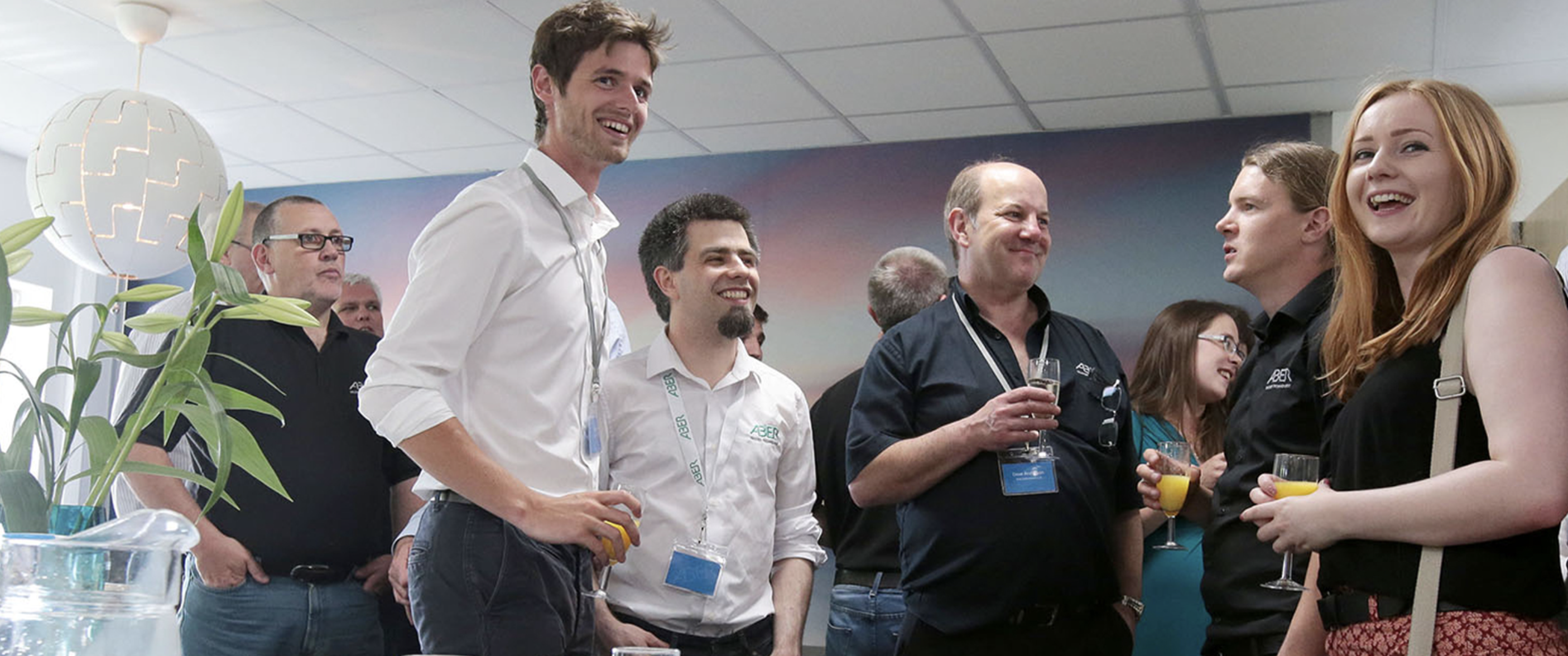
Employee Ownership
AberInstruments developed their approach to Employee Ownership naturally as an extension of their organisational culture. Ramy mentioned how the company started at the Centre for Alternative Technologies, a knowledge hub for environmentally conscious graduates. Around the time the founders were there, early experiments in generating electricity from wind were underway, and the company's alternative mindset, as AberInstruments grew, attracted equally holistically minded colleagues.
AberInstruments’ first step towards Employee Ownership was launching its Trust in 2002, with the intention that all shares become employee-owned, which became a reality in 2011. The founders' belief in Employee Ownership stemmed from their moral stance that the company’s most important stakeholders are people contributing to the success of the business: the Employees, and that becoming Employee Owned made the most sense for the long-term prosperity of the company.
Ramy explained that AberInstruments’ unique hybrid ownership model only works because of its preexisting high employee engagement, which AberInstruments has continued to maintain and grow: The highly technical company, which builds knowledge and sells it via their products, is driven primarily by its technical experts, who are not only at the forefront of their specialism, but are also involved with company-wide decision making, enabling employees as specialist experts, as well as engaging them with the success of the whole company. As employees think more like owners, they become more interested in the company's success as a whole than in their department's or their own success.
AberInstruments’ hybrid ownership structure is unique and inspiring for other businesses. The business culture fosters a sustainable approach to revenue and growth, without either becoming the company's north star. Their high employee retention rate reduces hiring and training costs, and the environmental benefits of the business lower operational costs, contributing to higher profits that are distributed among employee owners and reinvested in the industry, leading to a more efficient company able to do more with less. AberInstruments is also able to be more grounded in its charitable endeavours by having such a strong connection to its founding place. The societal impact they have is highly concentrated, excluding the impact of their products, meaning they can make a big difference in their local community.
The employee ownership structure has had a significant impact on the business and has truly helped AberInstruments stand out as a company. AberInstruments has a profit-sharing scheme, where every six months, 25% of the company’s profits are distributed to employees as a multiplier of their monthly salary. This direct financial incentive motivates people to work efficiently and contribute to the company’s success.
Employee ownership has also helped boost employees’ confidence and business awareness. People begin to think more like business owners, looking for solutions to problems and considering the best ways to manage the company's budget.
AberInstruments finds Employee Ownership encourages more thoughtful, well-considered decision-making. Being cautious with finances means avoiding rushed decisions, taking the time to listen to different perspectives, and ultimately choosing the best path for the company’s future. Additionally, this steady approach helps the company maintain its core values and ethics as it grows.
Another key point raised by Ramy is that AberInstruments has a very high employee retention rate. This means that people genuinely enjoy working there, feel valued, believe in the company’s mission, and don’t want to leave. When issues arise, employees are encouraged to speak openly. Everyone is expected to be part of the solution, and there is a strong sense of shared responsibility. Moreover, the structure offers stability, as it is very difficult to sell. All employees must agree on both the decision to sell and the price, which makes such a sale extremely unlikely. This adds another layer of security and reinforces the company’s long-term focus.
This comes down to AberInstruments' environmental group. Every year, the environmental group organises a half-day or full-day community volunteering event, and anyone from the company who is willing can join while being paid. For example, last year they organised a beach cleaning!
This creates a mindset of helping the local environment in general, including non-work-related actions. All employees are being given the opportunity to participate in these meaningful activities.
One of the founders, when the employees bought his shares, used the money to install solar panels on the offices. This means they generate a lot more energy than they actually use: people who work at the company use electric cars and charge for free from the sun, so the energy they generate has no emissions.
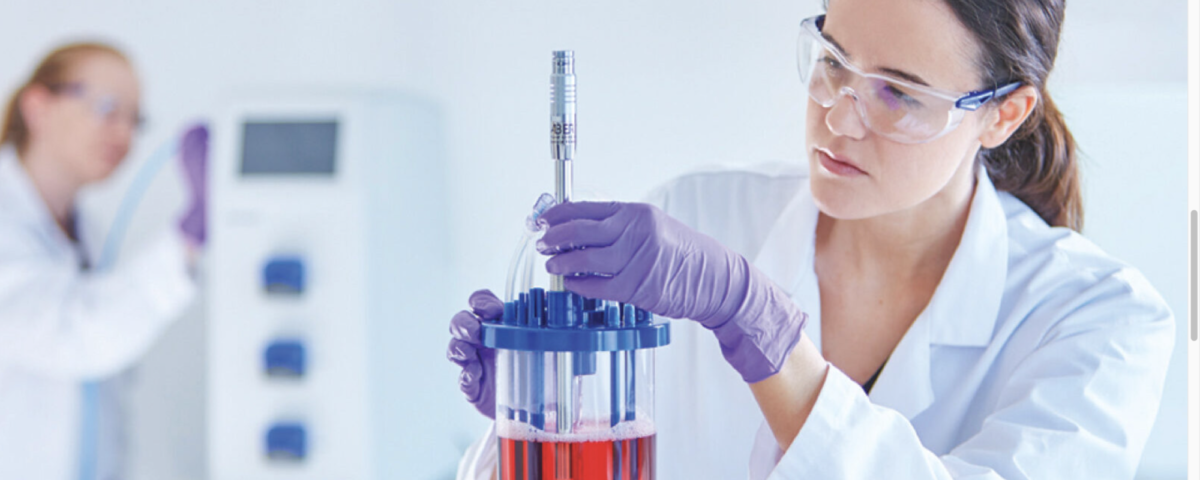
AberInstruments products also enable industrial waste reduction and consistency. In general, breweries create a lot of waste during their processes. Their technology continuously monitors cell concentration in a reactor to ensure optimal processing.
AberInstruments technology allows for higher accuracy than traditional measurements, as their data is live. Without AberInstruments, their clients can waste multiple weeks of progress and resources. Afterwards, they still needed to sterilize the equipment, which required a large amount of energy and harmful chemicals. All of this increases waste. AberInstruments' technology, Ramy said, enables you to optimise the harvest and even rescue it when cells are starting to die off; therefore, the company saves time in processes and energy, becoming more efficient.
Get stories of positive business innovations from around the world delivered right to your inbox.
Ramy Elabbadi, Employee Council