
Barnamoy Roy

TIAS School for Business and Society
Benito Giordano


Keep this story going! Share below!
Rare Planet is a profitable travel-retail company that connects rural Indian artisans directly with consumers through stores at airports and cultural landmarks, transforming traditional crafts into premium, mainstream products. Its business solution replaces single-use plastics with sustainable artisanal alternatives—such as terracotta kulhads—while ensuring fair income, market access, and dignity for over 10,000 artisans. By embedding sustainability into a scalable retail model, Rare Planet directly advances SDG 12 (Responsible Consumption and Production) while contributing to SDG 1 (No Poverty) and SDG 10 (Reduced Inequalities).
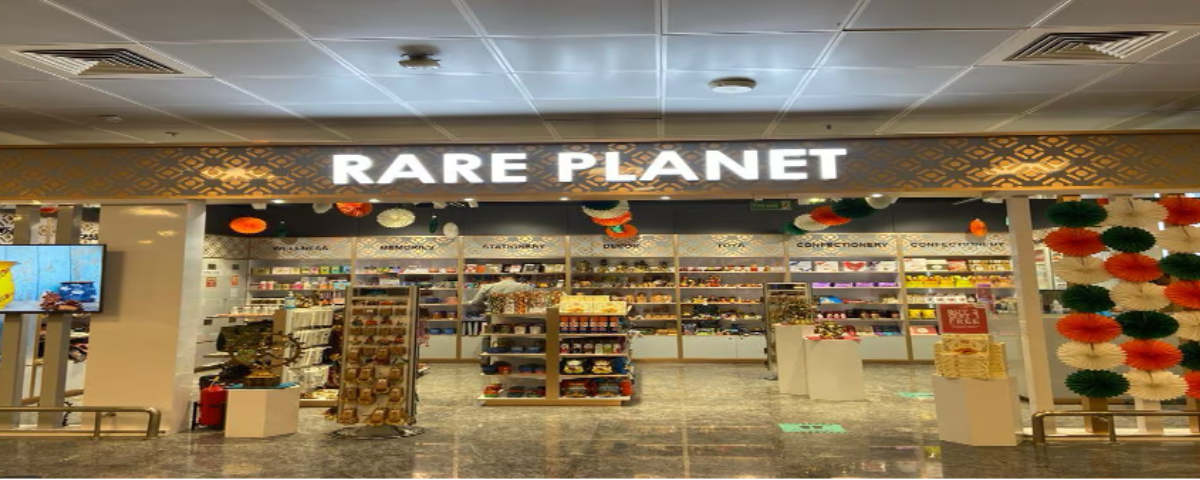
Rare Planet’s innovation lies in reimagining how traditional Indian craftsmanship can be integrated into modern, high-footfall retail environments to create both commercial value and measurable social impact. Founded in 2015 by Ranodeep Saha, the company operates at the intersection of culture, commerce, and sustainability by bringing rural artisans into premium travel-retail spaces such as airports, railway stations, and nationally significant cultural landmarks, including Rashtrapati Bhavan circuits. Instead of positioning craft as a niche or philanthropic activity, Rare Planet embeds it within a scalable, for-profit retail model that reaches millions of consumers annually.
The core innovation is responsible consumption through design and distribution. Rare Planet works directly with over 10,000 artisans across India to co-create contemporary, functional products—such as hand-painted terracotta kulhads, jewellery, fashion accessories, and wellness items—that serve as sustainable alternatives to single-use plastic and mass-produced goods. These products are supported by an eco-conscious retail infrastructure, with approximately 75% of store fixtures made from recycled materials such as tetra-pack sheets. This integrated approach ensures sustainability is not limited to the product alone but extends across the entire value chain, directly advancing SDG 12 (Responsible Consumption and Production).
Equally innovative is Rare Planet’s inclusive market-access model. Through initiatives like the Umeed project, specially-abled artisans and entrepreneurs are integrated into mainstream retail as producers and store operators, addressing SDG 10 (Reduced Inequalities) and SDG 8 (Decent Work and Economic Growth). By providing consistent demand, fair pricing, and national visibility, Rare Planet enables artisans to transition from informal livelihoods to stable micro-entrepreneurship, contributing to SDG 1 (No Poverty). This holistic, replicable model demonstrates how heritage-led businesses can drive systemic change while remaining financially resilient and growth-oriented.
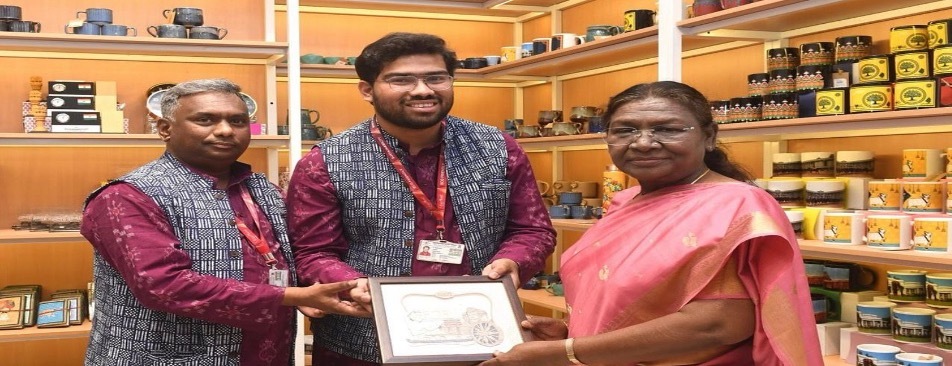
The inspiration behind Rare Planet’s innovation is deeply personal and rooted in Ranodeep Saha’s early exposure to art, craftsmanship, and grassroots entrepreneurship. Growing up in a middle-class household, Saha began his journey by hand-painting products for school festivals—an experience that introduced him to both creative expression and the realities of selling handcrafted goods. Reflecting on those early years, he shared, “When we started, we never had this big of a goal… but every year taught us a lot,” highlighting how continuous learning and adaptation shaped the company’s evolution rather than a predefined commercial blueprint.
A defining influence on Saha’s leadership philosophy was witnessing the undervaluation of Indian artisans despite the richness of their skills and heritage. He was particularly driven by the contradiction between India’s global reputation for craftsmanship and the limited economic mobility available to the communities behind it. This conviction is captured in his belief: “We prioritize rural artisans and their work over everything else. That is what has made us what we are today.” For Saha, Rare Planet was never meant to be a charity platform; instead, it was envisioned as a dignified marketplace where artisans could access premium consumers and earn fair, sustainable incomes.
Equally influential was Saha’s strong stance on integrity-led growth. Rare Planet remained bootstrapped for its first five years, a deliberate choice that allowed values to take precedence over rapid expansion. As he explained during the interview, “We do not accept money from true venture capital funds; we are a bit choosy in terms of investors.” This approach ensured alignment between financial backing and the company’s long-term mission. Ultimately, Saha’s inspiration extends beyond business success—“I want to make such products mainstream in the country and sell them at a premium, thus uplifting their lives,” he said—capturing a vision in which commercial scale becomes a tool for social transformation rather than a compromise.
Rare Planet’s innovation has created measurable economic, social, and environmental impact by embedding sustainability and inclusion into a scalable retail business model. Since its founding in 2015, the company has built a nationwide presence across 157 high-footfall travel-retail locations, connecting over 10,000 rural artisans from craft clusters across India to premium markets. In the short term, this model generated consistent demand and fair compensation for artisans, leading to immediate income stability and improved livelihood security. Evidence of this impact includes the emergence of over 150 micro-entrepreneurs within Rare Planet’s supply chain and increased access to education for more than 1,000 children from artisan families, directly supporting SDG 1 (No Poverty).
Social inclusion has been another critical outcome of the innovation. Through initiatives such as the Umeed project, Rare Planet has integrated specially-abled individuals as artisans, store operators, and business owners within mainstream retail environments. In the short term, this provided dignified employment and skill development; in the long term, it has reduced dependency on welfare and strengthened economic participation among marginalized groups. The company’s workforce composition—46% women and 5% people with disabilities—provides tangible evidence of progress toward SDG 5 (Gender Equality), SDG 8 (Decent Work and Economic Growth), and SDG 10 (Reduced Inequalities).
Environmentally, Rare Planet’s introduction of terracotta kulhads and clay-based alternatives to single-use plastics has influenced everyday consumer behavior at scale. By replacing plastic and paper cups in high-traffic travel locations and using recycled materials for approximately 75% of store fixtures, the company has reduced plastic waste and lowered its retail carbon footprint, aligning strongly with SDG 12 (Responsible Consumption and Production). Over the long term, this innovation has helped normalize sustainable consumption while demonstrating that environmentally responsible practices can coexist with strong financial performance—evident in revenue growth from ₹75 lakhs in 2017 to a projected ₹150 crores by 2025.
Because Rare Planet embedded sustainability and artisan empowerment at the core of its business model, the company achieved strong, resilient commercial growth rather than treating social impact as a cost. Since transitioning from a proprietorship to a private limited company in 2017, Rare Planet’s revenues have scaled from approximately ₹75 lakhs to a projected ₹150 crores by 2025. By positioning artisanal, eco-friendly products as premium travel souvenirs, the company successfully captured high-margin, high-footfall markets such as airports, railway stations, and government-owned cultural landmarks across India. This strategic placement created a steady, repeat-driven revenue stream that is less vulnerable to seasonal demand fluctuations.
Because the business prioritized artisans as long-term partners rather than low-cost suppliers, Rare Planet built a stable and diversified supply chain that supports over 10,000 artisans across multiple craft clusters. This approach reduced dependency risks, improved product quality, and enabled faster innovation through co-creation. As a result, the company expanded into multiple complementary brands—such as Sitara, 2M Minimart, Rare Chemist, and Liquid/Atimoda—allowing it to enter new consumer segments and open additional revenue verticals. This multi-brand strategy strengthened resilience during disruptions such as the COVID-19 pandemic, when Rare Planet continued to expand its store network rather than contract.
Because Rare Planet aligned its growth with values-driven leadership and inclusive workplace practices, it also benefited from higher employee engagement, retention, and organizational agility. A flat, decentralized structure allows faster decision-making and cross-functional collaboration, while a diverse workforce—46% women and 5% people with disabilities—enhances creativity and brand credibility. The company’s disciplined investor selection process has further opened long-term capital opportunities with partners aligned to its mission, reinforcing stakeholder trust. Ultimately, because Rare Planet proved that responsible consumption can be both aspirational and profitable, it strengthened brand loyalty, attracted premium retail partnerships, and established a scalable blueprint for sustainable business growth.
Rare Planet’s innovation delivers significant social benefits by structurally integrating marginalized artisan communities into mainstream, premium retail markets. Since its inception in 2015, the company has partnered with more than 10,000 artisans across rural and semi-urban craft clusters in India, providing consistent demand, fair pricing, and long-term income security. In the short term, this reduced income volatility and dependence on middlemen; in the long term, it enabled social mobility through entrepreneurship—evidenced by over 150 artisans establishing their own micro-enterprises within Rare Planet’s supply ecosystem. This model directly advances SDG 1 (No Poverty) and SDG 8 (Decent Work and Economic Growth) by transforming informal craft livelihoods into dignified, sustainable sources of income.
Social inclusion is further strengthened through Rare Planet’s Umeed initiative, which empowers specially-abled individuals as artisans, retail operators, and business owners. Operating across high-footfall locations such as airports and cultural landmarks, the initiative challenges societal perceptions by placing inclusive entrepreneurship in visible, aspirational spaces. The company’s workforce composition—46% women and 5% people with disabilities—demonstrates tangible progress toward SDG 5 (Gender Equality) and SDG 10 (Reduced Inequalities). Over time, this inclusive approach contributes to reduced dependency, improved self-esteem, and stronger community participation among underrepresented groups.
Environmentally, Rare Planet promotes responsible consumption by replacing single-use plastics with durable, biodegradable artisanal alternatives such as terracotta kulhads and clay-based utensils. These products, distributed at scale in travel-retail environments, influence everyday consumer behavior and reduce plastic waste generation. Additionally, approximately 75% of store fixtures are constructed from recycled materials, including tetra-pack sheets, lowering the company’s retail carbon footprint. By systematically embedding sustainability across product design, retail infrastructure, and consumer education, Rare Planet advances SDG 12 (Responsible Consumption and Production) and demonstrates how business-led innovation can deliver long-term environmental benefits while shaping more sustainable consumption patterns.
Get stories of positive business innovations from around the world delivered right to your inbox.

Rare Planet is a profitable Indian company that has brought about a change to the travel retail sector by connecting rural artisans with customers at airports, railway stations, and significant cultural landmarks.