

Anshika Katara

Anushree Bhattacharya
Guido Lammers

TIAS School for Business and Society
Benito Giordano


Keep this story going! Share below!
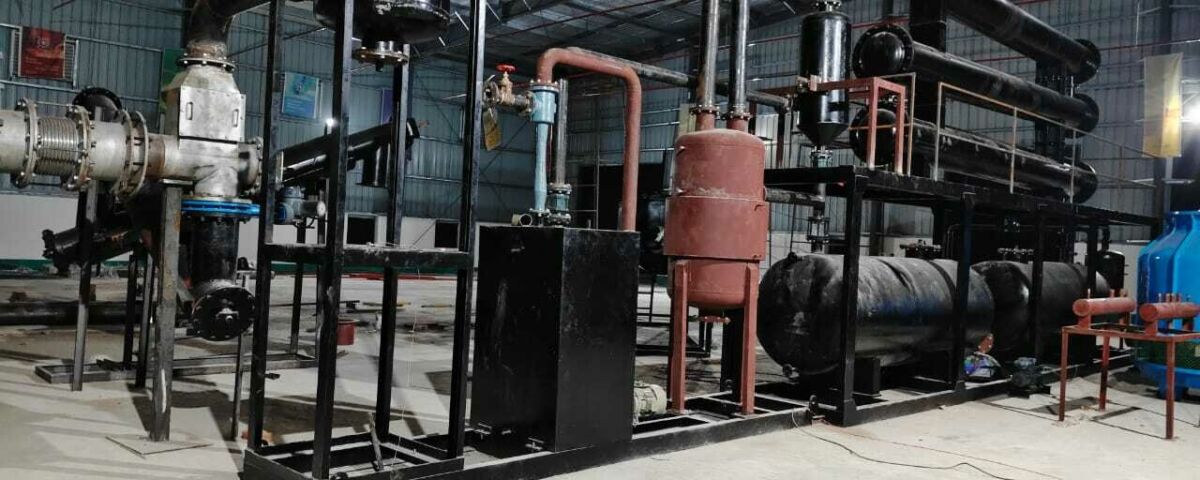
Goenvi is a chemical recycling company that uses proprietary catalytic thermal decomposition technology to convert mixed plastic waste, municipal refuse, and agricultural residues into fuel, bio-coal, and carbon-negative biochar. By lowering pyrolysis temperatures and integrating IoT-based monitoring and verification, Goenvi makes waste-to-energy economically viable while ensuring traceable carbon removal. This solution directly supports UN SDGs 7 (Clean Energy), 12 (Responsible Consumption and Production), and 13 (Climate Action) by reducing landfill waste, cutting emissions, and enabling verified carbon capture.
Goenvi, founded by engineer and entrepreneur Manojj Natarrajan in India, addresses the growing global crisis of plastic, municipal, and agricultural waste through an innovative form of chemical recycling. Observing rural communities burning plastic due to a lack of disposal options, Manojj began developing scalable recycling technology in 2010, culminating in a commercially viable solution by 2015. Today, Goenvi deploys modular waste-to-value systems across regions such as Goa and Chennai, proving that the technology can operate consistently in diverse conditions with minimal skilled labor.
What makes Goenvi’s solution innovative is its proprietary catalytic thermal decomposition technology, which significantly reduces the temperature required for pyrolysis by 30–35 percent. This breakthrough lowers energy consumption and operational costs, making chemical recycling economically feasible for mixed and unsegregated waste—materials that traditional recycling cannot process effectively. Goenvi’s systems convert complex plastic into fuel, municipal refuse-derived waste into bio-coal, and agricultural residues into carbon-negative biochar that enriches soil and captures CO₂. Automation and IoT integration allow the systems to run with minimal human intervention while enabling remote monitoring and optimization of performance.
Beyond physical processing, Goenvi has developed a digital Monitoring, Reporting, and Verification (MRV) platform that tracks waste from collection to final product using geotagging, batch IDs, and QR-coded outputs. This ensures transparency and credibility in carbon credit generation through its “Carbon Offset as a Service” model. By transforming waste into energy and verified carbon removal, Goenvi directly advances the UN SDGs on clean energy (SDG 7), responsible consumption (SDG 12), climate action (SDG 13), and sustainable cities (SDG 11), while providing new income streams for farmers and small businesses.
The inspiration for Goenvi’s innovation came from founder Manojj Natarrajan’s firsthand exposure to unmanaged plastic waste in rural India. While traveling near Pune, he witnessed villagers burning piles of plastic because they had no viable disposal alternative. This moment became the emotional and practical trigger for his work in chemical recycling. Troubled by both the environmental damage and social neglect surrounding waste, Manojj decided to act rather than wait for systemic change. He explained that Goenvi was born from a desire to restore dignity to waste processing and prove that sustainability could also be profitable.
Manojj began experimenting with chemical recycling in 2010, funding early trials himself and refining the technology over several years. His motivation was rooted in both frustration and opportunity: frustration at seeing waste treated as a burden, and opportunity in realizing it could be transformed into value. Reflecting on the simplicity of the system he ultimately developed, Manojj said, “One of the biggest challenges with chemical recycling is finding trained people. So, we built a completely automatic system. You feed the waste into a hopper, and it runs on its own with minimum human intervention.” He emphasized that accessibility was key: “It’s like operating a microwave. You don’t need to be a chemical engineer to run it; just load the hopper, press start, and the system takes care of everything.”
For Manojj, innovation had to be practical and scalable to make real change. He also believed environmental solutions must be economically viable to survive, stating, “If your business is not profitable, you cannot sustain. When you are profitable, you can create more impact.” This blend of personal conviction, technological experimentation, and economic realism became the foundation for Goenvi’s mission to turn waste into energy and verified carbon removal—transforming a local problem into a global climate solution.
Goenvi’s innovation has already produced measurable environmental and economic impact across multiple regions in India, including Goa and Chennai, where its modular waste-processing systems have been deployed. In the short term, the company has transformed more than 30,000 tons of plastic waste into useful energy products, preventing these materials from being burned or sent to landfills. This has resulted in the avoidance of approximately 90,000 tons of CO₂ emissions, providing clear evidence that its chemical recycling technology directly reduces pollution and greenhouse gases. By converting mixed plastics, municipal refuse, and agricultural residues into fuel, bio-coal, and biochar, Goenvi demonstrates how waste can be turned into valuable resources rather than environmental liabilities.
The innovation has also created economic benefits for small and medium enterprises and farmers who participate in the waste-to-value ecosystem. Farmers generate income by selling agricultural residues instead of burning them, while businesses benefit from high-margin fuel production and carbon credit opportunities. In the medium term, Goenvi’s IoT-enabled systems and digital Monitoring, Reporting, and Verification (MRV) platform ensure that waste processing and carbon removal are traceable and verifiable. This transparency supports the company’s “Carbon Offset as a Service” model, allowing corporations to fund new waste-processing facilities while meeting ESG and net-zero goals.
Looking ahead, Goenvi’s long-term impact is tied to scale. The company aims to achieve 500 million metric tons of carbon removal by 2035 through widespread deployment of its technology. If realized, this would represent a significant contribution to global climate mitigation efforts. The combination of proven waste conversion results, verified emissions reductions, and scalable business design provides strong evidence that Goenvi’s innovation can deliver lasting environmental and social impact aligned with the UN Sustainable Development Goals.
Because Goenvi developed a proprietary low-temperature catalytic pyrolysis technology, it created a highly profitable and scalable business model within the waste-to-energy sector. By lowering operating temperatures by 30–35 percent, the company significantly reduced energy use and production costs, enabling strong margins for both Goenvi and its customers. Converting waste at a cost of under ₹6 per kilogram while selling the resulting fuel at approximately ₹50 per liter allows participating enterprises to achieve EBITDA margins of 60 percent or more. This strong unit economics has made Goenvi’s solution especially attractive to small and medium enterprises, accelerating adoption and opening new markets across India.
Goenvi embedded automation and IoT into its processing systems, it minimized reliance on highly trained chemical engineers while ensuring consistent output across geographically diverse sites such as Goa and Chennai. This design enables rapid deployment of new units with lean staffing and limited training, improving productivity and lowering operational risk. At the same time, the innovation created multiple revenue streams beyond equipment sales, including catalyst licensing, software-enabled monitoring services, and long-term maintenance contracts. These diversified income sources enhance financial stability and allow the company to scale without proportional increases in workforce or overhead.
They also developed a digital Monitoring, Reporting, and Verification (MRV) platform, it unlocked an entirely new line of business through its “Carbon Offset as a Service” (COaaS) model. This platform enables corporations to pre-purchase high-integrity, traceable carbon credits, providing Goenvi with upfront capital to expand its infrastructure while helping clients meet ESG and net-zero commitments. As a result, Goenvi has evolved from a technology supplier into a full-stack climate solutions provider, attracting investor interest and strengthening its competitive advantage in the circular economy and climate-tech markets.
Goenvi’s innovation delivers immediate environmental benefits by preventing plastic, municipal, and agricultural waste from being burned or dumped in landfills. In the short term, its catalytic thermal decomposition systems convert mixed and unsegregated waste into useful products such as fuel, bio-coal, and carbon-negative biochar. This reduces open burning, lowers local air pollution, and decreases greenhouse gas emissions in communities where the systems are deployed, including regions such as Goa and Chennai. By transforming over 30,000 tons of plastic waste and avoiding approximately 90,000 tons of CO₂ emissions, Goenvi provides evidence that its solution directly mitigates climate and pollution impacts.
The innovation also generates social benefits by creating new income opportunities for farmers and small enterprises. Instead of burning crop residues, farmers can sell agricultural waste for conversion into biochar, improving soil fertility while earning additional income. Small and medium enterprises that adopt Goenvi’s technology benefit from lower energy costs and participation in a profitable waste-to-value ecosystem. This approach strengthens local economies while encouraging responsible waste management practices, contributing to healthier living conditions and more sustainable livelihoods.
In the long term, Goenvi’s digital Monitoring, Reporting, and Verification (MRV) platform ensures that environmental benefits are transparent, measurable, and credible. By enabling verified carbon removal and traceable waste processing, the company supports high-integrity carbon markets and responsible corporate climate action. With an ambitious goal of removing 500 million metric tons of carbon by 2035, Goenvi’s scalable model has the potential to significantly advance global efforts aligned with the UN Sustainable Development Goals, particularly Climate Action (SDG 13), Responsible Consumption and Production (SDG 12), and Sustainable Cities and Communities (SDG 11).
Get stories of positive business innovations from around the world delivered right to your inbox.

Goenvi Technologies offers innovative solutions for converting end-of-life hydrocarbon waste (Plastics, MSW refuse and Agricultural Waste) into sustainable alternative fuels and chemicals. The proprietary technology leverages cutting-edge processes to efficiently and cost-effectively transform waste streams into valuable products, while also reducing the environmental impact of traditional disposal methods. The approach not only helps companies and Governments manage their waste streams more effectively, but also supports the development of a circular economy by providing a sustainable source of renewable energy and chemicals. With Goenvi Technologies, one can reduce carbon footprint, cut waste management costs, and support a cleaner, more sustainable future.