
Akshay Shinde

Alka Burnwal
Aishwarya Sharma
Falak Gala

Rumela Pani

Goa Institute of Management

Divya Singhal


Keep this story going! Share below!
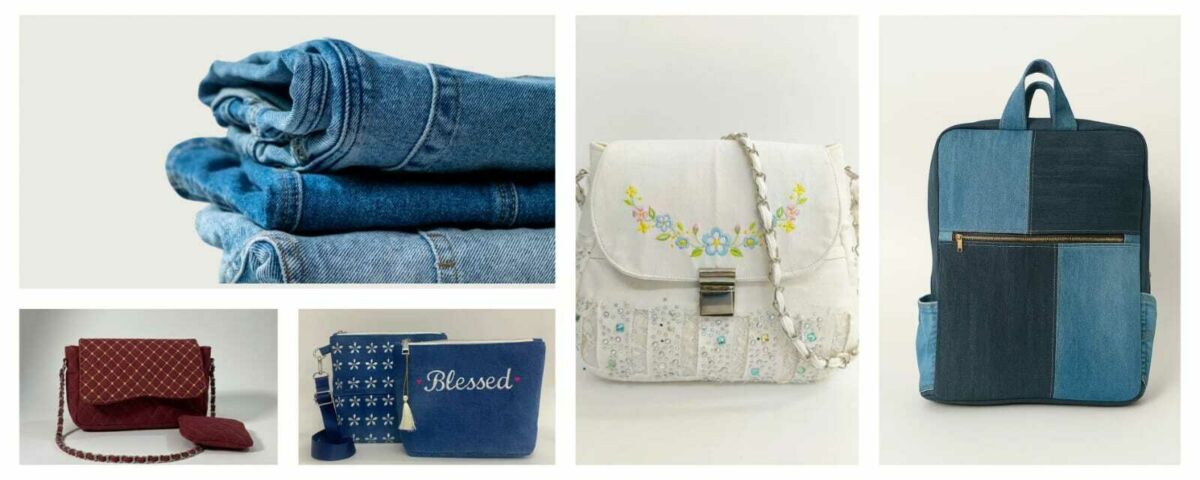
Filament Fabrics and More is a circular fashion startup that addresses textile waste through a traceable upcycling model. The company collects post-consumer garments directly from customers and transforms them into premium products such as bags—ensuring that each customer receives a product made specifically from their own clothing. This traceable approach differentiates the company from conventional recycling or donation systems, where garments are mixed and often end up in landfills. By extending the life cycle of textiles and promoting responsible consumption, the business directly contributes to UN Sustainable Development Goal 12 (Responsible Consumption and Production) and SDG 13 (Climate Action). Additionally, by creating artisan employment and promoting ethical production, it supports SDG 8 (Decent Work and Economic Growth). The innovation lies not only in converting waste into value but in building transparency, emotional connection, and accountability into the circular economy.
Filament Fabrics and More was founded to tackle the growing issue of textile waste, one of the largest environmental challenges globally. The company operates through a traceable upcycling system in which customers send their used denim garments, and those exact garments are transformed into new, high-quality products and returned to them. Unlike traditional upcycling brands that mix fabrics in bulk production, Filament maintains segregation and tracking throughout the production process. This ensures transparency and builds customer trust, as individuals can see their personal garment reimagined into a new product.
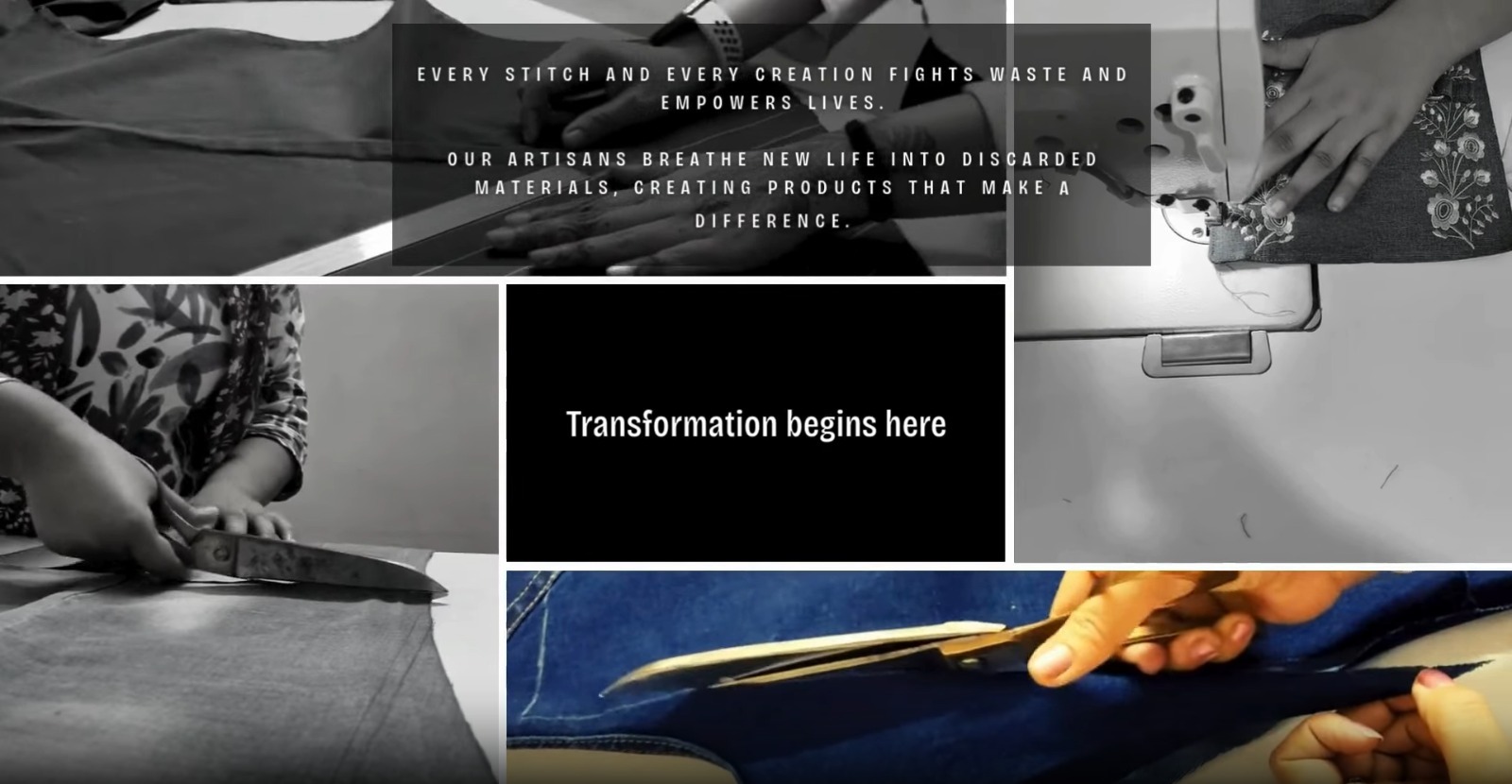
A key part of the innovation lies in design and operational excellence. The company spent significant time refining patterns so that denim of various sizes and styles could be standardized into structured, premium-looking bags. The goal was to ensure that upcycled products do not appear visibly recycled but instead match market expectations for quality and aesthetics. Furthermore, leftover materials are repurposed into smaller items or used for social initiatives, minimizing waste within the production cycle itself.
Beyond product innovation, the business model is strategically designed as a stepping stone toward a broader textile sustainability platform. Upcycling serves as proof of concept and brand credibility, with long-term plans to expand into recycling initiatives and pre-consumer industrial textile waste management. Through this approach, the company creates environmental impact while building a scalable circular ecosystem
The inspiration behind Filament Fabrics and More began with a deeply personal moment. The founder shared that the idea emerged while she was decluttering her wardrobe and questioning where unused clothes ultimately go. She realized that whether garments are donated or discarded, most eventually reach landfills. As she explained, “ Everything was taking us to the landfill- if not now, then maybe a year later .” This realization sparked the desire to extend the life of garments in a meaningful way.
The founder also emphasized that sustainability is not simply a business opportunity but a mindset shift. She believes overconsumption and overproduction are rooted in behavior, and that real change must begin at an individual level. In her words, “Sustainability is not a trend; it is a mindset.” This philosophy shaped the comp any’s model, ensuring that customers are not just buyers but participants in the circular process. By allowing individuals to trace their garment’s journey and witness its transformation, the company fosters emotional engagement and accountability.
Ultimately, the innovation was inspired by the belief that small, intentional actions when multiplied can create systemic impact. By combining personal reflection, environmental responsibility, and entrepreneurial courage, Filament Fabrics and More demonstrates how conscious leadership can transform waste into opportunity.
There is something particularly human about the way customers engage with Filament's model. Many send in garments with sentimental value – old clothing tied to memories – and receive something newly useful in return. Those experiences link sustainability to personal identity in a way that drives genuine behavioral change toward responsible consumption (SDG 12: Responsible Consumption and Production). This is impact that goes beyond transaction – it shifts how people think about what they own and what they discard.
Short-term, the traction is real. Approximately 300% monthly organic growth, repeat purchasing as a pattern rather than an exception, and Miss Kapoor reporting "98% of our feedback is absolutely positive" all point to a model that holds up. The workforce has expanded to around 20 employees, and engagement with corporate clients and government agencies on pre-consumer textile waste continues to grow. Early financial stability has been reached: "Right now also we are at a break even. We are not at loss."
The longer ambition is considerably larger – a "complete textile sustainability platform" integrating upcycling, recycling, and circular solutions. Upcycling comes first because it is accessible and builds the credibility needed for harder, systemic work ahead. Scaled properly, the potential to reshape consumer behavior and supply chains across the sector is genuine.
When Filament Fabrics & More (FFM) launched, the skepticism was understandable. Would people pay to have products made from their own worn-out clothes? Talking to Miss Parul Kapoor, it became clear the market has answered that question decisively: "for the last five consecutive months… every month it is almost 300% growth that we are seeing." What stands out is that this growth has been largely organic – not manufactured through heavy marketing spend but pulled forward by genuine demand for sustainable textile solutions.
The personalized upcycling model is central to why this works. Most businesses in this space collect and pool textiles but Filament does not. Each customer receives products made from their own garments specifically. That distinction creates something marketing budgets rarely can – real emotional connection and trust. Customer satisfaction has been remarkably high, with Miss Kapoor reporting that repeat purchasing has become a pattern rather than an exception – "Our average order size is at least three bags." Early financial stability has also been achieved: "Right now also we are at a break even. We are not at loss."
Because the business established credibility through upcycling, it has been able to expand into broader commercial opportunities, as reflected in the scalability and service model described in From Old to New: The Journey of Upcycled Products and in its corporate engagement offerings outlined on the Corporate Orders page. Corporate collaborations extend the model further, signaling that waste can be an input rather than a problem. Institutional interest is building, with Filament now "working with different corporates… and some government agencies" on pre-consumer textile waste. Miss Kapoor framed the original strategy plainly: "Upcycling was one initiative for us to make that name… to have those testimonials, to have those customer videos, to seek their feedback and to know that no, this is a legit organization that is actually working for a cause." Pairing sustainability with personalization has given Filament a position that is both differentiating and loyalty-building, with the foundation to generate much broader impact as it grows.
The social impact of what Filament Fabrics & More is building goes beyond the product. The team has grown into “a team of 20 individuals”. We have got a team of artisans who actually bring life to the ideas" – livelihood creation that connects directly to SDG 8: Decent Work and Economic Growth. The company leads with awareness rather than product promotion. Miss Kapoor was direct about this: "We are not selling a bag here… we are selling a concept." Through storytelling and personalized experiences, customers are encouraged to reconsider how they relate to textile waste – a theme that also runs through the company's sustainability blog, including insights shared in The Hidden Impact of Textile Waste on Our Planet. Corporate collaborations extend this further, signaling that waste can be an input rather than a problem.
The environmental logic at Filament is simple but important. Miss Kapoor put the scale of the problem plainly: "textile waste is such a huge problem… 9 million tons of textile are wasted every year… that's such a huge number." Upcycling keeps garments out of landfills while reusing existing materials reduces dependence on virgin resources. Operationally, leftover materials are repurposed rather than discarded, as described in From Old to New: The Journey of Upcycled Products. Further, Miss Kapoor explained: "Eventually everything has to end up in a landfill… but if you extend the life of a garment…that time to reach the landfill increases." That extended lifecycle matters for both SDG 12 (Responsible Consumption and Production) and SDG 13 (Climate Action).
Get stories of positive business innovations from around the world delivered right to your inbox.
Filament Fabrics and More is an India-based sustainability venture working to address the growing problem of textile waste through circular fashion practices. The company collects post-consumer garments and transforms them into upcycled products, ensuring that materials are responsibly reused rather than sent to landfills. Beyond upcycling, the organization is gradually expanding toward building a broader textile sustainability platform that includes recycling and industrial waste solutions. Through its work, Filament Fabrics and More combines environmental consciousness with practical business execution.