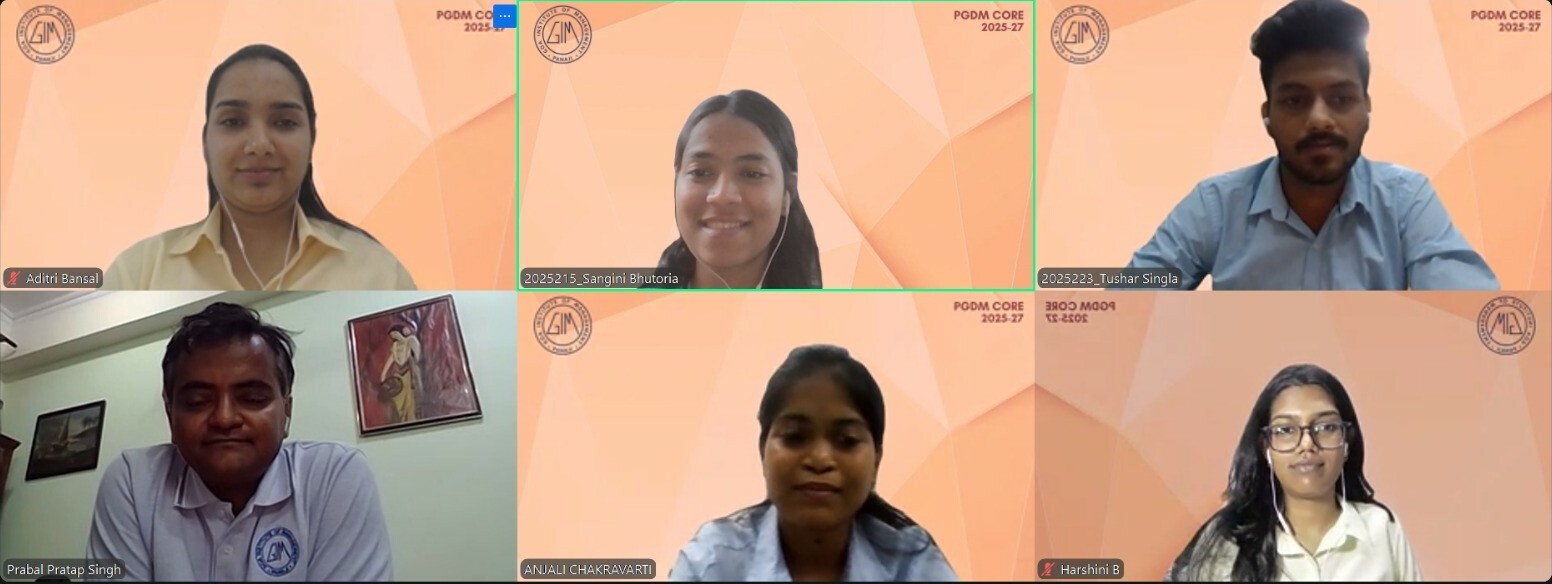

Aditri Bansal

Harshini B
Sangini Bhutoria

Anjali Chakravarti

Tushar Singla
Goa Institute of Management

Divya Singhal


Keep this story going! Share below!
Born from the painful realization that thousands were dying from curable conditions simply because they feared hospital costs, this innovation rebuilds trust in rural healthcare through a phygital, village-led model.
By empowering trusted Gram Mitras and Village Level Entrepreneurs to connect families with transparent, affordable hospitals and health financing, it ensures treatment happens before it becomes a life-or-death emergency.
In doing so, it advances SDG 3 (Good Health and Well-Being), SDG 10 (Reduced Inequalities), and SDG 8 (Decent Work and Economic Growth) by transforming healthcare from a distant privilege into a trusted community service.
The innovation was founded by Prabal Pratap Singh after a deeply personal loss — a close friend died from a simple kidney stone because treatment was delayed. He discovered that 20–25 lakh people in India die from absolutely curable diseases such as kidney stones and hernia, not because treatment does not exist, but because people wait until it becomes a matter of life and death. Fear of high hospital costs, lack of awareness about affordable facilities, and misinformation prevent rural families from seeking timely care. Many believe they would have to sell land or jewellery if they approached a hospital.
To address this, the company built a “phygital” healthcare model rooted in a Village Level Enterprise system. Drawing from his earlier experience of creating 30–35 thousand VLEs, he established a rural healthcare network supported by over 600 active Village Level Entrepreneurs and trusted Gram Mitras. These local representatives connect patients to verified hospitals, transparent treatment packages, and affordable health loans. The organization digitizes hospital data — including services and pricing — to ensure transparency and prevent inflated billing. It also arranges surgeries during hospitals’ lean days, securing additional discounts for patients.
Beyond healthcare access, the model creates sustainable rural livelihoods through gig-based Gram Mitras, many of whom are women, trained in business basics and trusted within their communities. By combining trust, technology, transparency, and affordability, the innovation advances SDG 3 (Good Health and Well-Being), SDG 10 (Reduced Inequalities), and SDG 8 (Decent Work and Economic Growth), while working toward standardizing price and quality across rural healthcare.
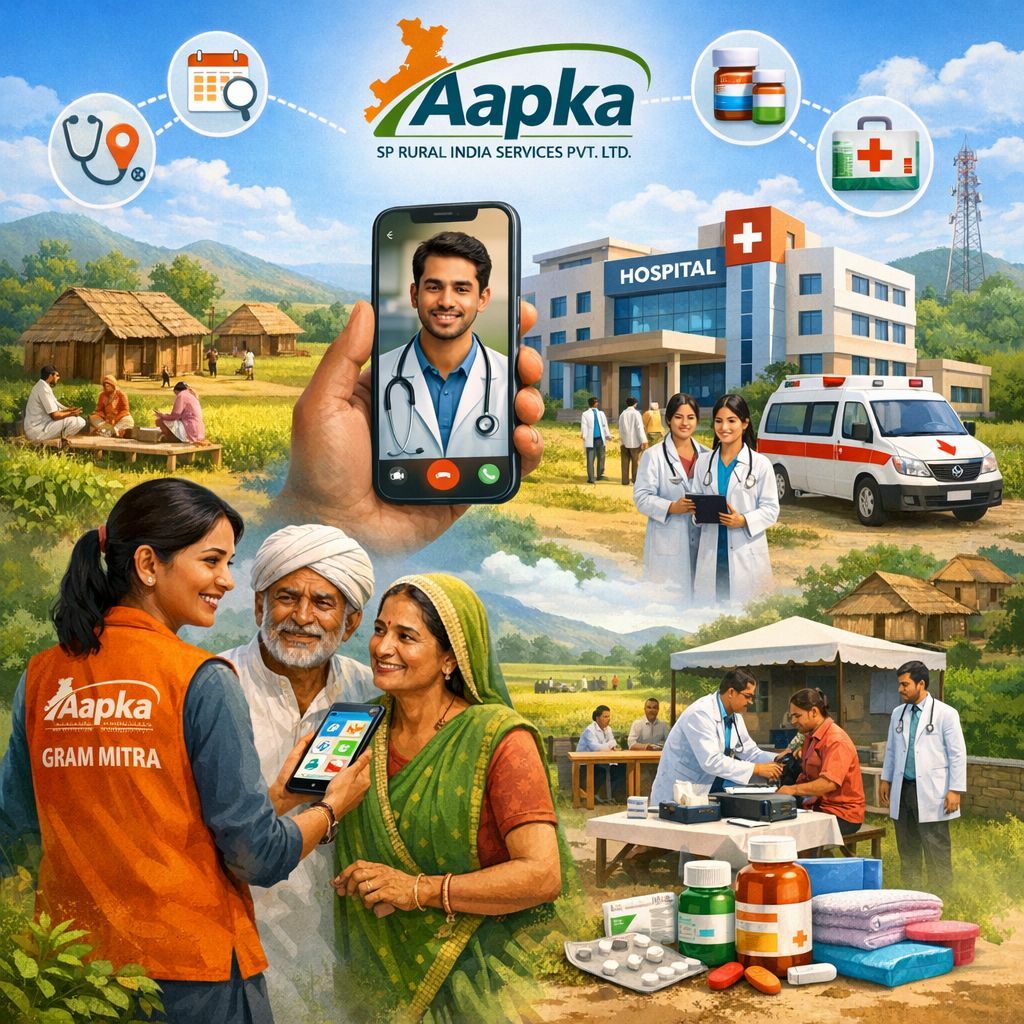
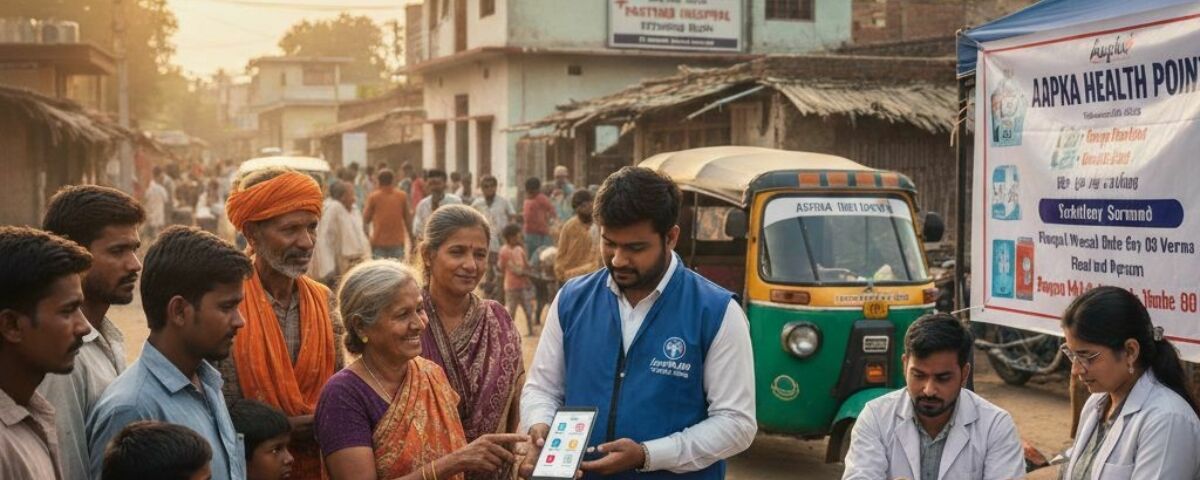
A trained Gram Mitra (Village Level Entrepreneur) connects rural families to verified hospitals through a phygital healthcare model, ensuring transparent pricing, affordable treatment, and trusted last-mile support from village to hospital.
The inspiration for this innovation came from a deeply personal and painful experience. The founder shared that a very close friend died because of something as common and curable as a kidney stone. He said he was “surprised to know this thing” — that someone could lose their life not due to lack of treatment, but due to delay, fear, and misinformation. That moment became a turning point. He realized that millions of people in rural India do not go to hospitals “until it’s a matter of life and death,” and by then, doctors say surgery is the only option.
During the interview, he reflected that people avoid hospitals because they believe they “will have to sell their land or jewellery” to afford treatment. He saw that the real problem was not just medical infrastructure — it was trust, awareness, and affordability. He strongly stated, “Solving rural healthcare is not only about tech. It’s about trust, sustainability, innovation.” He emphasized that one cannot understand rural India “by sitting in a room — you have to put your foot in the mud.”
Two emotional moments reaffirmed his purpose. A father once held his son’s hand and said, “You should change his life.” In another instance, a family named their daughter after his wife and co-founder, calling it a symbol of gratitude. For him, those moments confirmed that the purpose of the organization was being fulfilled.
The innovation has created measurable social and economic impact in rural healthcare access. In the short term, it has enabled patients in villages to seek timely treatment instead of waiting until conditions become life-threatening. Through a network of over 600 active Village Level Entrepreneurs and Gram Mitras, patients are connected to verified hospitals, transparent treatment packages, and affordable health loans. The organization ensures on-ground support during admission, documentation, and even daily hospital check-ins to prevent inflated billing. Operational KPIs such as the number of calls received, active Gram Mitras on the app, and diagnostic bookings reflect growing trust and usage within rural communities.
Economically, the model has generated livelihood opportunities for gig-based Gram Mitras — many of whom are women — who are trained in basic business skills and mathematics. These representatives, trusted within their villages, earn additional income while facilitating healthcare access. Hospitals also benefit, as surgeries are arranged during lean days when footfall is low, creating a win–win model that reduces patient costs and optimizes hospital capacity.
In the long term, the organization aims to standardize price and quality across a growing chain of partner hospitals, with a vision of 5,000 hospitals and 100,000 beds over the next decade. Its international recognition as the Highly Commended and only Asian finalist at AMBA & BGA Start-Up of the Year Award 2026further validates its scalable and sustainable impact. By combining economic sustainability with social responsibility, the innovation is building a trusted rural healthcare ecosystem.
Because the business built a phygital healthcare model rooted in Village Level Enterprises and transparent hospital partnerships, it has created a sustainable and scalable revenue structure. The organization charges hospitals a small service fee while simultaneously increasing patient footfall—especially during lean days when hospital occupancy is low. By arranging surgeries during these low-demand periods, the business creates value for hospitals while securing discounted rates for patients, resulting in a mutually beneficial ecosystem. This win–win model has enabled steady operational growth while keeping services affordable.
Because the company digitized hospital pricing, standardized packages, and introduced affordable health loan options, it has built strong trust and repeat engagement within rural communities. Operational KPIs such as increasing call volumes and the number of active Gram Mitras using the app monthly demonstrate expanding market penetration. The model has opened a largely untapped rural healthcare market, which the founder believes has the potential to become one of the largest markets in India. As awareness increases, dependency on heavy ground mobilization is expected to reduce over time, improving efficiency and margins.
Because the business relies on a gig-based network of over 600 active Village Level Entrepreneurs and Gram Mitras—many of them women—it has created livelihood opportunities without heavy fixed salary costs. With 9 full-time employees and a scalable gig workforce, the company maintains operational flexibility while expanding reach. International recognition from AMBA & BGA has further enhanced credibility, opening doors for partnerships and future investment opportunities.
Because the innovation addresses delayed treatment in rural India, it directly benefits society by preventing avoidable deaths from curable diseases such as kidney stones and hernia. By connecting villagers to verified and affordable hospitals through trusted Gram Mitras and Village Level Entrepreneurs, the model ensures that people seek treatment before conditions become life-threatening. The presence of on-ground representatives who assist with hospital selection, admission, documentation, and even bill verification reduces fear, misinformation, and financial exploitation. This builds trust in formal healthcare systems and improves overall community well-being.
The innovation also reduces inequality in healthcare access. Rural families often believe that treatment is only available in expensive, “big” hospitals and that they may have to sell land or jewellery to afford care. By digitizing hospital data, publishing transparent packages, and arranging discounted surgeries during hospitals’ lean days, the organization makes quality care financially accessible. At the same time, it creates income opportunities for local Gram Mitras—many of whom are women—thereby strengthening rural livelihoods and empowering communities economically.
Environmentally, the organization partners in distributing menstrual cups as an alternative to disposable sanitary pads, reducing long-term waste and harmful environmental impact from non-biodegradable menstrual products. By combining healthcare access, women’s participation, livelihood generation, and sustainable menstrual solutions, the innovation contributes to a healthier society while promoting responsible environmental practices.
Get stories of positive business innovations from around the world delivered right to your inbox.

Aapka (SP Rural India Services Private Limited) operates in the HealthTech and rural healthcare services sector. The company provides a digital platform that connects villagers with healthcare professionals, hospitals, and essential hygiene products through an intuitive mobile app and local representatives. Its services include hospital appointment assistance, basic diagnostics, non-emergency medical support, and healthcare facilitation. Aapka primarily serves underserved rural communities while also partnering with hospitals and healthcare providers to expand their reach into remote areas.