

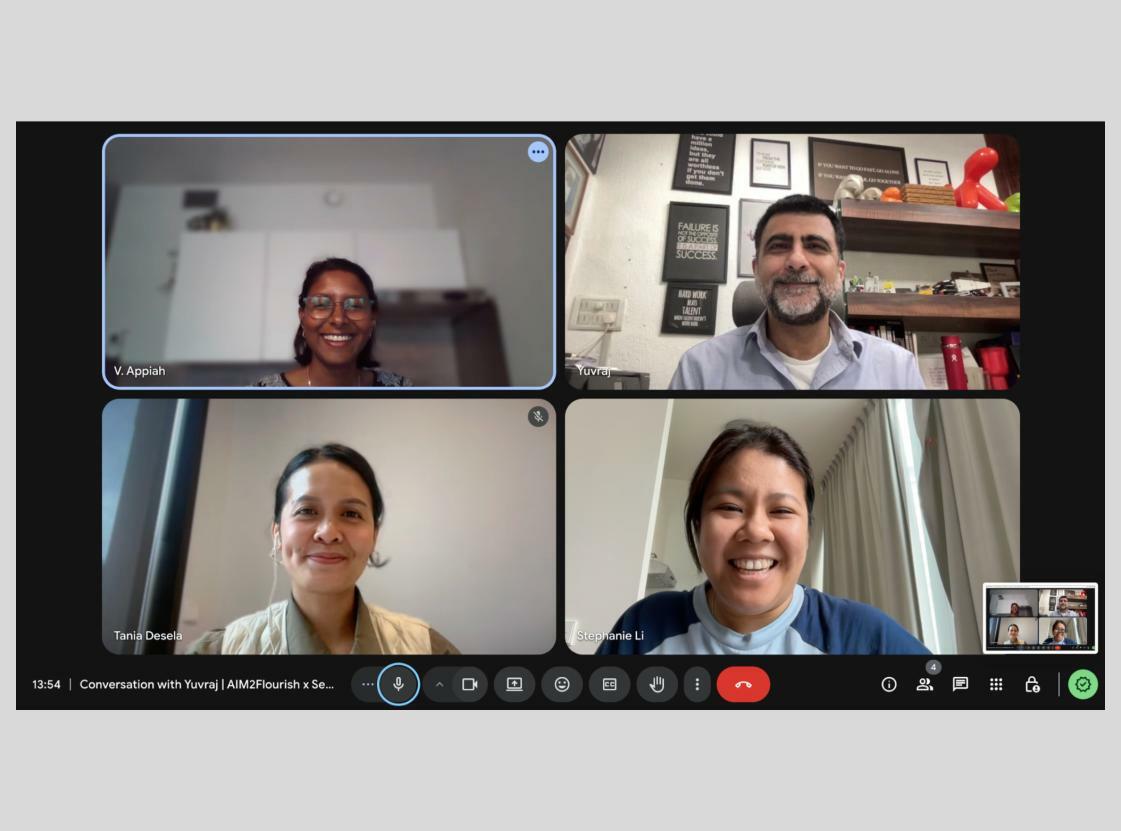
Tania Desela

Varouna Appiah

Stephanie Li

TIAS School for Business and Society

Benito Giordano


Keep this story going! Share below!
In India, where over 100 million plastic milk bags are discarded daily, Yuvraj Singh Ahuja, second-generation leader of Frontier Polymers Pvt. Ltd. and founder of the design-led brand Sereno, saw opportunity in waste. The operations at Sereno are backed by global recycling certifications, and from its base in Amritsar, the company transforms plastic debris into elegant, durable planters and furniture through the use of renewable energy. Sereno pioneers circular innovation aligned with UN Sustainable Development Goals (SDGs 7, 9, and 12), and is reshaping how India thinks about plastic refuse, i.e., not as a pollutant, but as a resource for sustainable design.
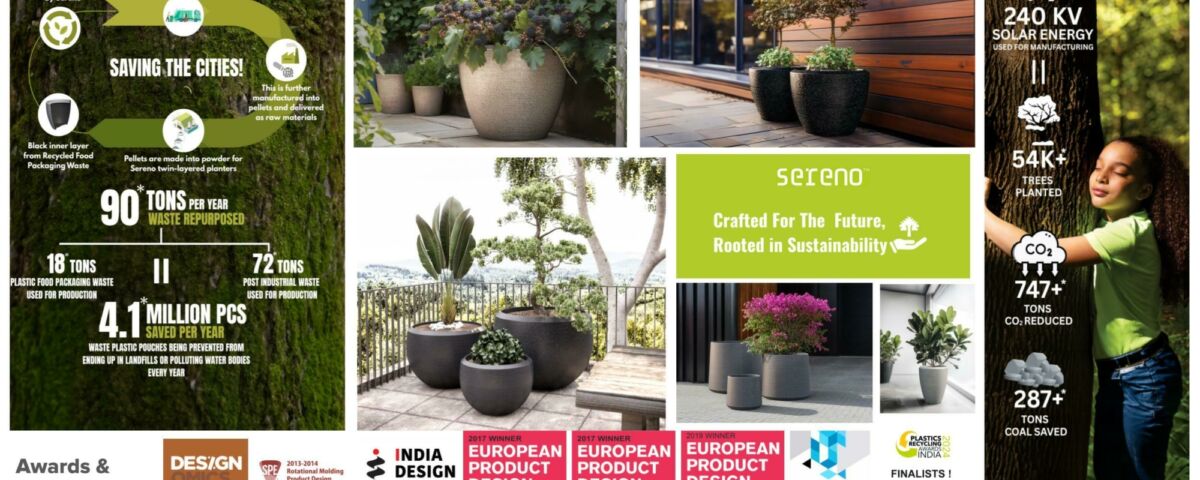
Sereno’s innovation lies in transforming single-use milk bags into durable, design-led products. Through partnerships with NGOs and zero-waste communities, the waste is collected, cleaned, and processed into granules that feed its 130-person facility in Amritsar. Its dual-layer design (outer shell of 100% recycled polymer and inner recyclable layer containing 30% post-consumer waste), enhances durability while reducing virgin plastic use by 40%. Powered by a 240-kW rooftop solar plant that meets half its energy needs, Sereno offsets the equivalent of over 54,000 trees planted, 747 tons of CO₂ emissions reduced, and 287 tons of coal saved.
In 2025, Sereno also became one of the first Indian companies to earn Global Recycling Standard (GRS) and Recycling Claim Standard (RCS) certifications, validating its process against international benchmarks. This not only assures transparency but also strengthens Sereno’s export potential in markets where verified sustainability is essential, for instance, in the Netherlands.
Sereno’s story is both personal and professional. Though raised in a family of plastic manufacturers, Yuvraj once aspired to be either an architect or a photographer. It was only after spending years on the shop floor at Frontier Polymers, working closely with his father, that he discovered his true calling – an enduring curiosity for materials and design. Frontier had already made its mark in India with innovative water tanks and road safety barriers, but Yuvraj wanted to create products that not only balanced utility and aesthetics but also brought purpose and joy into everyday spaces.
The turning point came during the COVID-19 pandemic, when Sereno sought to partner with the Dutch brand Capi Europe, a collaboration that would require adherence to specific sustainability standards. During this process, their European counterparts asked a simple yet powerful question: “What’s your sustainability story?” This prompted Yuvraj to rethink Sereno’s production approach, shifting from sole reliance on virgin plastics to incorporating recycled materials. He drew inspiration from Scandinavian manufacturers, who were recycling ocean fishing nets, and considered how a similar concept could be applied to the Indian context, where the plastic challenge was different.
Motivated by this challenge, Yuvraj began a two-year research and development journey to convert polyethylene milk bags into strong, attractive products. As he explains, “I wanted to prove to my daughter that plastic isn’t the enemy; it’s how we use and reuse it that matters”.
Sereno’s impact is both measurable and visible. In 2024, it repurposed over 90 tons of plastic waste, diverting over 4.1 million milk bags from landfills and waterways. By end of 2025, it aims to boost this impact by 15 to 18%, offsetting the equivalent of 62,000 trees planted, 860 tons of CO₂ reduced, and 330 tons of coal saved.
Each Sereno product is designed to last about 15 to 20 years, keeping the plastic used in circulation for decades. At the end of its life cycle, every product can be fully recycled, and grounded down to plastic granules to be used as raw material in new production, thereby ensuring that circularity is maintained.
In Sereno’s Delhi showroom, an “Impact Wall” tracks these achievements; a source of pride for workers once hesitant to handle “dirty milk bags” now take pride in seeing their collective impact. As Yuvraj puts it: “It is not just manufacturing; it is regeneration”.
Sereno’s approach to sustainability has proven to be smart business strategy given the following results:
Global Market Access
Partnership with Capi Europe opened access to the premium European home-and-garden market, where verified recycled products are in high demand. The GRS and RCS certifications serve as passports to these environmentally conscious buyers.
Operational Efficiency
To keep prices competitive, Sereno streamlined its manufacturing through lean processes, automation, and waste reduction. This resulted in fewer product rejections and higher consistency.
Brand Differentiation
Unlike many of its competitors who focus on manufacturing low-cost goods, Sereno insists on craftsmanship and design excellence. Yuvraj emphasizes: “Recycled products shouldn’t look cheap. They should look premium. When visitors to our showroom can’t make out that the products they are seeing are recycled, that’s when I know we’ve succeeded”.
Premium Value
By elevating recycled design, Sereno commands higher margins while building a loyal customer base. Its story of sustainability and style resonates with architects, landscapers, and conscious consumers alike.
Reputation and Recognition
Sereno’s circular model and design innovation have earned media attention, awards, and invitations to sustainability panels, thereby amplifying its reputation as a frontrunner in India’s green design movement.
Sereno’s work generates ripple effects far beyond its factory, creating lasting social and ecological value as demonstrated in several meaningful ways:
Environmental Gains
By giving new life to discarded milk bags, Sereno directly reduces the amount of plastic that would otherwise go into landfills or simply pollute waterways. Its rooftop solar system supports clean manufacturing and further reduces the CO₂ footprint of the process.
Cultural Shift
Inside the company, the employees have undergone a remarkable mindset transformation of viewing plastic waste as mere “dirty material” to seeing it as valuable raw material. The pride that they feel in seeing the tangible impact of their work reinforces a culture of responsibility and innovation. As Yuvraj puts it: “Our generation has a responsibility to clean up. We can’t blame our parents; they didn’t know. But we do, and the urgency is here”.
Community and Employment
Sereno’s raw material supply chain supports local waste-collection networks, small recyclers, and sorting centres, thereby fostering green jobs and formalizing parts of India’s informal recycling ecosystem.
Circular City Potential
Yuvraj envisions extending Sereno’s model to urban infrastructure whereby locally collected plastic waste is turned into benches, lamp posts, and fencing for city parks. “Imagine walking in a park built from your city’s waste”, he says. “That’s circularity in action”.
Shifting Public Perception
By showing that products made from recycled materials can be beautifully durable, Sereno challenges the stigma that these would be shoddy. It inspires consumers to see sustainability not as sacrifice, but as sophistication.
Overall, Sereno embodies the belief that unexplored pathways still exist for tackling pressing socio-environmental challenges. Aligned with UN SDG 7 (Affordable and Clean Energy), SDG 9 (Industry, Innovation and Infrastructure), and SDG 12 (Responsible Consumption and Production), Sereno continues to prove that industrial progress and environmental stewardship can thrive together. Its journey carries a clear message for entrepreneurs everywhere: identify your local challenge, innovate with purpose, and weave sustainability into the fabric of your business. Sereno is not just making planters; it is also planting the seeds of hope for an inclusive circular future.
Get stories of positive business innovations from around the world delivered right to your inbox.
Yuvraj Singh Ahuja, CEO
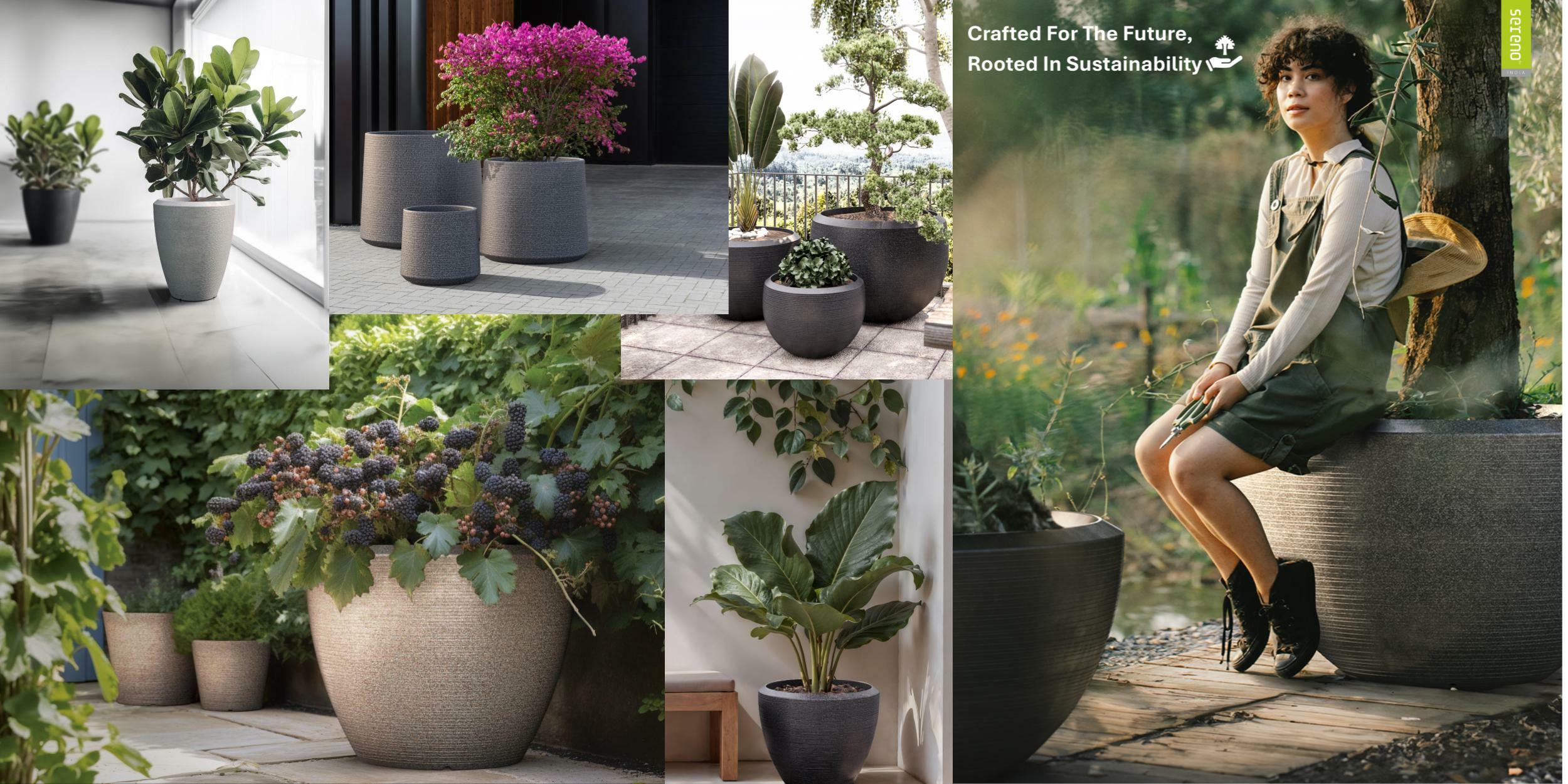
Sereno is an Indian sustainable manufacturing brand specializing in design-led lifestyle products made from recycled plastics. The company produces planters, outdoor furniture, and lighting solutions using circular manufacturing processes that extend material life and reduce plastic waste. Sereno integrates renewable energy, certified recycled inputs, and long-lasting product design to serve both domestic and international markets.